
By: Nevena Kovačević
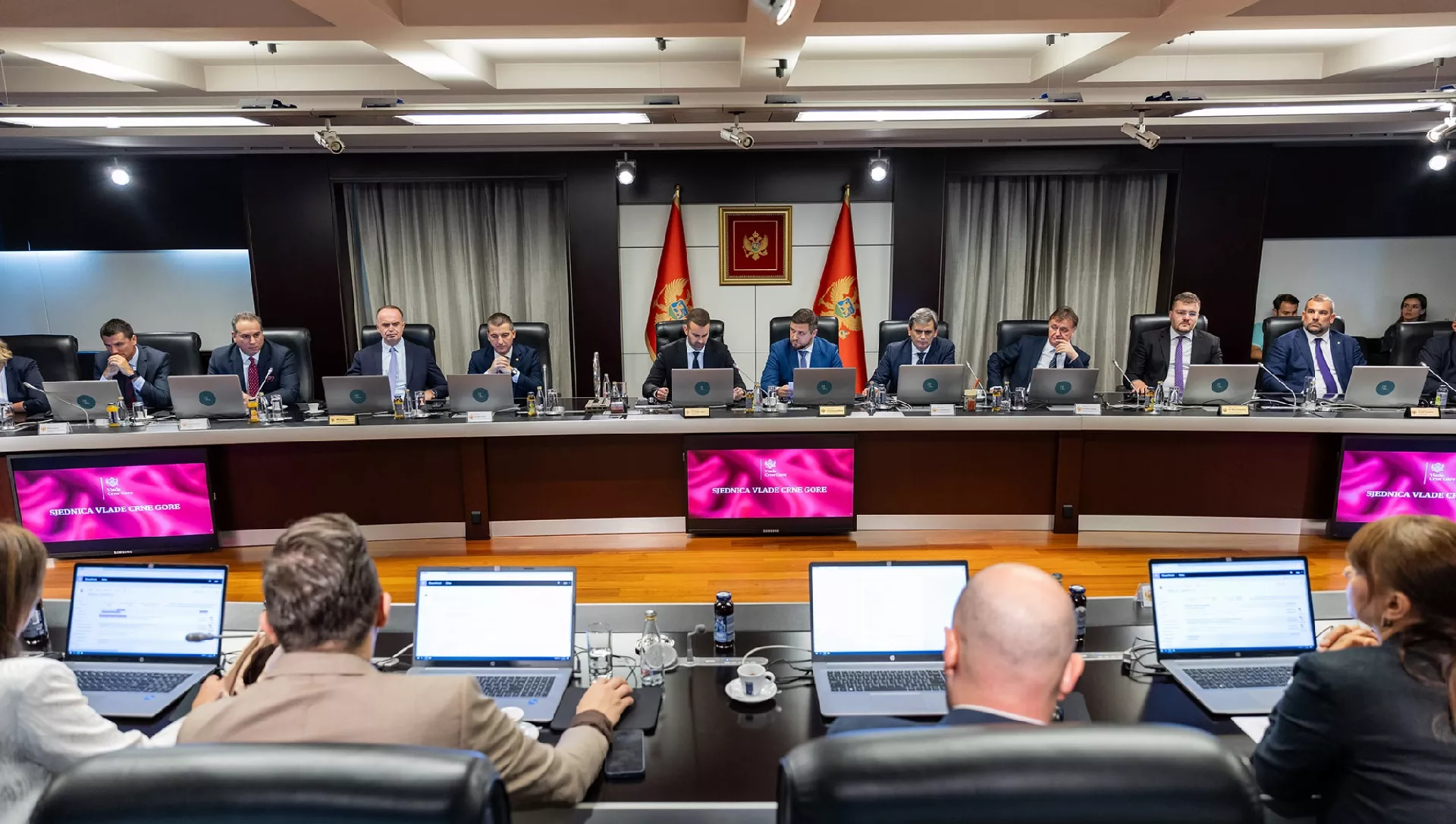
The Montenegrin government was reconstructed last week. The end of July was repeatedly announced as the final deadline by the leaders of the former Democratic Front, Andrija Mandić and Milan Knežević.
Although pro-Russian agents were already part of the executive power through positions of state secretaries, and Andrija Mandić, from the position of Parliament Speaker, effectively controlled the decisions not only of the parliamentary majority but also of Spajić's Government, their infiltration into the Government was formalized by taking over three ministerial portfolios and obtaining two deputy prime minister positions. In addition to the parties of the former DF, the Bosniak Party is also a new constituent of the executive government, to which five portfolios and one deputy prime minister position were allocated.
Montenegro has thus acquired the most bloated state apparatus in the history of multi-party politics, with over thirty members - 24 ministries and seven deputy prime minister positions, with almost fabricated portfolios intended to satisfy political appetites. Even the overlapping responsibilities of certain deputy prime ministers and ministries, whose ministers were appointed before their establishment, did not prevent politically hungry and office-seeking politicians from making the clientelistic-partitocratic structure so cumbersome in order to get a larger piece of the political pie, that it will be questionable whether the state even has enough resources at its disposal to support this evidently unsustainable system through its abuse and squandering of citizens' money.
This is, therefore, a system into which some enter solely to achieve ideological-political goals, but interest-based clientelistic positioning in breadth and depth is the key cohesive factor and motive that guides most constituents of the restructured Government. A bloated government, composed of programmatically and ideologically diametrically opposed entities, has no chance of surviving its full term. Although a two-thirds majority, from the perspective of political theory, usually indicates a path to stability, completely opposing goals and ideological differences will be the key stumbling block and constant turmoil within the government.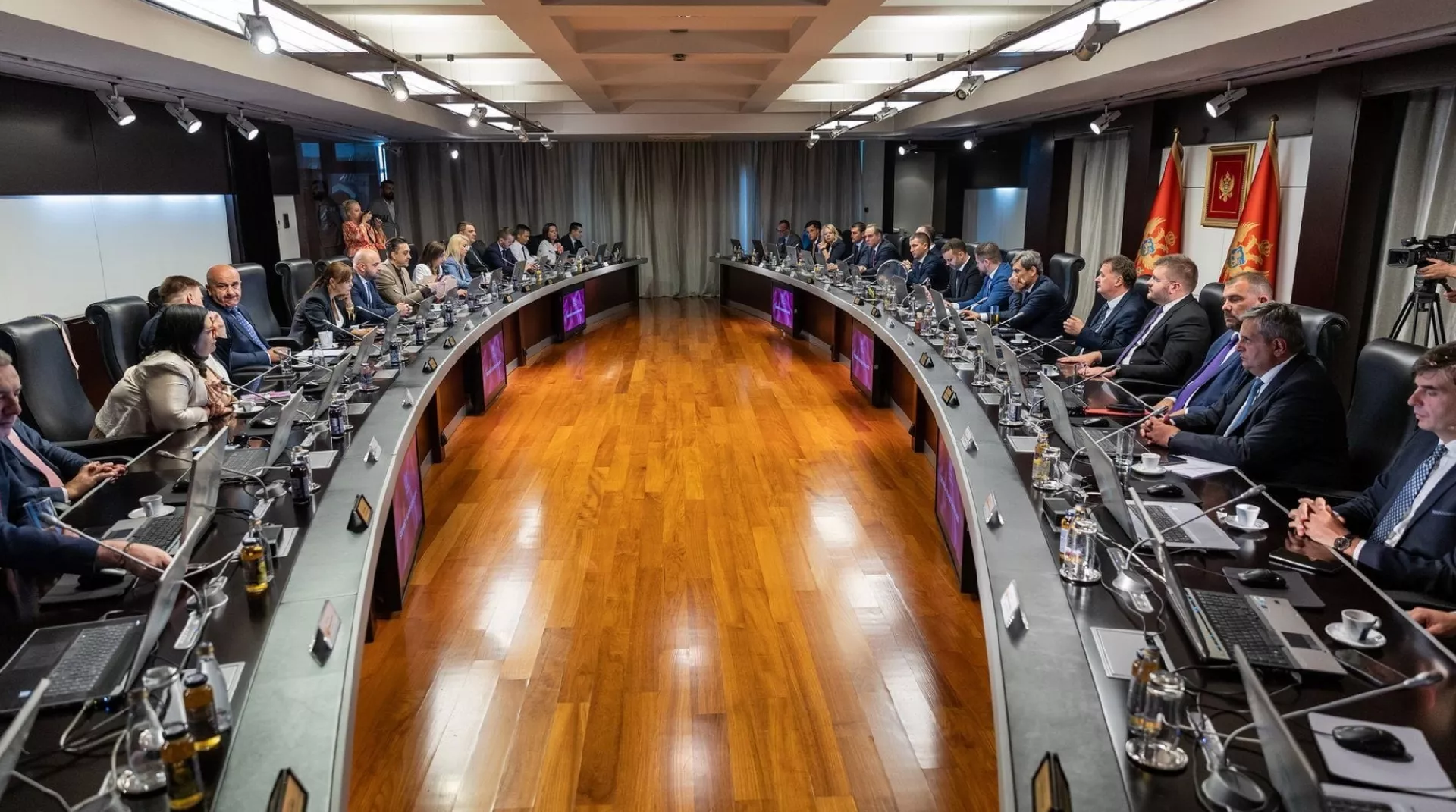
Foreign Policy Shift and Value Collapse
On the same day, after the session at which the reconstructed government was voted in, the United States of America expressed open concern about the entry of pro-Russian structures into the Montenegrin government, which, instead of being declaratively pro-European, is becoming openly pro-Russian, subordinate to Moscow and official Belgrade. The European Commission stated that it would closely monitor developments in Montenegro, not wishing to comment on individual government constituents.
However, just two days later, a sharp and highly coordinated message arrived – the declaration of the Speaker of the Parliament Andrija Mandić, Deputy Prime Minister Aleksa Bečić, and the leader of the Democratic People's Party Milan Knežević as undesirable in Croatia, following the adoption of the parliamentary resolution on the genocide in Jasenovac. The public in Montenegro is not surprised that, in addition to the Chetnik duke and Knežević, Bečić also found himself on Croatia's blacklist.
Indeed, a foreshadowing of conflict between Montenegro and Croatia occurred at the end of last year, when the Minister of Defense and Democrat official Dragan Krapović denied the Greater Serbian aggression in the former Yugoslavia and insisted on a unilateral solution regarding the ownership of the ship Jadran. This was followed by the cancellation of a meeting by the Croatian Minister of Defense Ivan Anušić, and then by Croatia's first protest note to Montenegro.
Bečić's Democrats are a right-wing party that, under the guise of civic orientation, pursues a kind of policy of neutrality. They stand aside while supporting, without precedent, all fascist proposals from local and state authorities. The Democrats are precisely the protectors of the President of the Municipality of Nikšić, Marko Kovačević, a fascist and genocide denier, who constantly announces showdowns with Turks, as well as the President of the Municipality of Pljevlja, Dario Vraneš, Vučić's and Vučević's reporter and destroyer of multi-ethnic and multi-religious harmony in a city that was a symbol of tolerance and coexistence until it was taken over by Mandić's protégé.
The ideological background of Bečić's policy has been exposed precisely by Croatia's entry ban. Such a move is a message to Spajić's Europe Now movement that sitting on two or three chairs is no longer an option. If other EU member states decide to follow Croatia, the ban could be extended to Schengen countries. It is clear that diplomatic moves are made in agreement with other EU member states. The question is how the new Minister of Foreign Affairs, Ervin Ibrahimović, will respond to the diplomatic slap from an EU member state. It was also the first unpleasant message to Ibrahimović – that he absolutely did not belong in a government with followers of the Chetnik movement and admirers of war criminals and servants of the contemporary continuators of the radical agenda of the nineties.
Andrija Mandić and Milan Knežević, by their own admission, have not and will not abandon their ideology. They remain loyal to the Putin-Vučić mission, which consists of the fascization of Montenegro, by negating the anti-fascist foundations deeply embedded in Montenegrin history and tradition. The ultimate goal, however, remains the redrawing of the state structure, by constitutional or unconstitutional means, and a government of the people rather than citizens is a crucial stage on the path to its achievement. Ibrahimović, as an experienced politician, had to know that his decision inflicts immeasurable damage on both the Bosniak and Montenegrin people, as well as the state to whose independence restoration the BS, along with other minority parties, made a decisive contribution.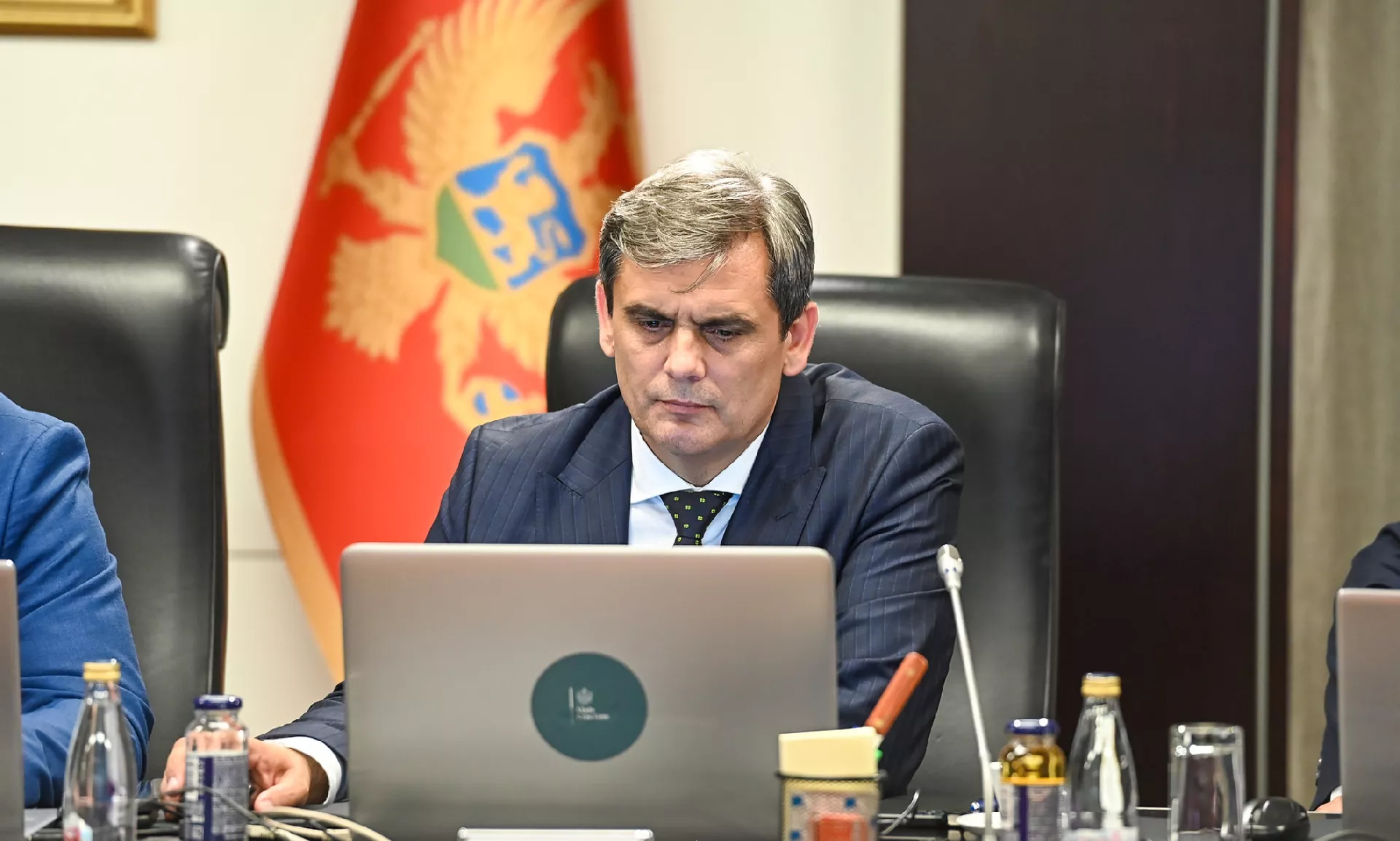
The fact that Ibrahimović, for the sake of positions and functions, decided to betray the principles of Rafet Husović, who in 2016 very explicitly refused the DF's offer to form a government with them, of which he would be prime minister, has caused numerous criticisms from the local and regional public, as well as the Bosniak diaspora, because by following Albanian voters, Ibrahimović agreed to cooperate with Greater Serbian chauvinists. Admittedly, Ibrahimović was supported by SDA leader Bakir Izetbegović and BiH Minister of Foreign Affairs Elmedin Konaković.
The support from the Mothers of Srebrenica is particularly surprising, given that Ibrahimović's coalition partners consider the executioners and murderers of Srebrenica victims to be national heroes, denying that genocide was committed at all, claiming that Islam is a false religion, and that the crime in Srebrenica cannot be considered genocide because military-able men were killed there. If the BS had entered Spajić's Government immediately after the elections, when that government had minority support from NSD and DNP, there would have been nothing controversial in such a decision.
However, after Mandić welcomed Dodik without the BiH flag, gave a scandalous speech at the so-called Pan-Serbian Assembly, and together with Knežević and coalition partners opposed Montenegro's vote for the UN Resolution on Srebrenica, and Knežević swore that he would not support the BS entering the Government if they supported Mandić's dismissal in March, which they did, it is clear that this is a mere clientelistic compromise, to which Mandić and Knežević agreed for the higher goals of Moscow and Belgrade, and Ibrahimović was motivated by office.
By including minority parties, Aleksandar Vučić cemented the position of his key agents, primarily the head of the executive and legislative power, the Chetnik duke Andrija Mandić. It was also an attempt to anesthetize the West, but the effect was clearly counterproductive. The BS's decision to agree to an arrangement with the clerical-Chetnik horde, ideologically and programmatically openly devoted to the policies of the nineties, is least of all in the interest of the Bosniak people.
It is also contrary to the ideals of an independent, sovereign, and civic Montenegro, based on anti-fascist and secular values. To the great and honorable Mr. Husović, if he were alive today, just as in 2016, interest-based coalition building based on compromise with neo-Chetniks would not be an acceptable option, under any circumstances. The decision of the BS at the Main Board meeting was supported by 87 members, one abstained, and about thirty were absent.
Judging by media reports, the expected split within the BS will be publicly announced in a few days, when a part of the dissatisfied membership will present an initiative committee for the formation of a new party with a national Bosniak character at a press conference. The BS will clearly face a significant drop in voter support. Let's recall that they won six mandates in the last parliamentary elections.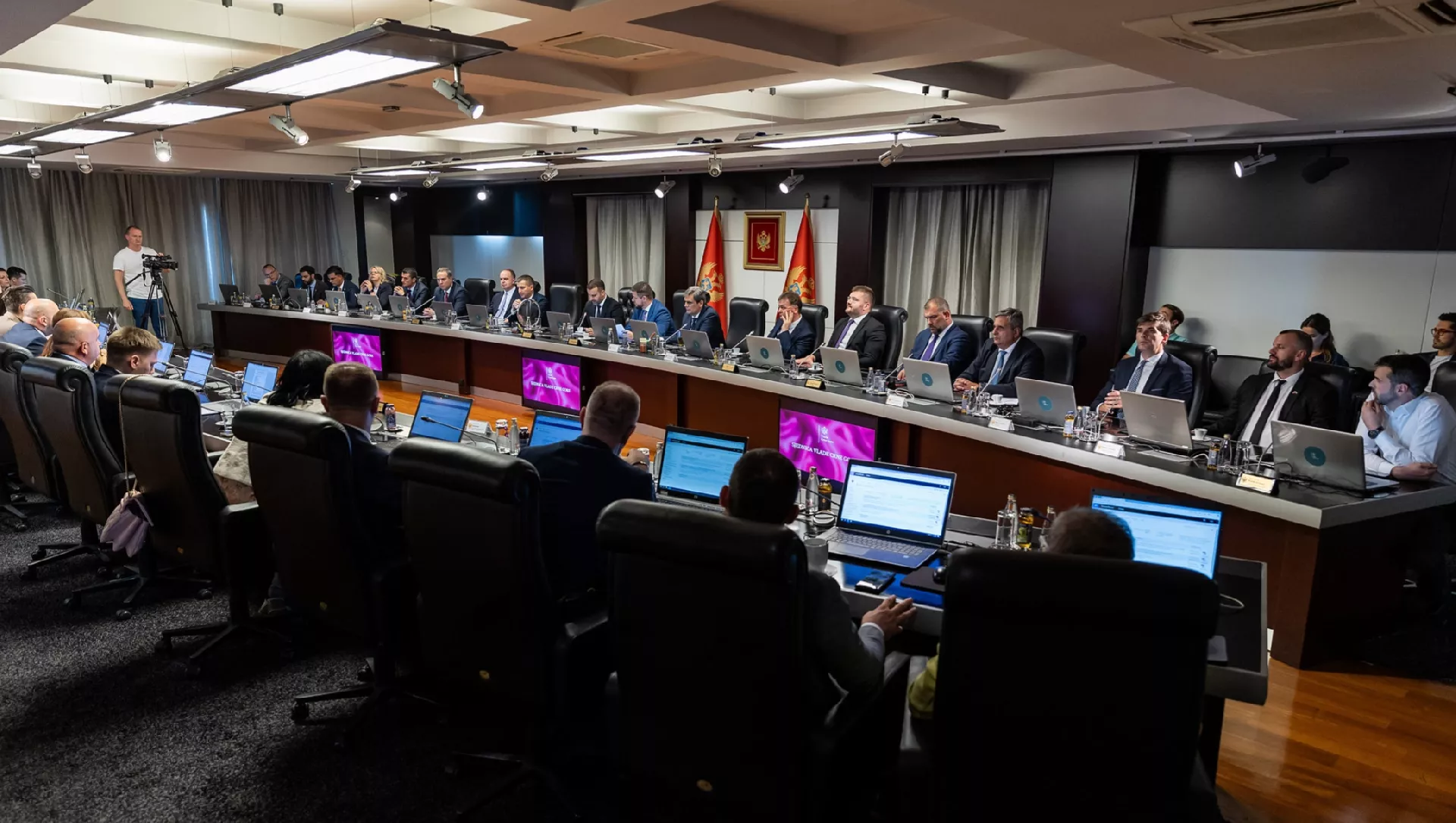
Votes according to the minority key are a sign of insecurity and a desire for a party with a national prefix to protect its voters from the terror and persecution they have been exposed to since the change of state and local authorities after 2020. Ibrahimović's party, if it wants to remain within the government, will have to fulfill the ultimatum of the ruling parties – to break all local coalitions with the DPS and hand over those municipalities to Russian-Serbian structures. Such a move leads to the destruction of bridges of alliance and coalition cooperation with traditional partners – pro-Montenegrin and sovereignist parties. It also provides fuel for the continuation of chauvinistic outbursts carried out by Mandić's most radical protégés – the presidents of the municipalities of Nikšić, Marko Kovačević, and Pljevlja, Dario Vraneš.
Ibrahimović, as an experienced politician, knew that neither he nor the Albanian parties have the capacity to stop the onslaught of rampant chauvinism. Instead of trying to initiate a wave of change through cooperation with the opposition at the local level, minority parties, consciously or unconsciously, are playing for the opposing team. Cooperation with the admirers of Čiča Draža, Mladić, and Karadžić is only in the interest of Aleksandar Vučić and Andrija Mandić, who, with Moscow's support, are undermining the constitutional order, turning a state of citizens into a state of the people.
Even before, during Abazović's Government, Dodik's associates were acceptable to Ibrahimović, but agreeing to enter a radical government, under the guise of capital and development projects, is a betrayal of the Bosniak people in Montenegro, the diaspora, and BiH. Such a decision can only be supported by someone who does not understand the Balkan situation and Vučić's criminal Greater Serbia project.
The President of Serbia, after all, admitted himself that his influence is growing, telling the international community that his agenda is being implemented according to plan, while the West tolerantly observes the triumphant boasting about armament and open threats of a new war for peace. And Vučić's and Mandić's claims about Croatia as a new NDH will put Montenegro in an even more unfavorable position.
Montenegro, after obtaining the IBAR, is making a radical foreign policy shift. Aleksandar Vučić's first goal has been partially achieved – the EU integration process is seriously threatened. The second goal is the adoption of the law on dual citizenship, through which phantom voters imported from Serbia and RS would change the ethnic and demographic structure of Montenegro. Then follow constitutional changes for which a two-thirds majority in the Parliament and a three-fifths confirmation in a referendum are needed. Although their adoption is unlikely, we should not be surprised by unconstitutional maneuvers, which we are well accustomed to and which we cannot predict. Spajić, in order to avoid political death, agrees to everything, and Mandić will expand his blackmail potential to other constituents of the Government and parliamentary majority. The politically experienced duke is well versed in methods of discipline.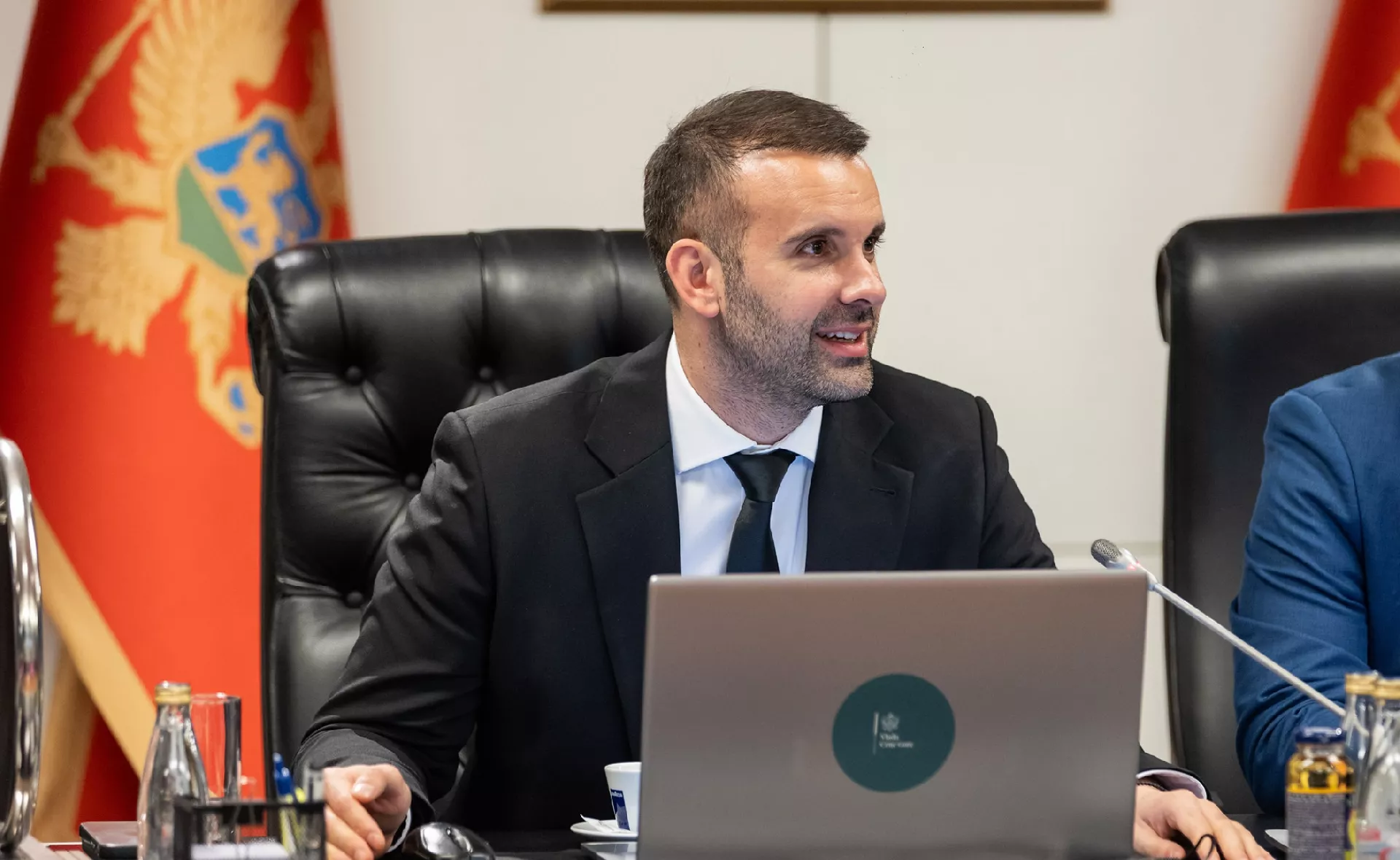
Montenegro is on the verge of collapse. From a sure step towards the West, a sure turn towards the East. After the acquittal in the state coup case, despite irrefutable evidence obtained from international sources and Vučić's former admission that the assassination of Milo Đukanović was planned, there are no limits for Mandić and Knežević. Spajić's Europe Now Two program is a marketing strategy that will prove ineffective at the Podgorica elections, and the deception of citizens will come due at the fall in ratings. Therefore, a broad pre-election coalition of government constituents will likely be a certain scenario, as the list of former Minister of Justice Andrej Milović will further divide the PES electorate, further shake Spajić's already shaky position, and draw away some of the membership.
The question also remains how President Jakov Milatović will position himself, who is trying to clean up his political biography with a pro-European turn. However, Milatović, from a stable position, opposes his former party colleagues, remaining true to his hard-ideological beliefs, and this is a lure that the opposition should not bite. The strong action of opposition forces and resistance to structures that can do whatever they want must be intensified. Judging by the election results in Budva and Andrijevica, an upward trend for the opposition can be expected in the upcoming elections in Podgorica and Kotor. It is certain that the leading opposition parties will run independently, DPS as one, and the European Alliance, consisting of the Social Democrats, the Social Democratic Party, and the Liberal Party, as the second column.
Running in multiple columns has proven to be more effective than forming a single list. Post-election situations can be complicated by the scattering of a huge number of votes, as some newly formed parties, such as the European Progress Party of former Prime Minister Duško Marković, announce independent appearances, although reaching the census is difficult for them. Nevertheless, the Podgorica elections are perhaps a bright spot in the clerical-fascist darkness. Montenegro, without a doubt, faces a turbulent political autumn, and sooner or later, early parliamentary elections.
As we have written before, the parties of the former DF need a two-thirds majority to attempt to pass constitutional changes regarding the anthem, language, and symbols. The hope remains that at least minority parties, even under Mandić's blackmail, will not agree to such a thing. A two-thirds majority as a path to reform steps sounds good in theory. The practice and intentions, however, are completely different.
Komentari (0)
Prijavite se za komentiranje
PrijavaJos nema komentara. Budite prvi!
Minuta
Sve →Iz drugih kategorija

High Representative Not Elected: Germans, French and British Against Americans, New Attempt at End of June

ČOVIĆ WITHOUT MERCY: How Those Who Brought Ademović to Office Created a Political Hell for Him



Sunny Saturday, quite warm



Tragedy in Albanian resort: Two minors drown












