
Written by: Amra Vrabac
There is still little time left until the beginning of 2025, and the minimum wage is not the promised 1,200 KM, no matter what shadow prime minister Vojin Mijatović says about it. First, he announced a minimum wage of 1,000 KM from January 2024, but that promise was not fulfilled. At the end of December 2023, the Government set the minimum wage amount at 619 KM.
Then, during 2024, the Government tried to “help workers” with decrees on employer assistance, but the decree was not binding, so that plan was also unsuccessful.
Then the Government sent amendments to the Law on Income Tax into procedure, which was supposed to enable employers to pay workers 200 KM of tax-free portion based on work performance. However, problems arose there as well. Some parties demanded that the amount be increased to 400 or 500 KM, and the Government did not provide a mechanism to protect workers from the employer reducing their salary by that amount and then paying them the reduced portion through work performance, thereby reducing costs at least during 2025, while workers would gain nothing except having less paid into health and pension insurance, which again harms workers.
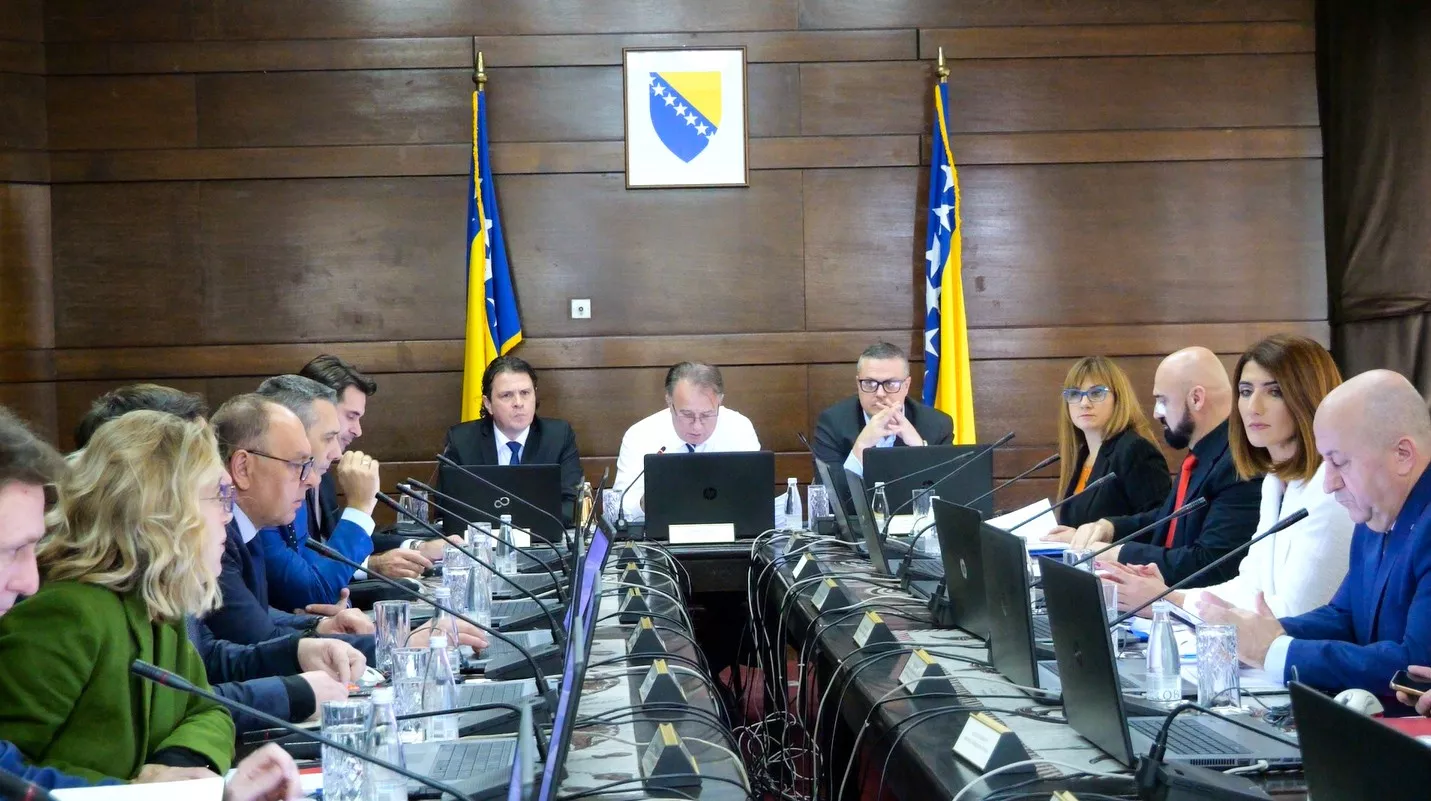
And then Prime Minister Nermin Nikšić withdrew the Law on Amendments to the Law on Income Tax from the parliamentary procedure.
The Government then again adopts a Decree on the payment of assistance due to increased living costs. The public was not informed about its content by the FBiH Government, even though several other decisions were made at the same session, as evident from the press release.
However, the provisions of the Decree still appeared in the media, and we analyze what the Government prescribed for workers and employers.
Assistance can be paid by employers who are registered as legal entities or sole proprietors and employ persons in accordance with the Labor Law, regularly pay salaries and pay contributions for employees in accordance with applicable regulations, have no outstanding obligations based on taxes and contributions, and exceptionally, if they have concluded an agreement with the Tax Administration of the Federation of Bosnia and Herzegovina on deferral or payment of obligations in installments in accordance with special regulations governing this.
It is stipulated that the employer can pay 200 KM to employees who receive the minimum wage in accordance with regulations on the minimum wage and 150 KM for all other employees. This calculation is based on the amount of the minimum wage that the Government will determine by the end of December. It is assumed that it will amount to 700 KM.
However, the possibility is left for the employer to pay up to 400 KM to an employee who receives the minimum wage and which the employer increases by 15 percent or more, but it all depends on the employer's financial capabilities.
The Government stipulated that the total monthly earnings of an employee, which include: net salary with tax and legally defined allowances for hot meal, transportation, and assistance prescribed by this decree, must not be lower than 1,200 KM from January 2025.
The Government also stipulated that the employer cannot reduce the salary of a worker that they had before the entry into force of this decree.
The amount of the minimum wage for the next year is determined at the end of December. It currently amounts to 619 KM in FBiH. An increase in the minimum wage to 700 KM is expected, and the FBiH Government makes a decision on this.
Assistance can be paid monthly, quarterly, and all employees who are in an employment relationship have the right to assistance.
The employer has an obligation to report the payment of assistance to workers to the Tax Administration of FBiH.
In essence, this decree is designed to ensure assistance for workers with the lowest wages, i.e., an amount of 1,200 KM per month including the assistance. And here is how. The minimum wage is currently 619 KM. The tax-free amount for a hot meal is 8 KM, which is mostly paid by private companies, amounting to 176 KM per month when there are 22 working days in a month, and a transportation allowance of 53 KM. So, that amounts to 848 KM. Given that the Government stipulated that with the assistance included, workers' earnings must not be lower than 1,200, this means that every employer will have to give the maximum amount of 400 KM to the worker.
However, if the FBiH Government increases the amount of the minimum wage, then the amount of assistance that the employer needs to pay to reach the amount of 1,200 KM decreases proportionally, because the employer can, but does not have to, pay more than 200 KM.
Komentari (0)
Prijavite se za komentiranje
PrijavaJos nema komentara. Budite prvi!
Minuta
Sve →Iz drugih kategorija

High Representative Not Elected: Germans, French and British Against Americans, New Attempt at End of June

ČOVIĆ WITHOUT MERCY: How Those Who Brought Ademović to Office Created a Political Hell for Him



Sunny Saturday, quite warm



Tragedy in Albanian resort: Two minors drown












