
SARAJevo, (Patria) - In the last 31 years, the relativization of crimes and denial of genocide against Bosniaks has encompassed all spheres and forms of the Serbian establishment. The amendment to the Criminal Code of BiH, which prohibits the denial of genocide and the glorification of convicted war criminals, has not stopped the practice of these phenomena.
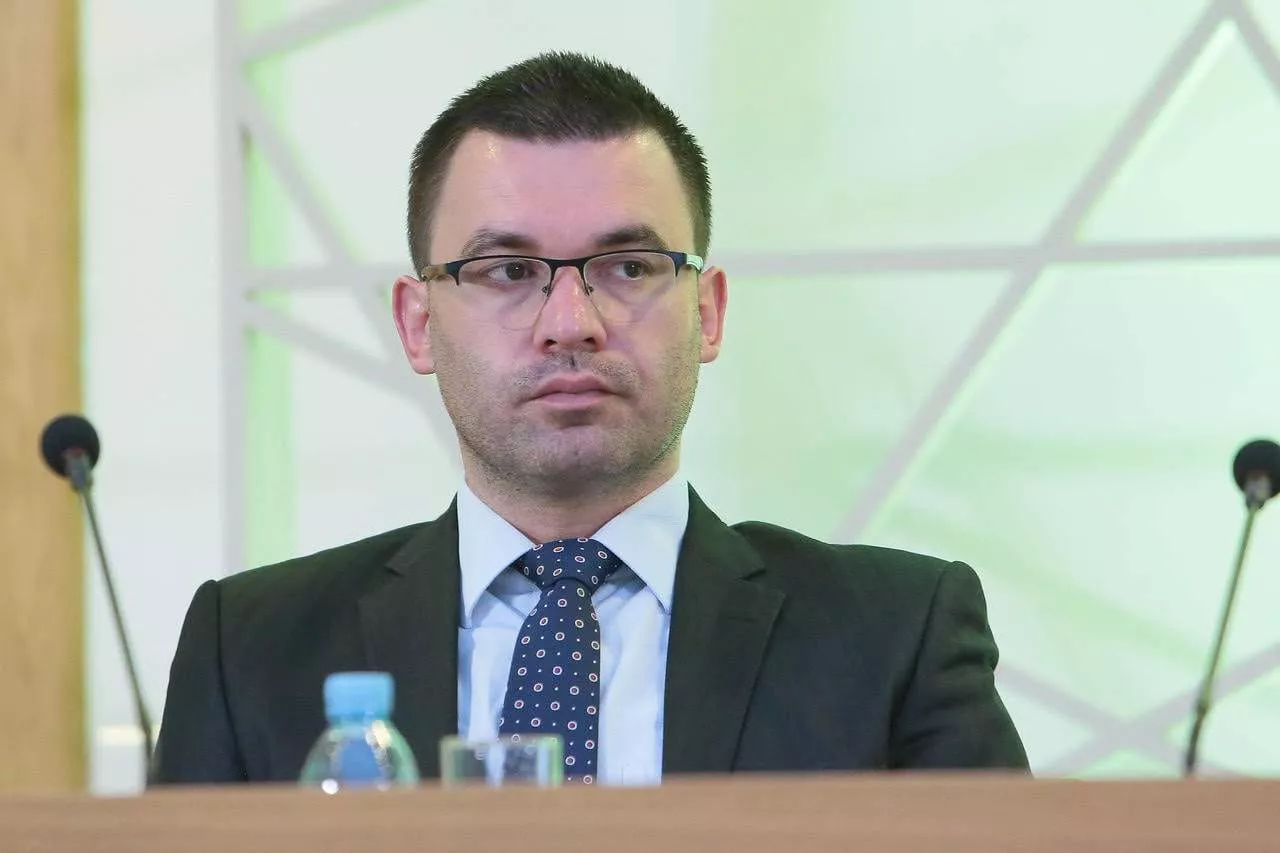
This was written on his Facebook profile by Muamer Džananović, a research associate at the Institute for Research of Crimes Against Humanity and International Law of the University of Sarajevo.
After the aggression, Džananović states, the denial of genocide continued through academic, cultural, social, and other forms. What is evident is that genocide denial has become deeply rooted in key institutions within the Bosnian entity of Republika Srpska and within Serbia, and that it is supported by broader masses.
- The denial of crimes and genocide actually began at the time when the crimes were being committed. World theorists like Gregory Stanton also describe the stage of genocide denial in this way, and the history of denying genocide against Bosniaks is proof that they are right.
Since 2020, reports on genocide denial in Srebrenica, published by the Srebrenica Memorial Center, have identified more than 900 public instances of genocide denial between May 1, 2020, and May 2022, primarily in Serbia, Montenegro, and the Republika Srpska entity.
This denial is carried out by the political leadership of Serbs in Serbia and Bosnia and Herzegovina, and among the deniers are the President of Serbia Aleksandar Vučić, the Prime Minister of Serbia Ana Brnabić, and the President of Republika Srpska Milorad Dodik. Among others are Aleksandar Vulin and numerous others.
Furthermore, it is not only about the denial of genocide in Srebrenica, but also, for example, about the denial of the massacres at Markale and Tuzla Gate. Reconstructions of events have even been created to prove that the Serbian army did not commit these crimes - Džananović states.
It is important to emphasize, he continues in his Facebook post, that the denial of crimes and massacres committed in Sarajevo began during the aggression itself - Radovan Karadžić publicly presented on Pale television during the aggression how the truth should be distorted.
- In the context of the crimes committed in Sarajevo, he said: "We know this and we must tell the Muslim people, and finally, when everything settles down, we will also judge some people who did this; who bombed Sarajevo - Muslims with Muslim weapons, who planted explosives in the streets of Sarajevo to kill their own people, in order to blame the Serbs. That has already been exposed, everyone in the world is laughing. When some dignitary arrives, for example, and then... a mortar hits the presidency - everyone laughs. Everyone knows it's a show" - Džananović reminds.
He states that the first known case of denial and the implementation of an apparently prepared strategy of relativizing crimes is the massacre in Vase Miskina Street in Sarajevo, where on May 27, 1992, 26 civilians were killed and 108 were wounded in a bread line.
- At that time, Serbian media reported that it was about "mining" and "self-shelling" by the Bosnian authorities. This is how Belgrade's Politika reported on June 28, 1992, in an article titled "The streets were mined," in which former JNA Colonel Milorad Cvijović states that the street was not shelled but that an explosive device was planted - Džananović says.
With the previously listed "arguments," Džananović points out, Karadžić defended himself before the International Criminal Tribunal in The Hague in the context of denying his own responsibility and the responsibility of the VRS for the mass crimes committed during the siege of Sarajevo.
- The revisionist matrix prepared during the commission of crimes has persisted to this day. The best example is the "argumentation" used to try to absolve Novak Đukić, a convicted war criminal for the crime at Tuzla "Gate."
As in Belgrade's Politika in June 1992, on the same matrix, experiments are recently being organized in training grounds in Serbia, attempting to deny the responsibility of the Serbian army for firing the projectile and the possibility that so many civilians were killed and wounded at "Kapija" by it. These pseudo-experiments are the source of data for publishing revisionist documentaries and books - concludes Džananović.
Komentari (0)
Prijavite se za komentiranje
PrijavaJos nema komentara. Budite prvi!
Minuta
Sve →Iz drugih kategorija

High Representative Not Elected: Germans, French and British Sabotaged Americans, New Attempt at End of June

ČOVIĆ WITHOUT MERCY: How Those Who Brought Ademović to Office Created a Political Hell for Him



Sunny Saturday, quite warm



Tragedy in Albanian resort: Two minors drown












