
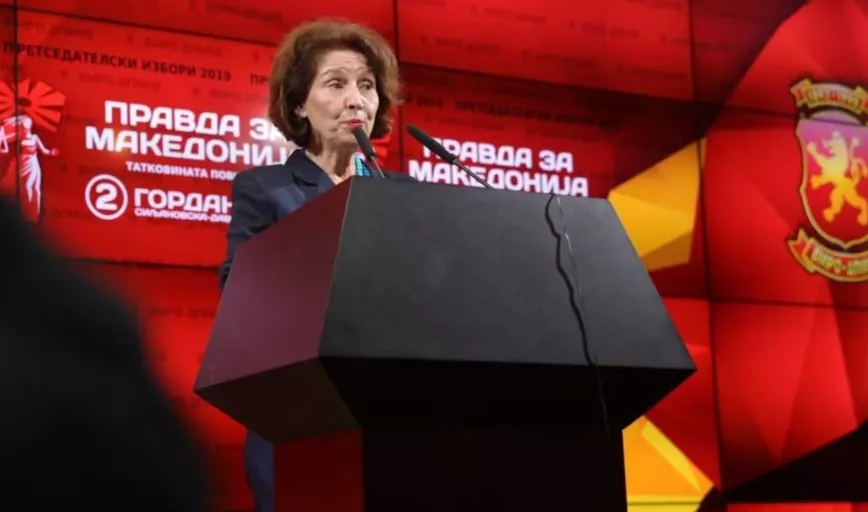
(Patria) - The right-wing opposition in North Macedonia achieved a major victory in the parliamentary and presidential elections on Wednesday, which saw a woman elected head of state for the first time.
Hundreds of jubilant supporters of the opposition party VMRO-DPMNE gathered outside their party headquarters in the center of Skopje, waving national and party flags and dancing to folk music, Reuters reports.
“Dear people of North Macedonia, we succeeded. Macedonia has won. This is a historic victory for the people,” VMRO-DPMNE leader Hristijan Mickoski told the crowd, Hina reports.
Election commission results showed VMRO-DPMNE winning 42 percent of the vote after 72 percent of parliamentary election ballots were counted, compared to 14 percent for the ruling Social Democrats (SDSM), prompting SDSM leader Dimitar Kovačevski to concede defeat.
“The result is disappointing and this is a big blow to SDSM,” Kovačevski told a press conference, where he also called for a thorough review of his party.
Voters in the country of two million people have grown frustrated with the slow progress in its bid to join the European Union, which was met with optimism in 2005 but has since been seen as a lost promise, agencies write.
Persistent corruption and slow development have also angered voters and turned them against the ruling party.
In the second round of voting for the more ceremonial role of president, Gordana Siljanovska-Davkova, a university professor backed by VMRO-DPMNE, defeated Stevo Pendarovski, the incumbent president backed by SDSM. Siljanovska-Davkova received 65 percent of the vote, and Pendarovski 29 percent, after more than 87 percent of ballots were counted.
“I asked myself why I deserved such an honor?” Siljanovska-Davkova told reporters shortly after being elected the country’s first female president. “The award is invaluable to me, this is a great responsibility,” she emphasized.
The opposition will likely have to form coalitions with smaller partners to secure a majority in parliament. Discussions are expected to unfold in the coming days.
Some voters expressed concern that the opposition’s nationalist leanings could harm relations with neighboring countries and its EU membership efforts. Analysts do not expect major progress in EU integration under the opposition, which was in power until 2017 and also faced criticism for alleged bribery.
“EU accession will not significantly advance under a potential VMRO-DPMNE government,” said Mario Bikarski, an Eastern and Central Europe analyst at the consulting firm Verisk Maplecroft.
NATO pulled North Macedonia back from the brink of civil war in 2001 during an ethnic Albanian insurgency and promised faster integration into the EU and NATO. Albanians make up almost a quarter of the country’s population.
North Macedonia’s lack of EU progress is partly due to friction with neighboring Greece and Bulgaria, both EU member states, but also a failure to implement economic and judicial reforms. The country joined NATO in 2020.
Some places and cities are among the most polluted in Europe, partly due to coal consumption and old cars. A large portion of the country’s youth has emigrated abroad in search of better prospects.
Komentari (0)
Prijavite se za komentiranje
PrijavaJos nema komentara. Budite prvi!
Minuta
Sve →Iz drugih kategorija

High Representative Not Elected: Germans, French and British Against Americans, New Attempt at End of June

ČOVIĆ WITHOUT MERCY: How Those Who Brought Ademović to Office Created a Political Hell for Him



Sunny Saturday, quite warm



Tragedy in Albanian resort: Two minors drown












