
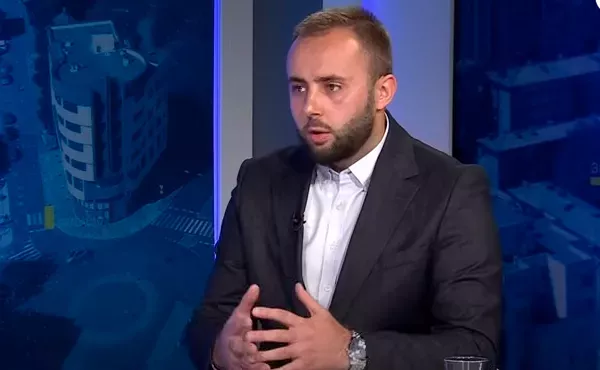
By: Kenan Hodžić, senior assistant at the Faculty of Criminal Justice, Criminology and Security Studies and member of the Political Council of Guardians of Bosnia
When we pay for electricity, we don't just pay for kilowatt-hours, we pay for others' mistakes, party-based hiring, and bad decisions. In Bosnia and Herzegovina, the price of electricity is determined by politics. And bad politics at that. Price increases are the result of decisions made in a chaotic and non-transparent system.
Energy security in BiH is threatened by poor management, epochal mistakes, and recklessness with dominant party control over public enterprises and the blind implementation of transition without local support.
The price of electricity in BiH is rising, even though the authorities boast about "green goals" and "development." In our case, price changes are not the cause but a symptom of the structural weaknesses of the energy system. Citizens are paying more, while energy companies operate without accountability, and the monopoly remains untouched. The question is whether we are talking about transition or improvisation. Instead of strategic policy, we have a series of ad hoc measures that benefit large players and shift the burden onto ordinary people.
Previous subsidies for renewable energy sources, such as so-called feed-in tariffs, have enabled private investors to make high profits, while citizens bear the costs. New regulated tariffs further complicate the situation. Why, for example, shouldn't households consuming up to 300 kWh have benefits and a reduced tariff. However, such a policy requires precise identification of users and institutional capacities that do not currently exist. Energy poverty, a situation where citizens cannot afford basic needs, is becoming commonplace. It is absurd that aid is not directed to the most vulnerable.
One of the fundamental problems is the fact that the corporate governance model in the energy sector has never taken root. Elektroprivrede (power utilities) function as an extended arm of political parties, without clear accountability to consumers. There is no real market competition, nor a development strategy for the energy sector that would be the result of expert, rather than political, debate. A system in which a small number of privileged individuals profit, and the majority pays more, is neither fair nor sustainable.
BiH was once an exporter of electricity. Today, it is energy-dependent, not due to a lack of resources, but due to bad decisions. Elektroprivrede are under party control, investments are non-transparent, and infrastructure is neglected. All of this increases the country's vulnerability, while citizens find it increasingly difficult to bear the costs.
A solution exists, and it is called energy democracy. This means greater participation of citizens and local communities in energy production and distribution. In addition to centralized systems for baseload energy, small solar grids, energy communities, and other forms of local production should be supported. This way, citizens become producers, not just passive consumers. And yes, the above is not a revolutionary discovery but sound practice and lessons learned in Europe.
The energy transition in BiH should result in the development of the civil energy sector. This would contribute not only to energy security but also to the democratization of public space. The global trend of developing citizen energy, through the participation of individuals and communities, can offer answers to local challenges as well. Then, decentralization and participation do not just mean cheaper electricity; they mean greater control over resources, greater resilience, and a fairer system. This is the answer to price increases, energy poverty, and political manipulation.
If the government truly wants a transition, then it must start investing in people. The energy transition must not be an excuse for new price increases and social injustice. It must become a process of fair change, for the benefit of citizens, not at their expense.
At a time when prices are soaring, it is clear that we need less top-down "regulation" and more energy from below, from communities, from apartments, from the initiative of people seeking a fair system.
Komentari (0)
Prijavite se za komentiranje
PrijavaJos nema komentara. Budite prvi!
Minuta
Sve →Iz drugih kategorija

High Representative Not Elected: Germans, French and British Against Americans, New Attempt at End of June

ČOVIĆ WITHOUT MERCY: How Those Who Brought Ademović to Office Created a Political Hell for Him



Sunny Saturday, quite warm



Tragedy in Albanian resort: Two minors drown












