
By: Nevena Kovačević
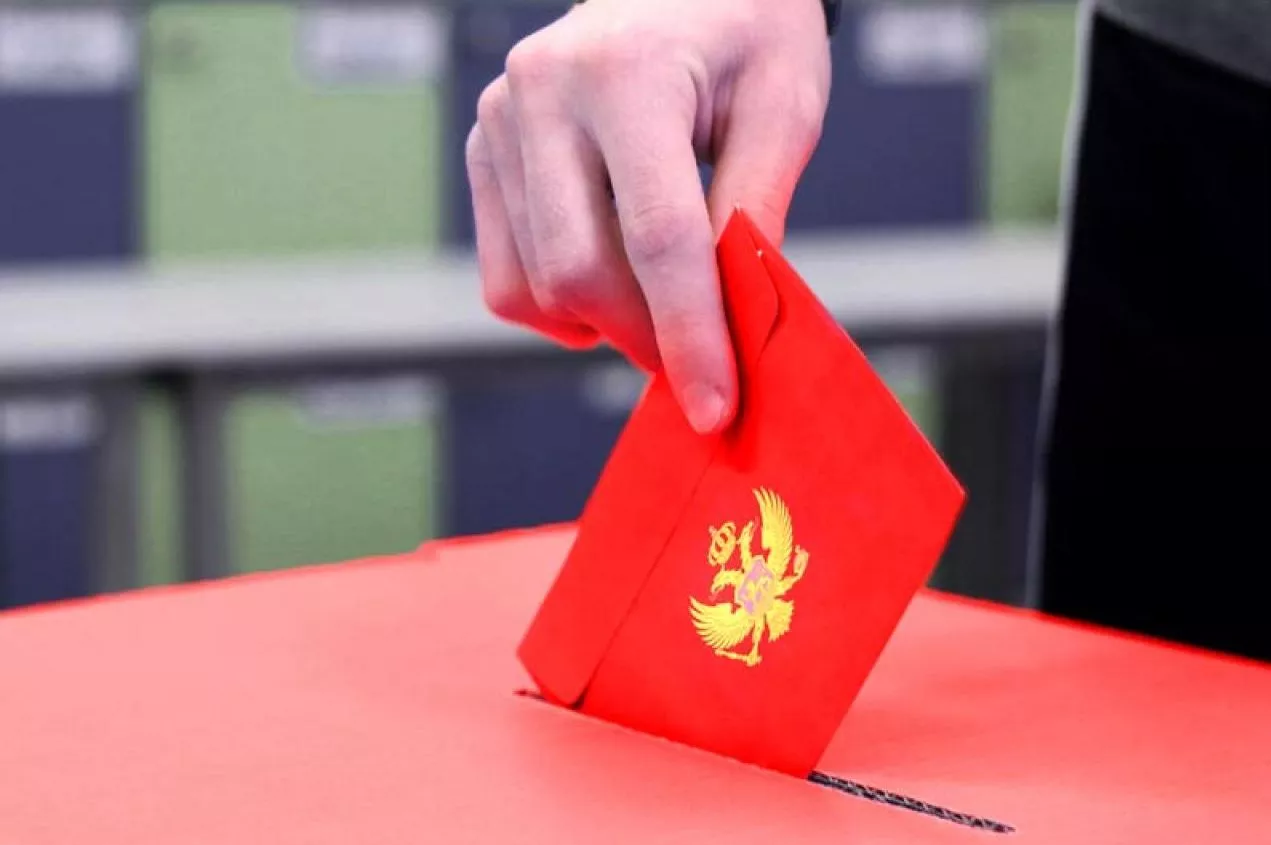
Only four more days separate us from the second round of presidential elections in Montenegro, in which the current head of state Milo Đukanović and the vice-president of the Europe Now movement Jakov Milatović will compete. Although a more aggressive campaign was expected during this week, it seems that the biggest battle is being fought over the votes of the Montenegrin diaspora and members of minority nations.
Officials of the Democratic Front, Democratic Montenegro, and the Civic Movement URA are regular speakers at Jakov Milatović's rallies across Montenegro. However, optimism regarding support through stronger voter mobilization through public appearances by representatives of the former parliamentary majority parties seems to have significantly waned, compared to the messages we could hear on election night and in the first days after the elections were held.
The reason, without a doubt, can be found in the fact that parties are already realizing that a broader coalition with the Europe Now movement could have a very negative impact on their party ratings and status on the political scene. Due to the enormous favoritism shown to Milatović by official Serbia, and his closeness to the same circles and centers of power outside Montenegro, they are forced to, at least formally, continue to publicly support the PES candidate.
However, mutual intolerance, which is an expression of the struggle for the favor of church circles and Serbian-Russian political structures, will likely manifest itself after the elections are over, regardless of their outcome, at least in the form of petty political bickering, which is characteristic of all actors of the two-and-a-half-year Montenegrin government.
Battle for the Diaspora
In the past few days, the biggest media stir has been caused by the arrival of voters from the diaspora for the April 2nd vote. Instead of tidying up the voter list and electoral reform that would allow voters from the diaspora to vote at diplomatic-consular missions, which the previous two governments, as well as those before them, did not seriously address, a debate is being held about who from the diaspora has the right to vote and who does not.
We remind you that Zdravko Krivokapić's government, in which Jakov Milatović was the Minister of Economic Development, attempted to revoke the voting rights of Montenegrin citizens temporarily working abroad who hold only Montenegrin citizenship, through amendments to the law, which, in accordance with current regulations, gives them the right to exercise their voting rights on an equal footing with Montenegrin residents.
The situation with emigrants who, in addition to Montenegrin citizenship, also hold citizenship of another country is significantly different, but potential abuses of this kind should have been prevented by a comprehensive reform of electoral legislation and a thorough cleansing of the voter list, which has not happened to date.
Krivokapić's government, however, did not deal with the so-called phantom and double-registered voters from the region, who, due to holding dual citizenship, should not have the right to vote in Montenegro.
Arben Jakupi, Assistant Director of the Directorate for Cooperation with Diaspora and Emigrants, during a television appearance, indirectly invited the diaspora not to come to vote, for which the Democratic Party of Socialists filed a criminal complaint against him, considering such a statement an abuse of official authority and an attempt to influence the electoral process. At a press conference held yesterday, Jakupi denied the DPS's claims, emphasizing that he considers the call for diaspora representatives to influence the electoral process inappropriate and incorrect.
He added that between 120 and 130 thousand Montenegrin emigrants have the right to vote in Montenegro, and that a very small number of them exercise that right. Jakupi stated that eight charter flights have been registered, mostly from Luxembourg, and the number of those who will come to vote, as he estimates, will not exceed four thousand, which, according to him, is causing panic in Milo Đukanović's party, as they have controlled the administration for years and used the diaspora as a voting resource.
Jakupi is, by the way, an official of the Party of Justice and Reconciliation, which supported the PES candidate. Representatives of numerous Montenegrin associations from the diaspora have repeatedly pointed out obstructions by the national airline. The Ministry of Foreign Affairs, headed by interim Prime Minister Dritan Abazović after the dismissal of Ranko Krivokapić, sent a dispatch to diplomatic-consular missions in countries where Montenegrin emigrants live, stating that any organized assistance for mass arrivals of voters to Montenegro will be strictly punished.
In response to Pobjeda, representatives of that department emphasized that they sent instructions asking diplomats to be professional, instead of implementing established practices according to which assisting mass arrivals of voters constitutes political agitation in favor of one political group. The justification of the MFA is that assisting organized arrivals for the purpose of voting in elections does not fall under providing consular protection to Montenegrin citizens.
The controversial dispatch is contrary to diplomatic practice, as well as to the norms of the Montenegrin Constitution and the Law on Foreign Affairs, which is why it can undoubtedly be seen as a form of political pressure.
Presidential candidate Jakov Milatović, contrary to the actions of the 42nd Government, has enthusiastically emphasized at rallies held in recent days that he sees the diaspora as a valuable human, not a voting, resource, and that he will do everything to, from the position of president, bring Montenegrin citizens back to their country.
Given that the Montenegrin diaspora is traditionally inclined towards Milo Đukanović, and that their more massive turnout, along with members of minority nations and some disappointed abstainers, could provide an advantage to Đukanović, because Milatović's supporters are not doing enough to strongly motivate their voters, out of fear that the Europe Now movement will further threaten them in terms of results in the upcoming parliamentary elections, everything we are witnessing seems to be a battle for the diaspora.
Despite the alleged obstructions, a large number of Montenegrin associations have announced a massive arrival of their members who wish to exercise their right to vote.
Financing Milatović's Campaign
To the question posed by SDP candidate Draginja Vuksanović Stanković during the last presidential debate about the financing of the campaign of an extra-parliamentary party, Milatović waved his hand instead of answering, wanting to emphasize that money comes from the head, meaning that money is brought by knowledge and competence. Even children of the earliest age would not swallow such fairy tales.
Even before the publication of the non-paper created in the kitchen of Vučić's Serbian Progressive Party, which Pobjeda published three days ago, it was clear that official Serbia, in addition to the formally supported candidate Andrija Mandić, had directed a certain amount of financial resources to the campaign of reserve player Jakov Milatović, because, obviously, the top of the SNS well perceived that a reserve player, due to his appeal, populist rhetoric, and declarative orientation towards the West, could easily become the main link for achieving the intentions of official Belgrade.
It is therefore certain that an extra-parliamentary party, which is not entitled to be financed from budget funds, receives money from powerful centers outside Montenegro.
Support from the Region
Last week, convicted war criminal Vojislav Šešelj, during a guest appearance on Happy television, commented on the elections in Montenegro, stating that it is most important for Serbia to support Milatović, in order to solve the problem of Milo Đukanović, which would create conditions for holding a fair and honest census. The main ideologue of the Serbian world, historian Aleksandar Raković, also expressed support for Milatović, repeating the stance on the necessity of uniting Montenegro, Serbia, and Republika Srpska, by creating a common state of all Serbs, on the wings of official Russia's narrative about pan-Slavism and the unification of all Orthodox peoples.
Let us recall that Raković, in earlier public appearances, openly advocated for the assimilation of the Montenegrin and Bosniak peoples, so that fatal secessionist ideas would be implemented. It is obvious that Šešelj and Raković, as key ideologues of Vučić's policy, essentially say what Aleksandar Vučić thinks, and what, in his style, he will never publicly say.
And where there is support from official Serbia, there is also, albeit indirectly expressed, favor from Moscow, and the main exponent of Russian-Serbian influence in the Western Balkans, the Serbian Orthodox Church, whose head in Montenegro, Joanikije Mićović, maintains exceptionally good relations with Milatović.
Disagreements within the Europe Now Movement
While the would-be presidential candidate Milojko Spajić is not overly inclined towards Montenegro joining the Open Balkans, Milatović sees border changes as the basis for improving regional cooperation. There was also disagreement regarding the signing of the so-called fundamental agreement, which Milatović supported, while Spajić expressed reservations about this act. Therefore, Milatović, who as an educated Westerner does not distance himself from the support of a convicted war criminal, accepting Serbia's interference in Montenegrin electoral processes as something that should not be given special attention, while on the other hand refusing to answer the question of the president of the community of Montenegrin associations in Germany, Emira Ličina, whether genocide occurred in Srebrenica, under the pretext that past policies should be rejected, is more dangerous than his party colleague.
All of the above are reasons why official Serbia sees Milatović as a player who, at some point, can first withdraw recognition of Kosovo, and bring Montenegro closer to Vučić's vision of recreating a common state, which is still very relevant, considering the recent statement by the President of Serbia that Montenegro became independent thanks to Serbia's inaction.
Montenegro, from the perspective of official Serbia, is seen as some form of compensation for the lost Kosovo, in case Vučić loses the game with the West and European diplomats. Vučić played on two fronts in the October elections in Bosnia and Herzegovina, specifically in the entity of RS, when he formally supported Jelena Trivić's candidacy, while essentially supporting his comrade Milorad Dodik.
Support for Đukanović
Unlike Milatović's supporters, support for Đukanović comes from prominent intellectuals and representatives of civil forces from the region. Thus, the founder and president of the Helsinki Committee for Human Rights of Serbia, Sonja Biserko, sent a message of support to Đukanović, stating that Montenegro's independence in 2020 was hijacked, and the process of its fundamental dismantling began from then on.
"Do not let them lure you into the Serbian world with false promises, because we are not doing well there either. At the historical crossroads where the world is, and Montenegro too, choose civic, not theocratic Montenegro, once again. Vote for Milo Đukanović. He is the only guarantee," Biserko concluded.
A message of support for Đukanović was also sent by the former Deputy Prime Minister and Minister of European Affairs of Croatia, Vesna Pusić, who called on the citizens of Montenegro to participate in the presidential elections, which, as she said, have exceptional importance.
"In these elections, you are deciding on two important things. First, whether Montenegro will exist as a sovereign and independent state, and second, whether Montenegro will become a member of the European Union. That is what these elections are about, and everything else is secondary. It doesn't matter if you are ethnically Montenegrins, Serbs, Bosniaks, Albanians, or anything else. If you are a citizen of Montenegro and want that chance for your country, vote for Milo Đukanović in these elections," Pusić said.
Đukanović was also supported yesterday by the Mothers of Srebrenica.
In the end, the question is whether the state of Montenegro should pay the price for the catastrophic state of internal policy created during the rule of the Democratic Party of Socialists with the victory of a candidate whose campaign is led by foreign centers of power. The question is whether the mistakes of the Democratic Party of Socialists should be paid for by voting to fulfill the mission of an agent in the service of foreign interests.
Đukanović, as an experienced leader, has the last chance to understand that the leadership must change and systemic mistakes must be corrected, while the agents of the Serbian-Russian world will not give up on a campaign based on crude populism until they bring the country to total bankruptcy.
If only Montenegro had a truly civic progressive movement today, based on values, not national affiliation. Only then would the goal of defeating Đukanović not lead us to the insane collapse of the long-trodden path to European Union membership.
Unfortunately, we are very far from that level of democratic development, and we will be even further if populism overcomes reason.
For Serbia, these elections are a key battle to free itself from Đukanović as an obstacle to Greater Serbia projects, while for Montenegro, at least on the geopolitical level, they are a choice of strategic direction in international policy and a test of preserving its sovereignty. Because - the well-known discursive phrase that we choose the lesser of two evils could cost the country more than all the corrupt actions of the previous government, both financially and geostrategically. And instead of with 'I know a city, it's called Belgrade' and trumpets, the victory of the new president would be celebrated with 'Veseli se srpski rode' (Rejoice, Serbian kin), as it was once in Podgorica.
Komentari (0)
Prijavite se za komentiranje
PrijavaJos nema komentara. Budite prvi!
Minuta
Sve →Iz drugih kategorija

High Representative Not Elected: Germans, French and British Sabotaged Americans, New Attempt at End of June

ČOVIĆ WITHOUT MERCY: How Those Who Brought Ademović to Office Created a Political Hell for Him



Sunny Saturday, quite warm



Tragedy in Albanian resort: Two minors drown












