
By Amina Čorbo-Zećo
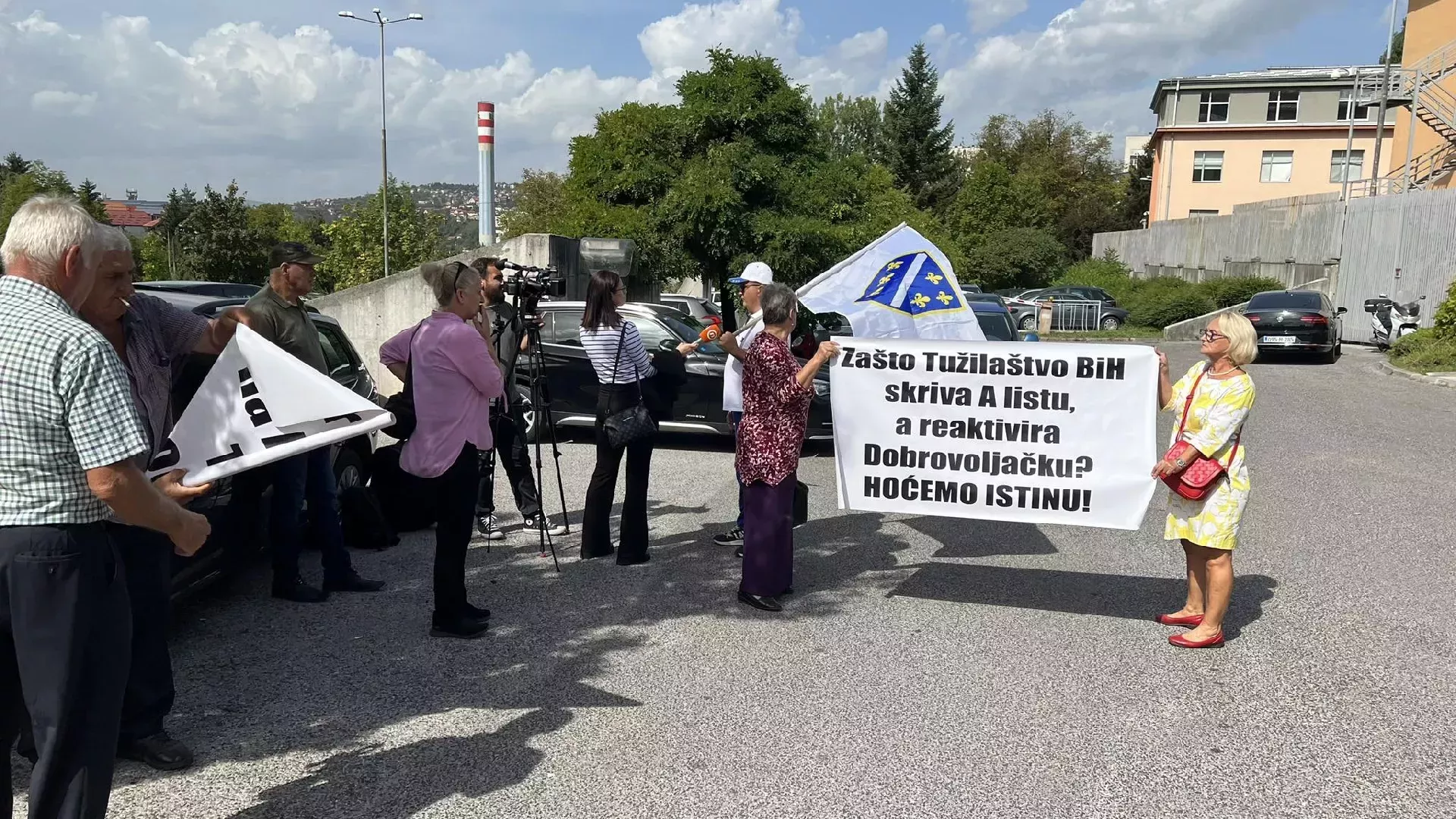
The practice of hearing witnesses via video link before the Court of BiH, which was explained as an exception based on necessity back in 2025, is increasingly becoming the rule today. And while defense teams warned back then that such a method of presenting evidence must be strictly justified and based on clearly established legal criteria, the latest developments in the "Dobrovoljačka" case further deepen suspicions that the video link institution is being used selectively, and even abused.
The case of witness Ljubinko Lukić exposes this completely. The Prosecution's explanation that he was an elderly person who moved with the help of a wheelchair was disproven as soon as the video link was established, when it was seen that the witness entered the courtroom in Belgrade without difficulty. This not only called into question the credibility of one explanation, but also the credibility of the system that accepts such explanations without verification.
The defense's reactions were expected; the demand for precise justifications, including medical documentation, to be provided in the future is nothing more than an insistence on minimum procedural guarantees. Because, if the video link is an exception, then it must be clear why it is being applied. Otherwise, it opens the door to suspicions. And the worst kind! Because no procedural economy should be prioritized over fairness.
But the problem goes much further than one witness.
A pattern is continuously emerging: witnesses coming from outside Bosnia and Herzegovina, especially from Serbia, are increasingly being heard remotely. Formally due to efficiency, economy, or personal circumstances. Essentially, without serious questioning of the reasons for their non-arrival in Sarajevo.
And that is precisely the key question that the judiciary persistently avoids: are certain witnesses avoiding coming to BiH due to fear of criminal prosecution?
Considering the fact that even three decades after the war, there is no indictment for the siege of Sarajevo, despite public testimonies, confessions, and abundant evidence of shelling and sniper fire, this practice takes on an even more worrying dimension.
The paradox is obvious: witnesses who could potentially be subjects of investigations for the most serious crimes, including the siege of the capital, appear before the Court of BiH as witnesses in other cases – those against the defenders of BiH, but from the safety of other countries. This effectively eliminates any possibility of their prosecution in Bosnia and Herzegovina, at least at that moment.
In other words, the judicial system allows them to speak, but not to answer.
In the "Dobrovoljačka" case, witnesses largely speak about the broader context of wartime events, including events directly related to the siege of Sarajevo. Some of them have previously spoken publicly about their own participation in military activities that could constitute criminal offenses.
In such a situation, the lack of reaction from the BiH Prosecutor's Office becomes as problematic as the video link practice itself.
Because, if the judiciary has information that points to possible war crimes and does not initiate proceedings, the question of selective justice arises. And selective justice is not justice, but its opposite.
And this is no longer just a procedural issue, but a deeply political and legal one. Where is this practice leading? Milanko Kajganić and Mladen Vukojičić certainly know, at least when it comes to the fabricated trial called Doborovoljačka.
If it leads to certain witnesses being protected from criminal responsibility, while at the same time proceedings are conducted against others, then we are talking about a serious breach of trust in the judiciary.
If it leads to the relativization of wartime events, through fragmented and selective presentation of evidence, then we are talking about the danger of revising the truth.
And if it leads to the Court of BiH, consciously or unconsciously, becoming a space where truth is filtered through technical possibilities and political realities, then it is high time to set clear boundaries.
Because justice, to be justice, must be neither remote, nor selective, nor conditional.
Komentari (0)
Prijavite se za komentiranje
PrijavaJos nema komentara. Budite prvi!
Minuta
Sve →Iz drugih kategorija

High Representative Not Elected: Germans, French and British Sabotaged Americans, New Attempt at End of June

ČOVIĆ WITHOUT MERCY: How Those Who Brought Ademović to Office Created a Political Hell for Him



Sunny Saturday, quite warm



Tragedy in Albanian resort: Two minors drown












