
By: A. Čorbo-Zećo
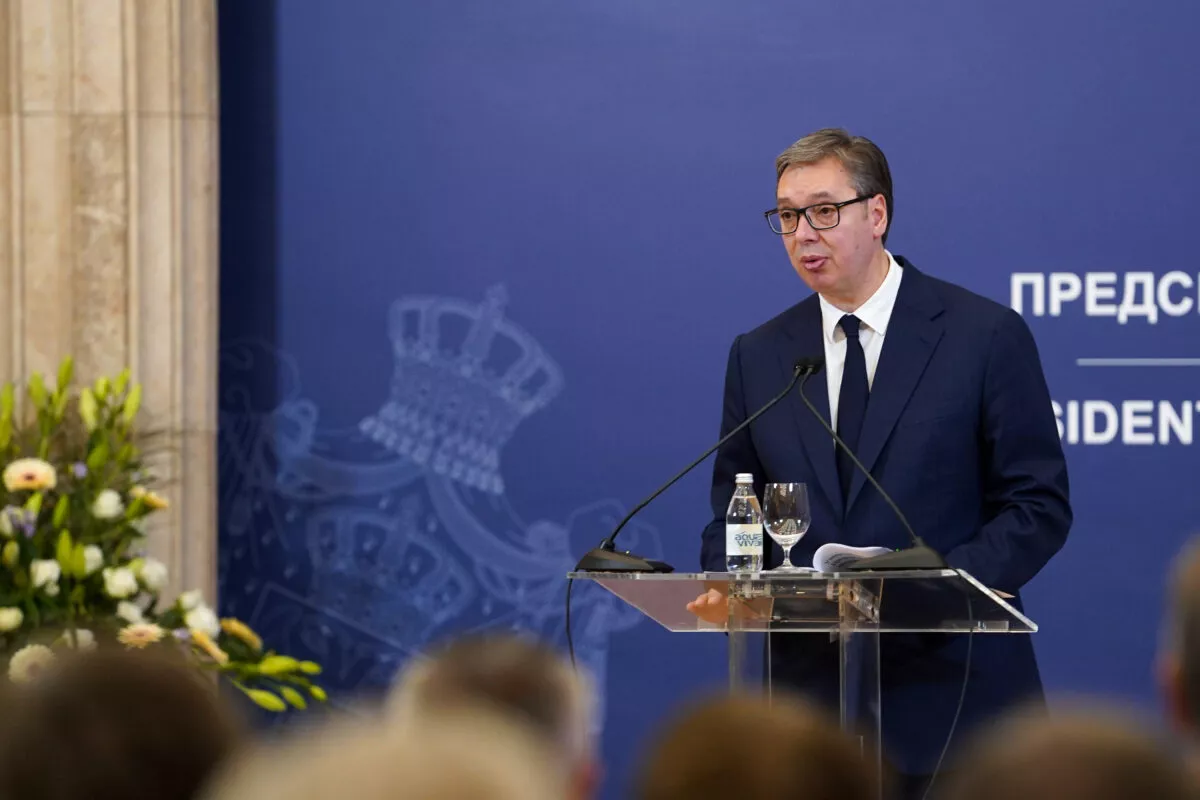
The statement by Serbian President Aleksandar Vučić that "the whole world is preparing for war" and that "they are digging trenches and waiting" once again highlights sensitive security risks in the region, especially for Bosnia and Herzegovina. Nearly 24 hours after this serious statement, there is almost complete silence in BiH.
The only reaction comes from Defence Minister Zukan Helez, who, more jokingly, commented on Vučić's words, alluding to the past war: "Maybe Vučić is dreaming again of shooting at civilians in Sarajevo from the Jewish Cemetery."
Helez nevertheless emphasised: "Be that as it may, Bosnia and Herzegovina will not allow anyone to threaten it with war, not even the President of Serbia. Statements that invoke a new conflict in the Balkans are not only dangerous, they are deeply irresponsible and recall the dark 1990s, when precisely such politics led to brutal aggression against BiH."
However, reactions from the competent institutions are absent. The Ministry of Foreign Affairs of BiH has not responded, and the chances that Elmedin Konaković will issue a diplomatic note or at least a public statement on the importance of regional stability seem minimal.
Let us recall the words of Željko Komšić that "he only receives security assessments when he asks for them," which calls into question the systematic monitoring and assessment of threats.
It would be more logical for BiH to have a regular reporting system monthly, quarterly, or as needed, because it is clear that peaceful is not the same as safe.
BiH also does not sufficiently use international channels – the EU, USA, NATO, and OSCE have mechanisms for monitoring security risks in the region, but active coordination with these partners is minimal.
The same applies to strengthening the internal resilience of institutions; security agencies and the Armed Forces of BiH should be better prepared, with transparent communication with citizens to prevent panic and destabilisation. Currently, this is lacking.
There are many unanswered questions while Vučić's words grate on the ears and bring back painful memories. The silence and lack of a public, active, and coordinated response allows Vučić and Milorad Dodik to take primacy in the public space, without an adequate response from BiH. If the situation were reversed, a national security commission would probably already be meeting in Belgrade today.
The conclusion is clear: BiH is not obliged to enter into confrontation, but passivity in such situations can be perceived as weakness.
An active diplomatic response, combined with internal strengthening of resilience and security mechanisms, is the only realistic way for the state to protect its peace and stability in this unstable region.
Komentari (0)
Prijavite se za komentiranje
PrijavaJos nema komentara. Budite prvi!
Minuta
Sve →Iz drugih kategorija

High Representative Not Elected: Germans, French and British Against Americans, New Attempt at End of June

ČOVIĆ WITHOUT MERCY: How Those Who Brought Ademović to Office Created a Political Hell for Him



Sunny Saturday, quite warm



Tragedy in Albanian resort: Two minors drown












