

Interviewed by: A. Čorbo-Zećo
Bijeljina was the prelude to the aggression against Bosnia and Herzegovina. I remember entering the city on April 3rd, begins his story journalist Sead Omeragić, who entered Bijeljina two or three days after Arkan's massacre on April 1, 1992.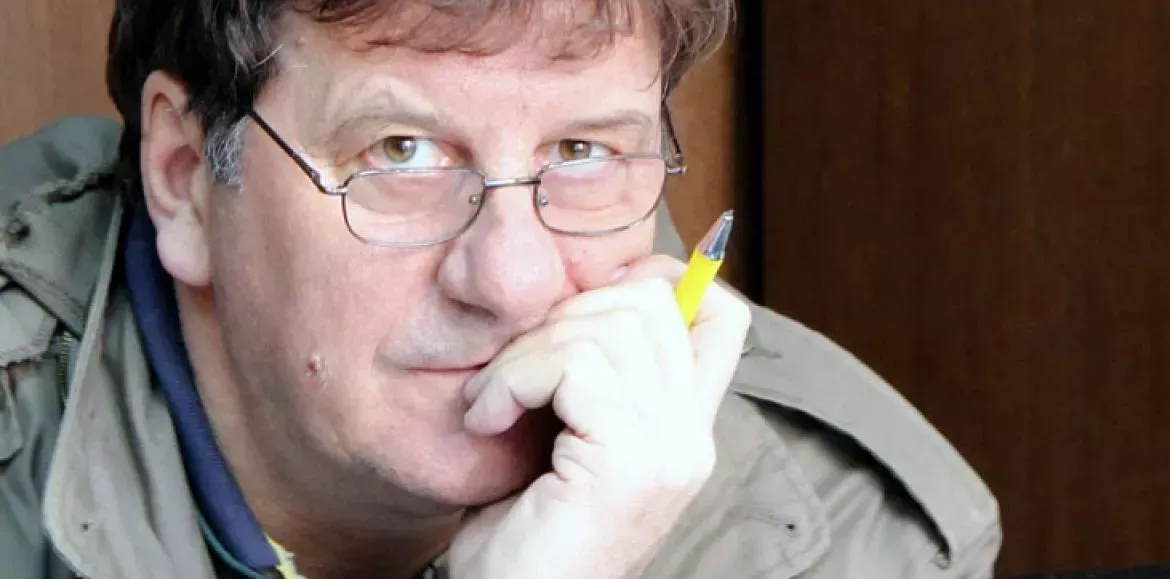 Sead Omeragić
A powerful explosion woke the residents of Bijeljina after midnight on March 31, 1992. Aleksandar Zekić threw a bomb into a café near the bus station, injuring six people. It was the announcement of war in this city and the terror that would follow in the coming days. The next day, April 1, 1992, Bijeljina was burning.
That day, the Tigers led by the criminal Željko Ražnatović Arkan occupied Bijeljina. Upon entering Bijeljina, Arkan took control of the city and ordered the systematic abuse and killing of the Muslim population.
Only around April 3rd, the Army of Republika Srpska removed the bodies of the massacred in anticipation of the arrival of a delegation from the Government of the Republic of Bosnia and Herzegovina tasked with investigating what had happened.
Journalist Omeragić also came with the delegation.
“I remember the flag on the city mosque, the news on the car radio as we entered Bijeljina that 24 'unknown' corpses had been found at the city landfill, armed men in JNA uniforms every five to six meters with gun barrels pointed at the column of cars.
Later in the city, a visit to the hospital and a walk through the streets. Everywhere fear and horror in the eyes of Bosniaks. A woman approaches me, a member of the liberal party, and quietly says she is ashamed of what her fellow Serbs did to their neighbors,” Omeragić tells Patria.
Several Bosniaks were wounded, in the hospital, Omeragić recalls, and there was no need to introduce themselves; it was visible from their horrified looks.
“Later I learn that armed Bosniaks Muslims had set up barricades due to the terror their neighbors were inflicting on them, and they had a total of 12 pistols and one old Tandžara rifle. I remember when an Arkanovac put the barrel of a Heckler to my forehead and tried to drag me out of the Municipal building. And the sergeant in JNA uniform who pulls me back and doesn't let them take me away. And I remember the most pathetic moment when General Marijan Praščević reports to Arkan.
Those visits by Biljana Plavšić and Fikret Abdić were just a circus, so that with the false hope created by the story of peace actions, the killing could continue more easily. I had enough of everything. The departures of that duo Abdić-Plavšić to Derventa, Bosanski Brod. Just supposedly agree to a ceasefire, it lasts ten minutes, and then shelling and shooting resumes more fiercely than before. I remember my argument in Tuzla with Plavšić and Mile Dubajić, commander of the JNA garrison. That argument of mine broke up the assembly. Then with Fikret Abdić on the way back to Sarajevo. I deliberately insulted him to try to awaken in him an awareness of the tragedy awaiting the Bosniak people.
'You had 23 thousand rifles in Agrokomerc, take them and arm the people.' 'No,' he says, 'some officers came and took everything away.' I tell him angrily: 'Go to Cazinska Krajina, go to Krupa and raise the people to revolt, war and slaughter of your people are coming.' He tells me: 'There will be no war.' And I insultingly retort: 'Then go count eggs in Agrokomerc, you're good for nothing else.'
Both he and I knew there were listening devices in the car and that somewhere in that column someone was listening to our conversation. But I had to speak, and the anger did not leave me. Just as many are angry today at the nonchalance of this government. Bijeljina marked the beginning of the most brutal criminal aggression against the state of Bosnia and Herzegovina. The crimes were preceded by the cheapest and most primitive lies. Sometimes I think that after that horrific slaughter, we learned nothing. Even today, lies multiply and multiply,” adds Omeragić.
Komentari (0)
Prijavite se za komentiranje
PrijavaJos nema komentara. Budite prvi!
Minuta
Sve →Iz drugih kategorija

High Representative Not Elected: Germans, French and British Sabotaged Americans, New Attempt at End of June

ČOVIĆ WITHOUT MERCY: How Those Who Brought Ademović to Office Created a Political Hell for Him



Sunny Saturday, quite warm



Tragedy in Albanian resort: Two minors drown












