
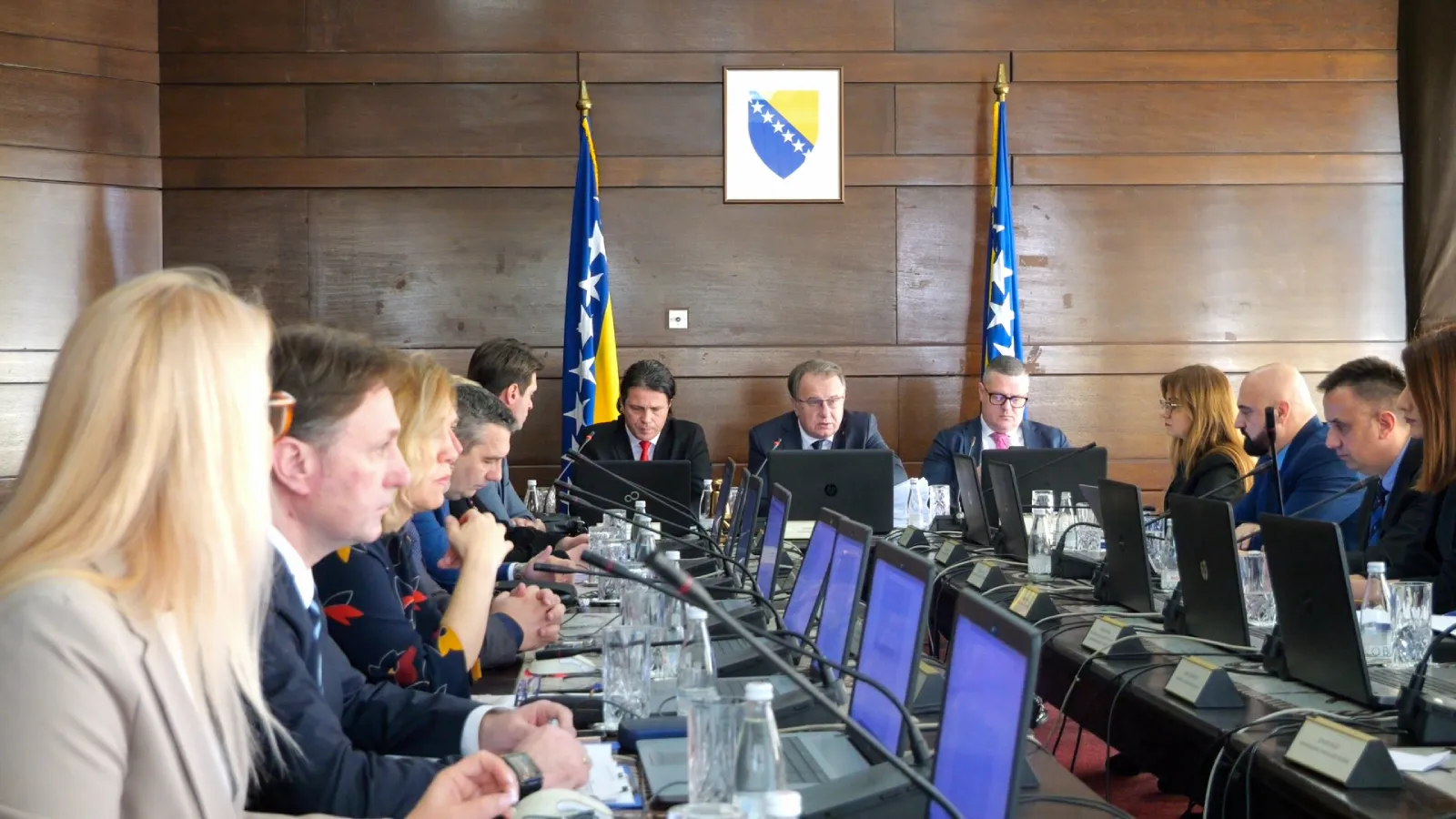
Besides corruption scandals, the Government of the Federation of Bosnia and Herzegovina, led by Nermin Nikšić (also an actor in the 'spengavanje' affair), will also be remembered for a series of restrictive economic moves, from the abolition of the working Sunday to interventions that increasingly encroach on the market.
At the same time, we are witnessing the collapse of key industrial systems, from problems in heavy industry like Koksara in Lukavac and Zenica Ironworks, to a wider effect that is inevitably spilling over to the Railways of the Federation of Bosnia and Herzegovina. This is a classic 'system of connected vessels' in which a disruption in one sector destabilizes others in a chain reaction. The 'experts' have even managed to bring the defense industry to the brink of collapse!
It is precisely in such an environment that the new measure of limiting the price of bread comes into play. While seemingly socially sensitive at first glance, it essentially represents another example of ad hoc economic interventions that do not address the root cause of the problem.
Because, if the production costs of energy, raw materials, and labor are higher than the administratively prescribed price, producers are forced to operate at the break-even point or at a loss. The consequences are already known: a drop in quality, a reduction in weight, or withdrawal of products from the market.
In other words, the measure does not solve the problem; it only temporarily freezes it.
Furthermore, the actual effects on citizens' standards of living will be limited and short-lived. Without broader fiscal and energy policies, such decisions remain cosmetic.
Let us also recall that there is no political consensus at the state level to abolish excise duties on fuel, a measure that would have a direct and wider impact on both citizens and the economy. In such a scenario, the pressure on the prices of basic products would be naturally eased, without the need for administrative restrictions.
Experience with previous margin limitations also shows that such measures do not yield significant results. Nevertheless, despite this, the Government continues with the same practice. As our people would say, 'waving at a blind man is useless'.
Instead of systemic solutions, we are witnessing a repetition of moves whose consequences usually become visible only later, when the damage has already been done.
This new damage will evidently have to be resolved by some new government, if we manage to somehow survive until then.
Komentari (0)
Prijavite se za komentiranje
PrijavaJos nema komentara. Budite prvi!
Minuta
Sve →Iz drugih kategorija

High Representative Not Elected: Germans, French and British Against Americans, New Attempt at End of June

ČOVIĆ WITHOUT MERCY: How Those Who Brought Ademović to Office Created a Political Hell for Him



Sunny Saturday, quite warm



Tragedy in Albanian resort: Two minors drown












