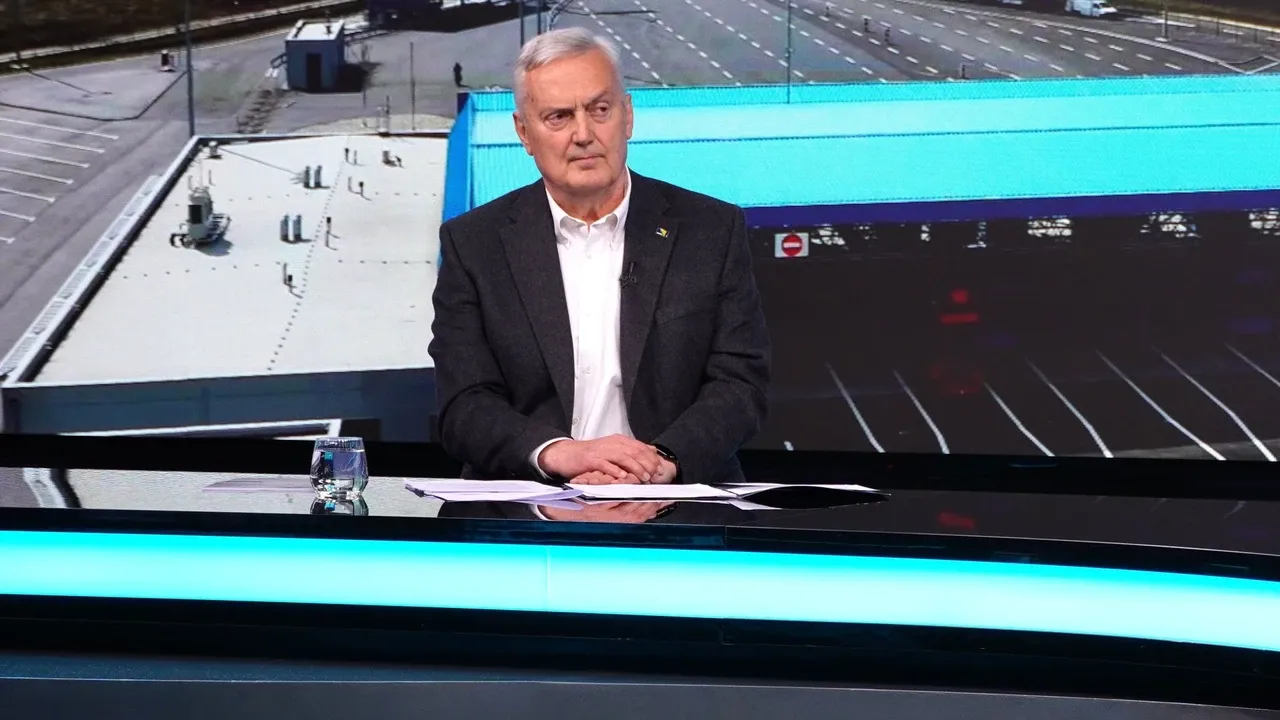
Zlatko Lagumdžija's guest appearance on Hayat TV, the BiH Ambassador to the UN, resembled the start of a political campaign for Denis Bećirović more than an analysis of foreign policy issues in Bosnia and Herzegovina. At the same time, between the lines, another message could be clearly read, one directed within the Social Democratic Party of Bosnia and Herzegovina, where a silent battle is already underway for the "post-Nikšić era" and control over the future party infrastructure.
Although he formally spoke about the Gradiška Border Crossing, state property, the role of the OHR, Christian Schmidt's departure, and relations in the region, Lagumdžija returned almost every topic to Denis Bećirović, building an image of a politician who, according to that interpretation, is the only serious statesmanlike authority within the pro-Bosnian bloc. This was not accidental.
Lagumdžija needs Denis Bećirović's victory in the October elections, as he is clearly aware that Bećirović's potential political fall would not only mean the weakening of one political figure but also the end of his direct influence on political processes in the country.
Therefore, the entire appearance seemed like an attempt to politically brand Bećirović as the central figure of the future policy of the SDP and the broader pro-Bosnian political space. In other words, the whole world revolves around the most famous letter writer.
At the same time, Lagumdžija acts from the position of a man who claims not to be returning to active party politics, but who clearly has no intention of truly leaving it. He will admit this himself, saying that he will be involved in politics forever. He talks about generational change and "the young people coming," while simultaneously, a serious battle is being waged within the SDP over whose youth and cadre structure will take over the party when Nermin Nikšić's political power finally stops.
Lagumdžija will say that Nikšić is retiring, even though, for comparison, he is five years older than him. That is why the talk of a generational shift sounds a bit hypocritical. Because the essential question is not who is retiring from politics, but who remains to manage processes from the shadows.
And it is precisely Lagumdžija who has shown that he still sees himself as the key political architect of the SDP, regardless of his age or formal position. Or, regardless of his feigned surprise at the host's questions about whether he was returning to lead the SDP!?
That is why Denis Bećirović's victory in the October elections might be more important to him than to Bećirović himself.
His stories about how he used to resolve disputes with Croatia, how he reacted as Chairman of the Council of Ministers, or how the international community perceived BiH differently back then were not just reminiscences of the past.
It was a demonstration of political superiority over the current leadership of the "Trojka," whom he clearly considers administratively weak and politically immature.
Precisely because of this, this guest appearance was not just a diplomatic commentary on current crises. It was simultaneously a campaign presentation of Denis Bećirović and an internal message to the SDP that the political battle for the party's legacy is just beginning.
Komentari (0)
Prijavite se za komentiranje
PrijavaJos nema komentara. Budite prvi!
Minuta
Sve →Iz drugih kategorija

High Representative Not Elected: Germans, French and British Against Americans, New Attempt at End of June

ČOVIĆ WITHOUT MERCY: How Those Who Brought Ademović to Office Created a Political Hell for Him



Sunny Saturday, quite warm



Tragedy in Albanian resort: Two minors drown












