
By: A. Čorbo-Zećo
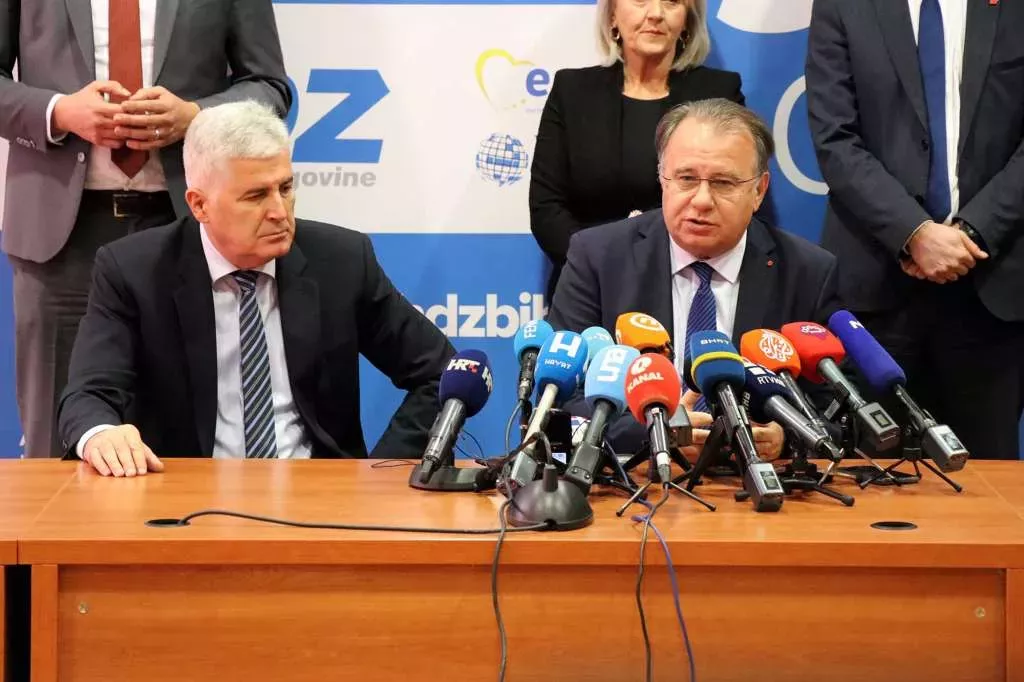
The Prime Minister of the Federation of BiH, Nermin Nikšić, has announced a visit to Zagreb, where he will meet with the Prime Minister of Croatia, Andrej Plenković. The topic of the meeting is most likely the construction of the South Gas Interconnection, a project of strategic importance for the energy sector of BiH.
Although it is an infrastructural topic, Nikšić's initiative itself raises serious questions about respecting constitutional competencies and foreign policy procedures.
The Constitution of Bosnia and Herzegovina clearly stipulates that the foreign policy is conducted by the Presidency of BiH, not by entity prime ministers. Denis Bećirović, who is an SDP cadre and a member of the BiH Presidency, has not commented on this, nor is it known that he has lodged a complaint with Nikšić. Slaven Kovačević, an advisor to Željko Komšić, publicly did so, reminding of the constitutional competencies.
Any decision or agreement with international partners without the consent of the Presidency can be considered an informal initiative, but certainly not a state position.
This is precisely where the problem of Nikšić's visit lies; while he can discuss projects and exchange information, he formally has no right to bind BiH or negotiate on behalf of the state. Such an approach creates political confusion and ambiguity in international relations, as investors and partners from abroad may get the wrong impression that the entity level decides on strategic projects, while constitutionally authorized bodies such as the Presidency of BiH remain on the sidelines.
Similar criticisms were directed at Dragan Čović, president of HDZ BiH and delegate in the House of Peoples of the BiH Parliament, due to frequent visits to political Zagreb. So, what is the difference in Nikšić's behavior, who unilaterally crosses the border of constitutional competence.
Unilateral negotiations by entity prime ministers undermine the constitutional order of BiH and create a problematic precedent. It is unacceptable for Nikšić to agree on projects with Plenković in which the Presidency of BiH does not participate.
The legal framework and diplomatic practice require that such initiatives be coordinated with the Presidency and the Council of Ministers, so that BiH has a clear, unified, and legitimate position before international partners.
Komentari (0)
Prijavite se za komentiranje
PrijavaJos nema komentara. Budite prvi!
Minuta
Sve →Iz drugih kategorija

High Representative Not Elected: Germans, French and British Against Americans, New Attempt at End of June

ČOVIĆ WITHOUT MERCY: How Those Who Brought Ademović to Office Created a Political Hell for Him



Sunny Saturday, quite warm



Tragedy in Albanian resort: Two minors drown












