
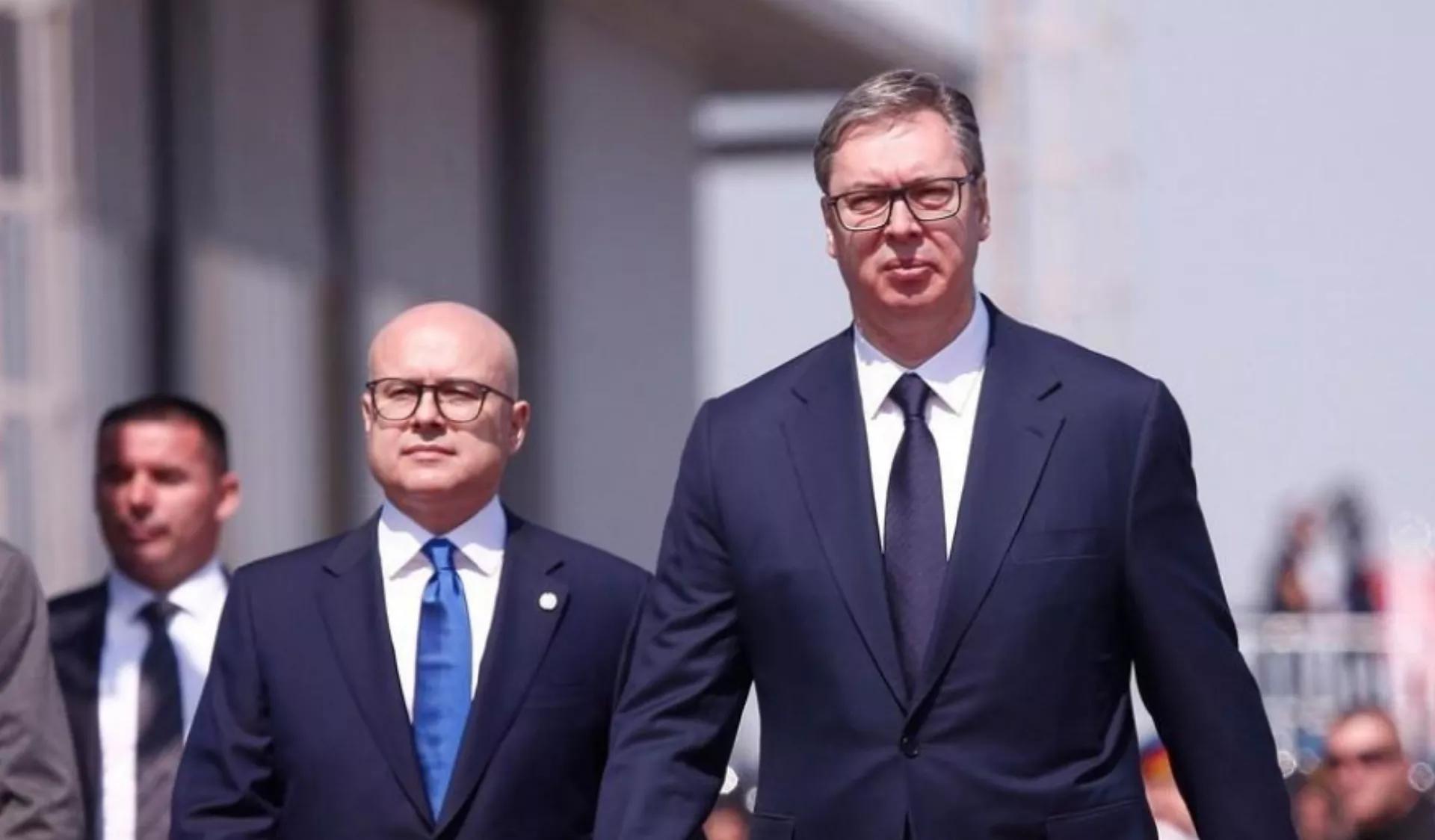
(Patria) - Serbian President Aleksandar Vučić "sacrificed" his prime minister in an attempt to calm protests that have swept cities across Serbia, posing a major challenge to his decade-long rule, writes The New York Times (NYT).
Prime Minister Miloš Vučević, a close ally of President Vučić and nominal leader of the Serbian Progressive Party, said he was resigning so as "not to further raise tensions in society" - just hours after Vučić demanded an "urgent and comprehensive government reshuffle."
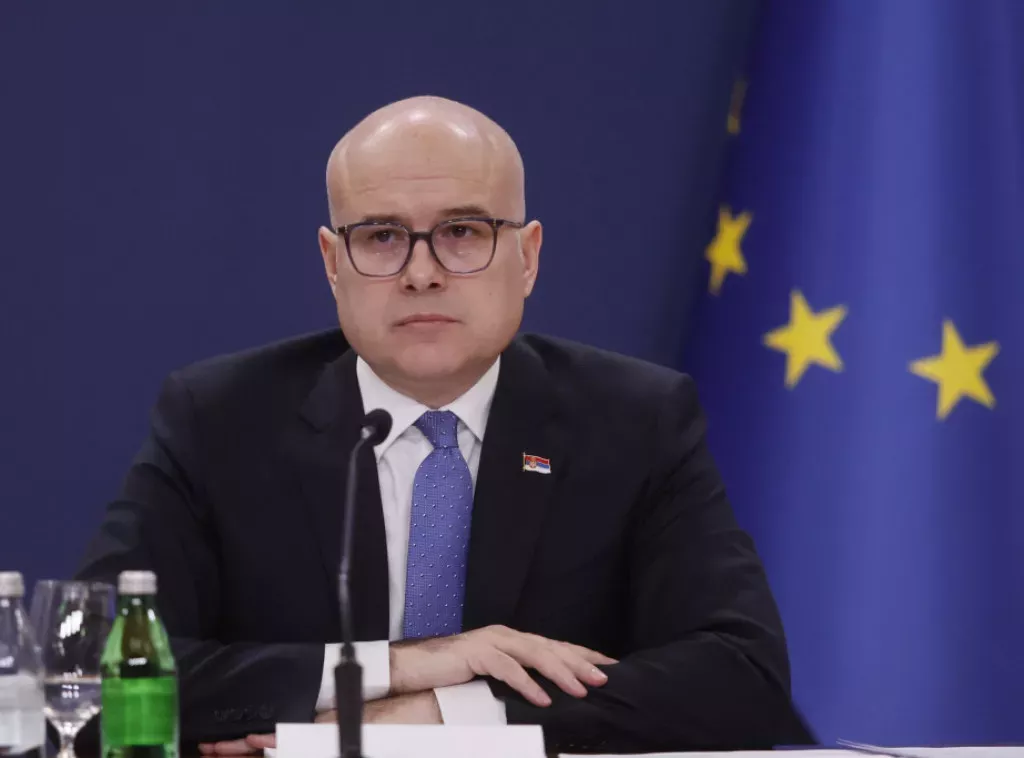
Skilled at maneuvering within deeply polarized Serbian politics, as well as between Russia and the West, Vučić has a long history of casting aside his allies, at least temporarily, and throwing opposition parties off balance. Opponents have struggled to challenge him at the ballot box but have joined protests led by students, the NYT reports.
It is unclear whether the prime minister's departure will calm or perhaps even escalate the protests across the country, which have been fueled by public anger over the deaths of 15 people in a November accident at the Novi Sad railway station.
Students, who have been blocking faculties for weeks, gathered on Tuesday in front of the ruling party's headquarters in Novi Sad, where unidentified supporters beat several students. The wall of the party premises was covered with graffiti reading "Murderers" and "Thieves." Activists opposed to the government continued protests in Niš as well.
On Monday, Vučić promised to fulfill one of the students' main demands - the publication of contracts and other documents related to the reconstruction of the Novi Sad railway station, carried out by a Chinese company and its subcontractors.
Most of the students' initial demands have been met, including the prosecution of those responsible for the disaster and the dismissal of ministers who oversaw the reconstruction project, including the minister of transport and infrastructure, as well as the minister of trade, the NYT writes.
However, as the protests gained momentum, opposition politicians began demanding that Vučić form a "transitional government."
- Vučić is trying to buy time, expecting the protests to subside - said Dragomir Anđelković, a political analyst who supports the students. The protests will continue, he added, because the prime minister's resignation is "just an attempt at a new deception," the NYT reports.
The presidency of Serbia was once a largely ceremonial position, but since Vučić took office as president after the 2017 elections, following a term as prime minister, it has become the dominant center of power in Serbia and the focus of opposition anger.
The political crisis in Serbia, in which President Donald Trump's son-in-law, Jared Kushner, worked on a deal for a luxury Trump hotel in downtown Belgrade, poses a dilemma for the new U.S. administration.
Under President Biden, the United States tried to court Vučić, attempting to separate him from Serbia's traditionally close partnership with Russia, and opposition politicians criticized them for being too lenient with the Serbian president.
The Biden administration's policy yielded some results, including the secret sale of nearly a billion dollars' worth of Serbian ammunition and weapons, to be used by Ukraine against Russian forces, as well as Serbia's support for UN resolutions condemning the Russian invasion, the NYT notes.
However, Serbia has firmly resisted pressure to join Western sanctions against Russia and has adopted Russian stances in response to the protests, with Vučić claiming the protests are an attempt to stage a "color revolution" led by "agents" from the West. Last week, Serbia deported five activists from Croatia, whom it accused of helping Serbian groups involved in the protests.
Serbia applied for EU membership in 2009, but its orientation toward Russia, doubts about its commitment to democracy, and other issues have slowed its accession. Some analysts and diplomats say Russia is encouraging the protests to pressure Vučić into abandoning his "periodic courtship of the West." Serbian war veterans joined a recent protest waving Russian flags, the newspaper writes.
In recent years, there have been several protests in Serbia against Vučić, but the current ones have gained support. Among those who have expressed support or at least sympathy for the demonstrators are the union of employees of the state public broadcaster RTS and Serbian tennis player Novak Đoković, whose family has in the past been vocal in supporting President Vučić, the NYT reports.
Previous protests - against Covid restrictions, democratic backsliding, violence, and a large lithium mine - were mostly confined to Belgrade and eventually fizzled out. However, the canopy collapse in Novi Sad and allegations of corruption in construction contracts sparked anger far beyond the capital, becoming a catalyst for broader discontent against authoritarian officials, widespread corruption, and a media space dominated by pro-government tabloids and highly biased state television.
Protests in Belgrade, Novi Sad, and other cities have drawn tens of thousands of people, paralyzing traffic. The size and persistence of the demonstrations are compared to the unrest of the late 1990s that toppled Slobodan Milošević in 2000, the authoritarian leader of Serbia who pushed his country into a series of disastrous wars against its neighbors, concludes The New York Times.
Komentari (0)
Prijavite se za komentiranje
PrijavaJos nema komentara. Budite prvi!
Minuta
Sve →Iz drugih kategorija

High Representative Not Elected: Germans, French and British Sabotaged Americans, New Attempt at End of June

ČOVIĆ WITHOUT MERCY: How Those Who Brought Ademović to Office Created a Political Hell for Him



Sunny Saturday, quite warm



Tragedy in Albanian resort: Two minors drown












