
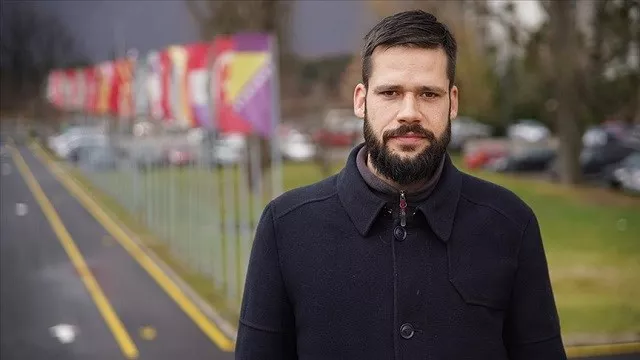
Written by: Jahja Muhasilović
In 2024, the Middle East was a center of significant conflicts and geopolitical turmoil. Israel continues brutal military operations in Gaza, launched on October 7, 2023, as a result of which more than 45,000 Palestinians, including 17,000 children, have lost their lives.
In November 2024, the International Criminal Court issued an arrest warrant for Israeli Prime Minister Benjamin Netanyahu for war crimes. These actions led to the expansion of the conflict, and Iran retaliated by launching dozens of drones and missiles toward Israel in response to attacks on its consulate in Damascus. Israel retaliated by striking key Iranian military targets, and the conflict spread to southern Lebanon, where Hezbollah forces were located, providing support to the Palestinians.
The past year was also marked by the killings of key figures in the Palestinian and Lebanese resistance against Israeli aggression.
The killing of Hassan Nasrallah in Beirut, the capital of Lebanon, as well as the elimination of Ismail Haniyeh, leader of the political wing of Hamas, in Tehran in the middle of the year, brought tensions between these two countries to the brink of direct conflict.
After Iran responded by firing hundreds of missiles at Israeli territory for the first time since relations between them soured, Israel also retaliated with attacks on key targets inside Iran.
Key changes occurred in Syria; at the end of November 2024, Syrian rebel forces, led by the group Hayat Tahrir al-Sham, took control of the capital Damascus, marking the end of the decades-long regime of Bashar al-Assad, who withdrew to Russia.
Israel used this situation to intensify its military activities, targeting the remaining forces of the former government. Operations against pro-Kurdish SDF forces in the east of the country, in which Turkey has also actively become involved, continue.
In the conflict between Russia and Ukraine, information flows about the progress of each side have often changed, creating a contradictory picture of the situation on the ground. Although the world's most significant powers provided extensive financial and military support to Ukraine, including modern weapons, missiles, advanced systems, fighter jets, and drones, Ukrainian forces failed to push Russia out of the occupied territories, as Russia increasingly seizes Ukrainian territory.
The idea of the beginning of negotiations between the two sides was present throughout the year. With each serious Russian territorial gain, that narrative would intensify further.
On the European front, the Russian-Ukrainian war remains complex, with ongoing conflicts shaping the fate of many countries. Although the most powerful states have provided military and financial aid to Ukraine, the situation on the battlefield remains uncertain, and the war in these challenging times only further complicates global relations.
Also, the 60th U.S. presidential election ended with a second victory for Donald Trump, who won a decisive victory over Democratic candidate Kamala Harris, which on the other hand increases fear among small nations and countries, given Trump's anti-liberal rhetoric that does not shy away from seriously threatening the international order as we know it.
We must not forget the significance of the exponential development of AI technology, which plays an increasing role in everyday life through analytics, scientific research, geopolitics, and art. This technology not only shapes our daily activities but also changes the way we understand and respond to global events. It can certainly be assumed that its development will continue to shape the world in 2025.
Climate change remains a serious challenge, as a global consensus on measures to combat it is lacking, which hinders joint efforts in this field. Overall, geopolitical tensions and the dismantling of the international order crafted shortly after World War II have also negatively impacted the capacity for agreements on issues concerning the entire planet.
The Western Balkans remained geopolitically interesting in 2024 as well. Signs of a weakening of the American order are somewhat noticeable in the region. Ideas about strengthening Serbia and Croatia at the expense of Bosnia and Herzegovina, Montenegro, and Kosovo have proven unsustainable, especially at a time when alternative geopolitical players like Russia, Turkey, and China, which have a different vision from Pax Americana, are gradually strengthening their influence.
All of this is facilitated by clumsy American diplomacy in the region, which has already created much dissatisfaction.
The future of the Balkans largely depends on developments on the Ukrainian front; a possible Russian victory could strengthen right-wing movements across Europe, which would further destabilize this region and increase the risk of it becoming a new crisis hotspot.
Komentari (0)
Prijavite se za komentiranje
PrijavaJos nema komentara. Budite prvi!
Minuta
Sve →Iz drugih kategorija

High Representative Not Elected: Germans, French and British Against Americans, New Attempt at End of June

ČOVIĆ WITHOUT MERCY: How Those Who Brought Ademović to Office Created a Political Hell for Him



Sunny Saturday, quite warm



Tragedy in Albanian resort: Two minors drown












