
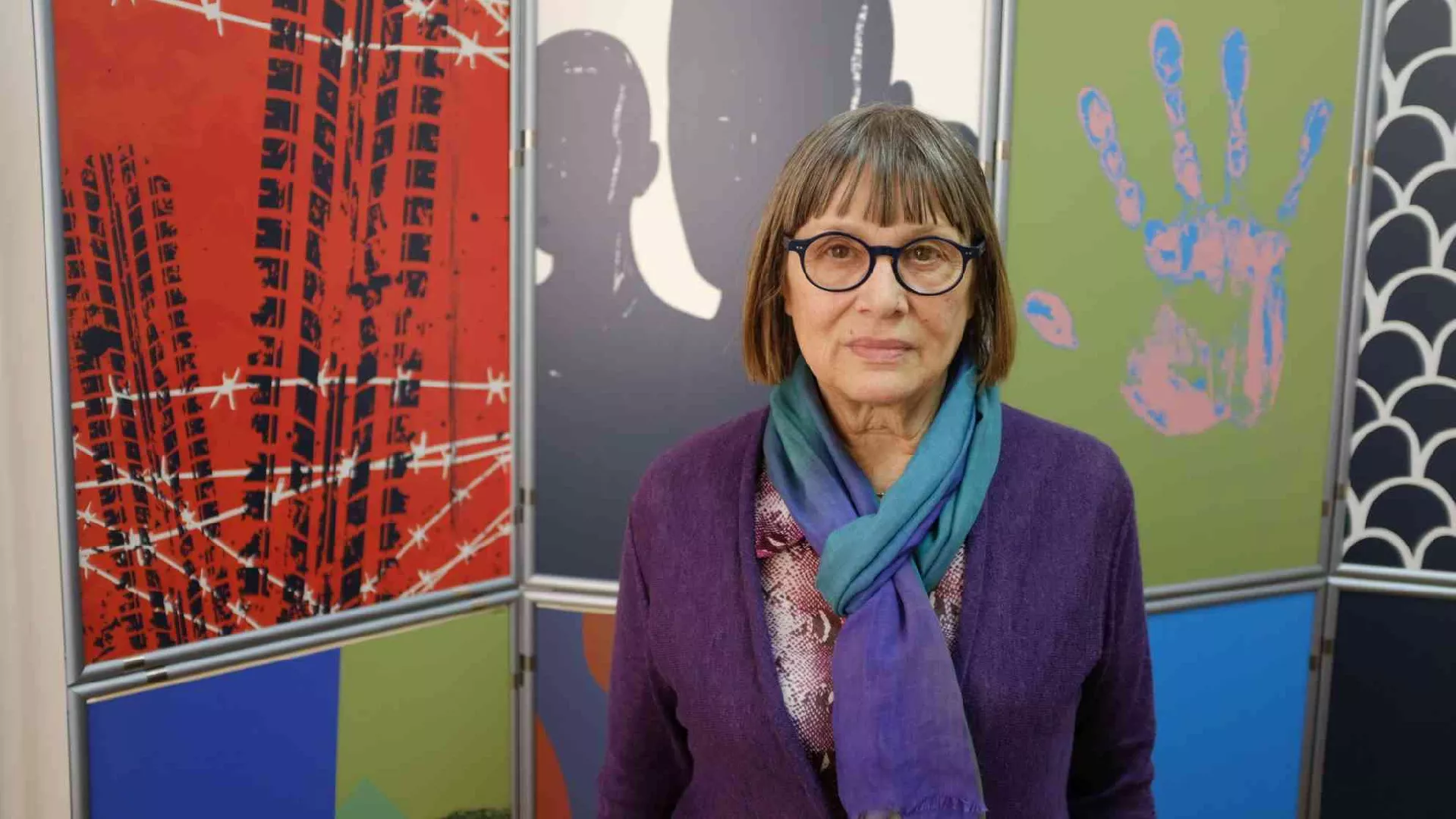
BELGRADE, (Patria) - Two American congressmen, Roger Wicker and Eliot Engel, nominated Nataša Kandić and the Humanitarian Law Fund for the 2018 Nobel Peace Prize last week.
Nataša Kandić founded the Humanitarian Law Fund in Belgrade in 1992 to document severe human rights violations committed during the conflicts of the breakup of former Yugoslavia.
- More than 25 years later, the Humanitarian Law Fund continues to fight for justice for victims of war crimes and to oppose the extreme nationalism and ethnic tensions that still smolder in the Western Balkans - stated the Helsinki Commission's press release.
The justification for the nomination stated, among other things, that the HLF's detailed documentation of these crimes has been crucial for delivering justice, both at the International Criminal Tribunal for the former Yugoslavia, which concluded its work at the end of 2017, and in national war crimes courts in the region's countries.
- The main perpetrators of crimes, including political and military leaders, have been held accountable at the international level for the first time since World War II. Survivors and traumatized communities where they lived have been given a chance to rebuild their lives. The countries of the region have been encouraged to adhere to the rule of law and accept the legacy of a terrible past - the Helsinki Commission's press release emphasizes.
The congressmen stated that the Fund continued its work "in an environment hostile to human rights defenders," and that in Serbia, "too many people try to deny horrific crimes or justify them by demonizing the victims."
- An even larger number remained silent while ethnic cleansing proceeded unimpeded. In contrast, with Nataša Kandić at its head, the HLF spoke out publicly against acts of aggression, reported on committed crimes, and rejected the hatred on which they were based. While this is impossible to measure, we are convinced that the Fund's efforts have deterred some additional human rights violations - the nominators emphasize.
The congressmen stated that Nataša Kandić is today an inspiration to a new generation of "dedicated young professionals leading the HLF," and that "there is no person or organization more deserving of the Nobel Peace Prize" and that the award going to them would contribute to peace and reconciliation in the region, as well as in other parts of the world.
However, the reputation Nataša Kandić enjoys in the world is a disgrace and a betrayal of national interests for today's Serbia, which Aleksandar Vučić wants to present as a regional leader in the reconciliation process.
Tabloids and the most widely read daily newspapers in Serbia, such as Informer, which serves as an unofficial bulletin for Vučić and his SNS, have ridiculed the initiative to nominate Nataša Kandić for the Nobel Prize.
Vojislav Šešelj, a Hague indictee, with whom Vučić is, at least formally, in conflict, has been given enormous space in Vučić's media to vent his hatred towards Nataša Kandić. Šešelj went so far as to say that he would give Nataša the Nobel Prize, but posthumously.
- I would most gladly reward Nataša Kandić with a stake of hawthorn. I would personally undertake to cut, process, sharpen, and impale Nataša Kandić on it. I would like, while this process is ongoing, for Đilas to sing her favorite Ustasha song 'Oh my Belgrade friend' with his sweet voice - Šešelj wrote.
After the civil and decent part of Serbia reacted fiercely to Šešelj's hate speech, he responded with a new statement, which is as vile as the first.
- All the worst Belgrade scum and riff-raff got extremely agitated because of my proposal that Nataša Kandić be awarded a hawthorn stake instead of the Nobel Prize. There will be work to do. Candidates are coming forward on their own. It is not true that I am threatening Nataša Kandić with death. She would be alive on the stake. She would even experience serial orgasms - Šešelj states.
A civilized and orderly civil society would be honored by the nomination of any of its citizens for the Nobel Peace Prize. Serbia today is clearly far from such a society. Or at least its majority part.
This amount of hatred towards Nataša Kandić, a woman who, in the worst moments, had enough civic courage and human morality to try to preserve the image of a nation and a state, shows that Serbia has not moved too far from the darkness of the war-torn nineties.
No matter how much Vučić tries to convince us otherwise.
Komentari (0)
Prijavite se za komentiranje
PrijavaJos nema komentara. Budite prvi!
Minuta
Sve →Iz drugih kategorija

High Representative Not Elected: Germans, French and British Sabotaged Americans, New Attempt at End of June

ČOVIĆ WITHOUT MERCY: How Those Who Brought Ademović to Office Created a Political Hell for Him



Sunny Saturday, quite warm



Tragedy in Albanian resort: Two minors drown












