
By: Amina Čorbo-Zećo
After more than two decades of silence and ignoring an obvious legal anomaly, the Prosecutor's Office of Bosnia and Herzegovina has finally publicly reacted to the case of the Dretelj terminal near Čapljina. In the statement of the Deputy Prosecutor of BiH, Almina Pilav, it is clearly stated that the property of the state of Bosnia and Herzegovina, specifically the land and facilities in Dretelj, was illegally re-registered without the consent of the legal owner – the state of Bosnia and Herzegovina.
However, while the Prosecutor's Office's words are strong and legally founded today, one key question remains - what was waited for until now? Why is this reaction coming only now, when the situation is almost irreversible and when the property has been used illegally for years?
Documents in the possession of the Government of the Federation of BiH (which Patria had access to) unequivocally show that the illegal real estate transaction of the Dretelj terminal has been known to institutions since 2005. As early as then, the Government of the Federation of BiH, by decisions from December 2005 and September 2006, assigned the management of this property to the Federal Ministry of Defense, and then to Terminali Federacije d.o.o. Sarajevo.
Despite these decisions, institutions never actually took possession of the terminal. Instead, the property was traded between legal entities, eventually ending up as collateral for a loan of the private company "Croherc AG" from the then Hercegovačka banka, and today it is registered as the property of this bank in bankruptcy.
Therefore, the state knew, documented, decided, but never acted.
The Prosecutor's Office now rightly warns that the state of BiH is the legal successor of the Republic of BiH and the former SFRY, and that it claims military and state property, including terminals. They state that the re-registration was carried out without the consent of the owner - the state of BiH, and thus there was no legal basis for changes in the ownership lists.
But, if all this is known and provable, why is the Prosecutor's Office only speaking out now?
Why were lawsuits not filed earlier? Why did the state not seek the return of the property when it had all the decisions, evidence, and institutional instruments at its disposal? It is obvious that the Dretelj terminal was traded in narrow political circles, regardless of the colors of the jerseys of the actors who ruled at the given moment.
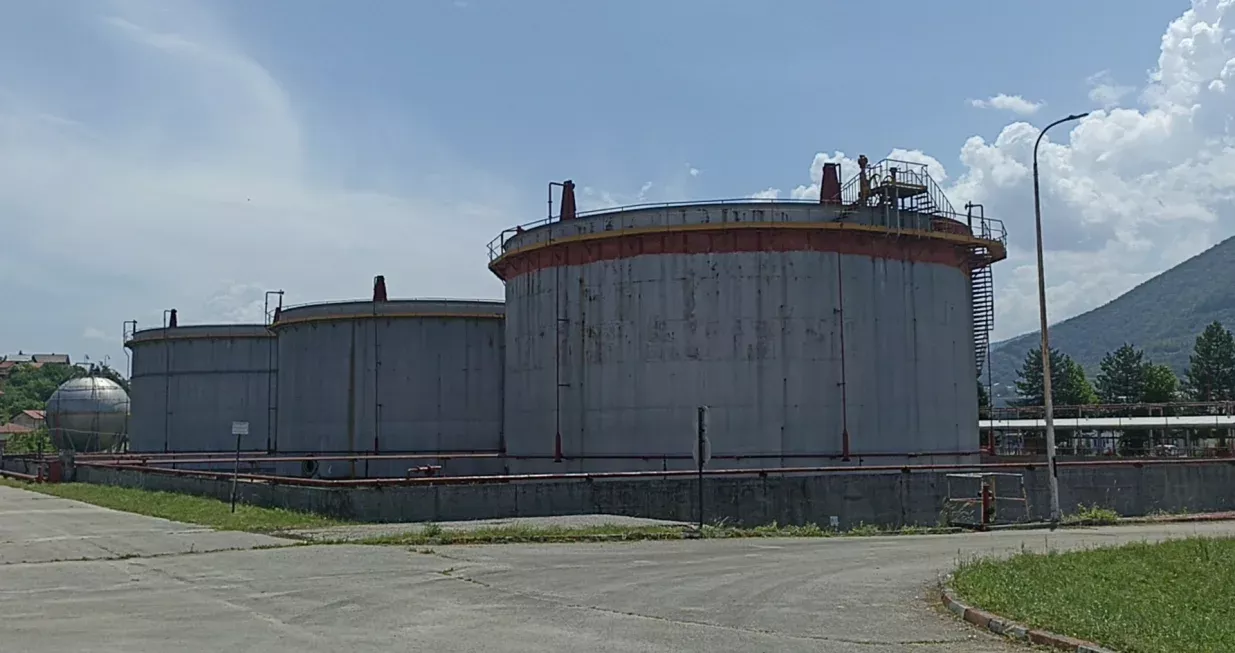
The Dretelj terminal today is a ruined warehouse with dilapidated underground tanks. Technically, according to the management of Terminali Federacije, they are practically unusable. Their reconstruction would be expensive, complex, and probably unprofitable. However, the property is valuable, not only in the context of fuel storage but also as a strategic political resource. Much more valuable than the price mentioned in the call for sale.
Therefore, it is not surprising that there was silence for years. Probably because it was "inconvenient" to raise the issue of ownership in a region where it was often easier for institutions to close their eyes than to open legal battles that touched upon sensitive inter-ethnic relations.
The Dretelj case is not an exception, it is the rule. The state of BiH has been late in protecting its property for years, and only when all other options have been exhausted and the damage has already been done do institutions come out with warnings and statements.
If this property had been protected earlier, BiH might have had a functional fuel storage facility today, which is strategically important in the context of energy security. Instead, we have legal chaos, dilapidated infrastructure, and another story of institutional inertia.
And therefore, the question that is rightly being asked today is who will be held responsible for the state's property being at the disposal of private individuals for 20 years?
And can this case finally be used as a precedent so that the protection of state property is not guided by a political compass but by laws?
Because a state governed by the rule of law must not react only when it is already too late! Or when foreigners ask it to! A state governed by the rule of law either functions or collapses. If we compare the condition of the Dretelj Terminal and other state property at the mercy of political bargains, the picture of the state's collapse will become clearer.
Komentari (0)
Prijavite se za komentiranje
PrijavaJos nema komentara. Budite prvi!
Minuta
Sve →Iz drugih kategorija

High Representative Not Elected: Germans, French and British Sabotaged Americans, New Attempt at End of June

ČOVIĆ WITHOUT MERCY: How Those Who Brought Ademović to Office Created a Political Hell for Him



Sunny Saturday, quite warm



Tragedy in Albanian resort: Two minors drown












