
By: Rasim Belko
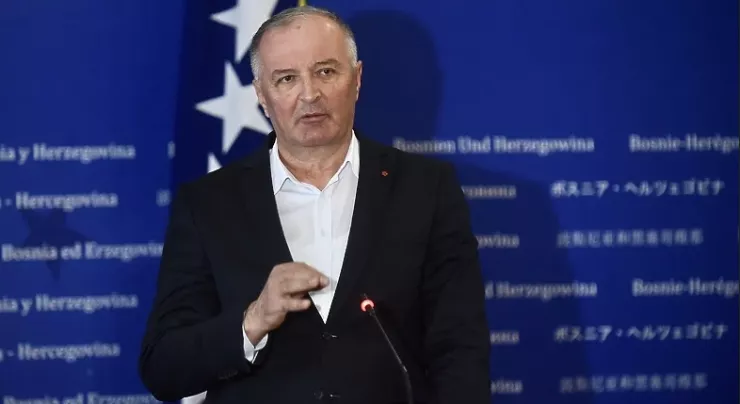
A poorly conceived and incomplete order from the Minister of Defense of Bosnia and Herzegovina, Zukan Helez, has led to a serious disruption of military order — for the first time since the defense sector has been unified at the state level.
Experts familiar with the functioning of the BiH defense system told Patria that Helez's order should have clearly defined the bearers of the order's implementation and the responsible persons for drafting the implementation plan.
What further compromises the entire procedure is the fact that the order was not signed by both deputy ministers, which is a legal obligation. The mistake was made already in that initial phase. Instead of responsible leadership, Helez attacked the Chief of the Joint Staff of the BiH Armed Forces, Gojko Knežević, in public appearances. However, according to Patria's information, Knežević duly forwarded the order to the Operational Command of the BiH Armed Forces for action, which is in accordance with his legal authority.
For a better understanding of how the defense sector functions, it is important to know that the Presidency of BiH is the collective supreme commander of the Armed Forces. The Ministry of Defense, as a civilian body, forwards orders from the Presidency or the Minister to the Joint Staff of the BiH Armed Forces (the expert body of the MoD and the Presidency), which then acts as a link between the Ministry and the Operational Command — the military executive body.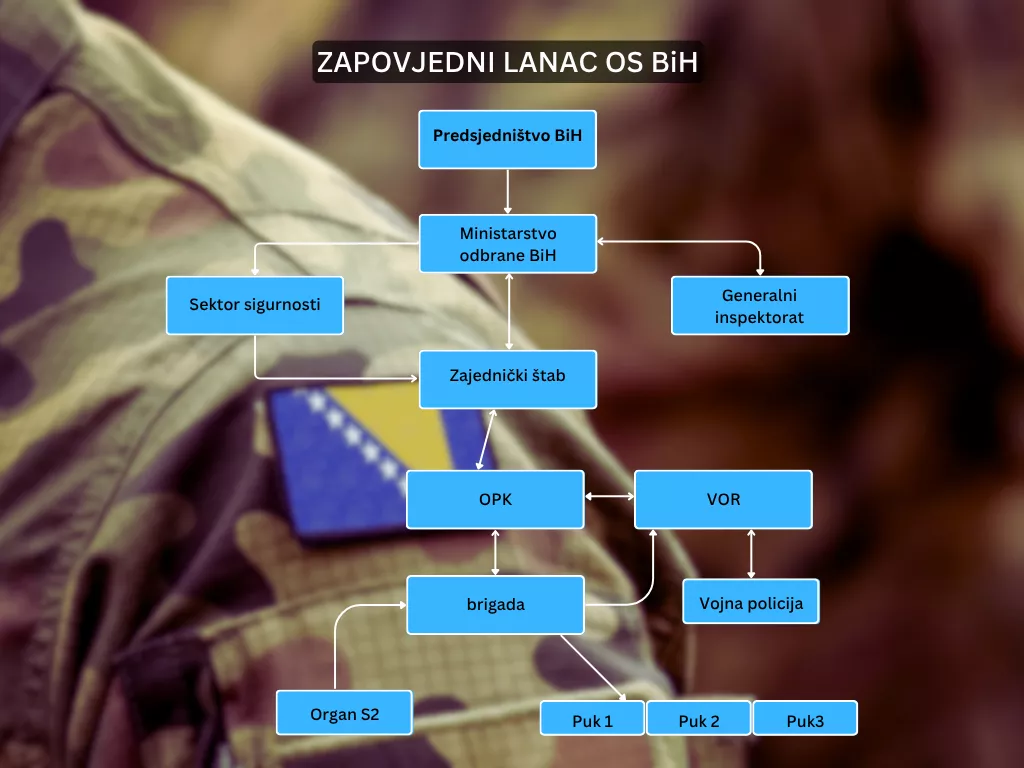
When the order arrives at the Operational Command, the commander of the Operational Command forms a team and holds individuals responsible for the implementation of the order within the given deadline. In this case, that team consists of the Military Intelligence Service (VOR) and the Military Police. The security officer in lower units (S2) has a legal obligation to inform the VOR on a daily basis about security-relevant occurrences and checks at military locations.
The Minister of Defense, as the civilian part of the defense, has direct jurisdiction over the General Inspectorate and can only issue direct orders to them. It is interesting that Helez's order does not provide for activities to be carried out by members of the Security Sector, especially in an operational sense.
According to the established hierarchy, an order signed by the minister and both deputies is forwarded by the Joint Staff to the Operational Command, commanded by Major General Radovan Ilić.
However, several serious problems have arisen in this case. For example, those familiar with the functioning structure say that the command and control (RIK) procedure is often skipped, and the command of the VOR, led by Brigadier General Nedžad Novalija, is contacted directly. These are specific omissions by Zukan Helez's Cabinet.
And when work is conducted outside the system and procedures, in order to create the illusion in public that something has been done, it is clear that the system will collapse. Instead of the Operational Command executing the order and informing their superiors about its implementation or any obstacles through feedback, complete chaos ensued.
We ask the minister if he requested a plan for the action's implementation from the subordinate units. According to the rules of service, the Military Police and VOR had to report in writing to their superiors, including the Minister of Defense, about any problems in the implementation of the order.
Failure to comply with the order, regardless of its potential shortcomings, constitutes an act of military disobedience and a creeping military coup. However, equally serious is the fact that Minister Helez himself did not act in accordance with the Defense Law and did not use the mechanisms for monitoring the implementation of the order, thus dividing the blame in this case.
Helez is well aware of his own omissions, as well as the mistakes of his advisors, which is why he is unable to implement disciplinary measures against those who practically initiated the creeping military coup. If he believed in the correctness of his decisions, all those responsible in the chain of command who did not comply with the order would have already been dishonorably discharged from service.
Due to everything he has caused in the Armed Forces of BiH, Minister Helez has only one morally and politically acceptable option — to resign.
Because he had to be aware of the moment in which he is acting, the weight of the decisions he makes, and his own responsibility in the chain of command. Even if there was a justified need to issue an order prohibiting Milorad Dodik and others from entering the Kozara barracks, it had to be legal and in accordance with the rules of service. Of course, its implementation had to be monitored operationally on a daily basis.
Everything else is unnecessary agitation in a place where stability should be most preserved. Any thoughtless move within a country's army instills apprehension, insecurity, and justified fear among its population.
Unfortunately, we have reached a situation where the Minister of Defense, instead of strengthening the combat readiness and operational capability of the Armed Forces, is causing chaos, a military coup, and complete disorganization with his actions, the consequences of which could be far-reaching.
Minister, resign. Spare yourself and the country.
Komentari (0)
Prijavite se za komentiranje
PrijavaJos nema komentara. Budite prvi!
Minuta
Sve →Iz drugih kategorija

High Representative Not Elected: Germans, French and British Sabotaged Americans, New Attempt at End of June

ČOVIĆ WITHOUT MERCY: How Those Who Brought Ademović to Office Created a Political Hell for Him



Sunny Saturday, quite warm



Tragedy in Albanian resort: Two minors drown












