
By Haris Ljevo
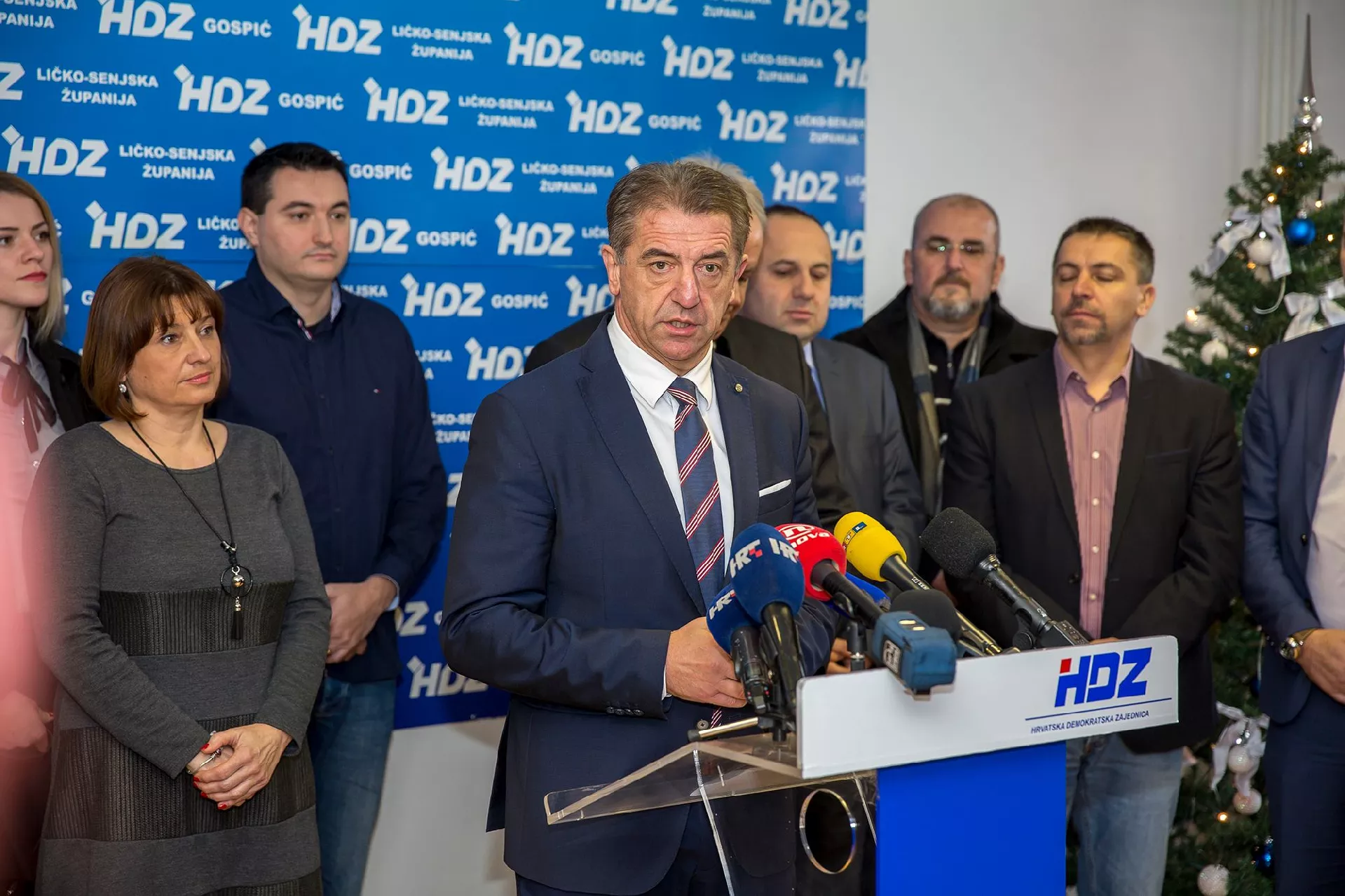
The Croatian HDZ has found itself in a kind of crisis these days after Darko Milinović, until yesterday one of the most influential and powerful people in this party, and generally on the Croatian political scene, came to the party headquarters in Zagreb with four buses of his supporters from Lika in protest against the postponement of internal party elections.
They were not allowed to enter the party premises, and only after they were confirmed that elections for the party leadership should be held on September 9, did they return to Lika by bus.
The political secretary of HDZ and the Minister of Public Administration of Croatia, Lovro Kuščević, stated that he does not decide on sanctions himself, but believes that Milinović and his people should face sanctions. Croatian media are reporting that Milinović could even be expelled from the party.
It is speculated that in an extreme case, the ruling coalition's hold on power could even be called into question. Namely, HDZ with its partners currently has the support of 77 members of parliament, while the minimum majority is 76.
After being elected prefect of Lika-Senj County in the local elections, Darko Milinović froze his mandate in the Parliament and handed it over to another representative. However, according to the law, he has the right to activate his mandate if he resigns from the position of prefect.
By activating his parliamentary mandate, he would cease to be prefect. Since two years have not yet passed (local elections were last year), the deputy prefect could not take over that function, and extraordinary elections would be held. Darko Milinović won in the strongest stronghold of HDZ in Croatia in the local elections in the first round, while in some other counties, HDZ candidates even lost to independent candidates, which only speaks to Milinović's strength and political influence.
Therefore, if Milinović decides to activate his parliamentary mandate, and in case he is expelled from the party, he could, out of revenge towards those who expelled him, even vote to overthrow the HDZ government.
If he is expelled from the party, which he is convinced will not happen, he will return to Parliament, and his support for the Government will not be unconditional. Milinović also said that the fate of the Government does not depend on his vote, although everyone knows that the majority is slim.
- I hope and wish that this Government does not depend on my vote and that I can have free hands as an independent if they expel me, but I hope that will not happen - said Milinović.
Therefore, the crisis in the Croatian HDZ is very serious, and from experience, we know that every crisis in Zagreb also affects HDZ BiH. Relations between the two HDZs have not been the best in recent years, and were recently felt during the debate on the ratification of the Istanbul Convention. It is an open secret that the Bosnian HDZ pursues a more radical and conservative policy than the one led by the leader of the Croatian HDZ, Andrej Plenković, while the policy advocated by Kolinda Grabar-Kitarović and radical circles from the Catholic Church and veteran organizations is closer to "our" HDZ.
The crisis in the Croatian HDZ can significantly affect the political scene of Bosnia and Herzegovina as well. The Croatian HDZ could always count on the unquestioning support of Croats from BiH in elections in Croatia, which could also affect the support for HDZ BiH in the upcoming elections in our country.
It should not be forgotten that the relationship of the Croatian towards the Bosnian HDZ was already called into question earlier. The previous president of HDZ, Tomislav Karamarko, had significantly better relations with the former president of HDZ 1990, Božo Ljubić, than with Dragan Čović and HDZ BiH.
Cardinal Vinko Puljić has indirectly criticized politicians several times recently for not paying enough attention to the interests of the people, but to personal interests, which many interpreted as criticism of Dragan Čović for his poor attitude towards Croats in RS and other parts of BiH where Čović and HDZ do not have absolute power.
Precisely because of this, Dragan Čović's main goal is to amend the Election Law of BiH, which would guarantee him election to the Presidency of BiH, because he is aware that among BiH Croats, and even among those in West Herzegovina, he no longer has the secure support he once did. This is where the increasingly present nervousness of HDZ BiH representatives lies.
The Bosnian HDZ has always, until the aforementioned situation with Karamarko and Ljubić, had unconditional support from the HDZ from Zagreb and the leadership of the Catholic Church in all political decisions.
Divisions among HDZ members in Croatia, first over the ratification of the Istanbul Convention, and now over Milinović, will undoubtedly be reflected in HDZ BiH and their voter base in BiH.
Komentari (0)
Prijavite se za komentiranje
PrijavaJos nema komentara. Budite prvi!
Minuta
Sve →Iz drugih kategorija

High Representative Not Elected: Germans, French and British Sabotaged Americans, New Attempt at End of June

ČOVIĆ WITHOUT MERCY: How Those Who Brought Ademović to Office Created a Political Hell for Him



Sunny Saturday, quite warm



Tragedy in Albanian resort: Two minors drown












