
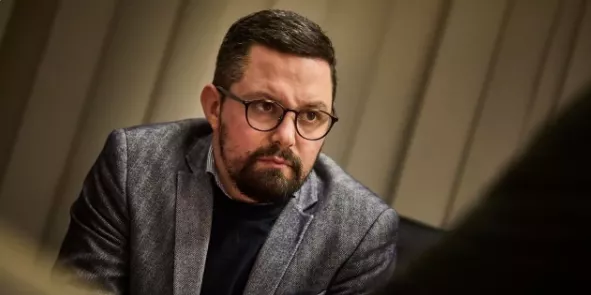
Interview by Nevena Kovačević
After the early parliamentary elections, Montenegro continues to experience a period of political instability, assessed Marko Savić, political scientist and associate at the Faculty of Political Science in Podgorica, in an interview for Patria.
Although he believes that the formation of a government led by the Europe Now movement is certain, he emphasizes that it will not be stable, and therefore does not rule out the possibility of a sooner redistribution within the parliament, as was the case with Dritan Abazović's government, which is still functioning in a technical mandate.
Two weeks have passed since the early parliamentary elections. Considering the results, as well as the events after the elections, do you think this electoral process has brought the long-awaited resolution of the political crisis, or a continuation of the period of political instability?
“We wanted to finally enter a period of normalization of social and political relations after the extraordinary parliamentary elections. Given the situation in this post-election period, it seems to me that this will unfortunately not be possible even for another entire electoral cycle. Some tectonic shifts have occurred in the party scene, which are not characteristic of Montenegro. We have the absence of the DPS as the culprit for everything happening in the country. That narrative could no longer generate a larger number of voters.
On the other hand, Milo Đukanović's departure is important for assessing the overall political scene, because in our analyses of electoral systems, their consequences, and political movements, he has always been identified as a leader – a charismatic personality who manages to generate votes from both sides. And that narrative around "for and against" Milo Đukanović was lost in these elections.
That, conditionally speaking, party-bloc division has also been minimized, but not completely lost, due to the redistribution within the DF. That alliance ceased to exist, but the consequences of their existence did not, and the Movement for Change felt this the most, which failed to preserve its identity and party integrity within the DF for ten years. Another characteristic is that these elections showed that there is no dominant party in Montenegro, which means that we must finally learn essential political dialogue, in order to achieve stability by seeking compromises. We will not see this here in the coming period, because a large number of actors have politically unwisely limited their coalition potential after the elections. I am primarily talking about the Europe Now movement.
Precisely because of their understanding of principledness, it will be very difficult to form a new government. We will very likely have a new government, with PES as its backbone. However, the question is to what extent Milojko Spajić coordinates all the mandates they have received, due to internal friction, weak party infrastructure, unclear hierarchy, and division into at least two factions, so the question is how many of these mandates Spajić can control, and how many are pulled by this faction closer to Jakov Milatović, and thus to the For the Future of Montenegro coalition.”
You mentioned limiting the room for maneuver for coalition building after the elections, in such a way that Milojko Spajić repeatedly stated that he would not negotiate with the DPS, but they are open to negotiations with the For the Future of Montenegro coalition. What would the entry of representatives of this coalition into the government mean in the context of further deepening political instability?
“When we talk about the former DF, or this continuation called For the Future of Montenegro, without the Movement for Change, we are talking about an internationally recognized political entity that is called a proxy of Russian and Serbian influence in Montenegro. That is something we should take very seriously. I don't think these people should be excluded from political life.
However, with the progress of political culture, I believe that this bloc will be reduced to its real minimum, which will be the result solely of their forces, without the support of Serbia, Russia, and the Serbian Orthodox Church. Their entry would create a rotten compromise in order to achieve that famous reconciliation in Montenegro.
The narrative of reconciliation, alongside that of the existence of two nationalist and extremist camps, is probably the most dangerous for the civic being of Montenegro. By selling this narrative, they are trying to reconcile what cannot be reconciled, because Montenegro, which I deeply believe does not need reconciliation, needs to rally around true European values and above all the values of freedom, justice, and anti-fascism, and we cannot have all of that if the successor of the DF is in the Government.
Secondly, in 2020, they did not receive the satisfaction in the executive power that belonged to them, but, believing the SOC, they handed it over to people who were not recognized in the political life of Montenegro. They paid a high price, despite important positions in state-owned companies, so now they will not allow any compromise with the mandates they have won.”
International partners have repeatedly warned about the unacceptability of parties from the former DF in the new government. The US ambassador reiterated this thesis a few days ago, after which sharp reactions followed. How do you comment on her statement and the reactions of the representatives of the For the Future of Montenegro coalition?
“In international relations, there is a clear division between small, medium, and large countries. We are in the group of small countries, which most often join blocs and wider coalitions and can only influence regional policies to some extent, and not global politics at all. This actually means that we are "vulnerable" to influences. Russia wants to attach us to one value system, and the European Union and America to another, to which I believe we fundamentally belong. I don't want to relativize, but I believe that embassies play a much larger role in small countries where political and social divisions are recognized, and that is natural.
Why does this bother the For the Future of Montenegro coalition? For the simple reason that it does not come from their ideological worldview. When the Serbian Orthodox Church formed the government, with a direct connection to Serbia, and an indirect one to Russia, it was completely fine. When mayors go to report to a committee in the Serbian Parliament, instead of to the citizens who elected them, then that is also fine. It is also fine when you receive an award from those recognized as key factors of destabilization in the region, who at any moment relativize the scourges of the nineties, including the genocide in Srebrenica. And when the ambassadors of the Quint express concern that someone with such a narrative determines Montenegro's internal policy, then it is not okay. So, we are talking about double standards and political hypocrisy.”
What, in your opinion, is the most realistic scenario regarding the actors who could form the new government? Will minority parties, which achieved significant electoral results, agree to be part of the executive power at any cost?
“The best option for Montenegro would be a coalition composed of PES, the coalition led by DPS, and representatives of minority peoples. DPS would actually be the key factor determining whether minority parties enter such a government. On the other hand, this immediately means that if the For the Future of Montenegro coalition is in the government, minority parties will probably not be in that coalition. However, we must have a reservation here too, because the representatives of minority peoples are quite conservative political parties. This means that they will largely be guided by narrow party interests, and in that, conditionally speaking, ghettoization of their voters and political calculation, they will determine what brings them more political points.
Given the position of the Bosniak Party in the technical government, I would not rule out the possibility that at one point it will not be outweighed by how much they gain by participating in power, whatever that power may be, because political and social divisions lead to minority peoples being ghettoized and voting along national lines. When it comes to the actors who will form the government, a possible option is a coalition led by PES, together with the Democrats and minority peoples, with possible support from the parliament, necessary for processes in the area of rule of law, which would be expected to come from the coalition led by DPS.
This is certainly a greater possibility than the first option I mentioned, especially considering the fact that the unnatural alliance and attempt at synergy between the Democrats and URA has diluted at the moment, and that the Democrats, with their statements, show a tendency to avoid URA for the sake of their own positions. However, they have lost their coalition potential in that game. They saved URA from political drowning, but they have fewer MPs than in the previous convocation. The position of the SNP will be decisive for the majority of 41 or slightly more, and they will try at all costs to secure certain positions.”
It is a general impression that Prime Minister Abazović tried to influence the decline in the rating of the Europe Now movement by releasing the Do Kwon affair, and thus ensure the survival of the Civic Movement URA on the political scene. Do you share this view, and can the initiation of this affair possibly affect the course of negotiations on forming the government?
“This affair, I am deeply convinced, was released during the election campaign to create a better position for the Prime Minister in the technical mandate, by actually seeing that the growth of PES should be disrupted in some way. This is not done from the position of a Prime Minister in a technical mandate, and above all, it is not done during an election campaign, because from the response of the Special State Prosecutor's Office, which was not in such a hurry, we see that all this, for which there are likely indications, could have easily happened after the elections. Therefore, an important factor that limited PES's growth is certainly the initiation of this affair, which enabled the observed coalition in which URA would continue its political life through the executive power and so-called positions in depth. Another important factor that is partially flying under the radar is Jakov Milatović's position on this affair.
We have not seen a sharp, explicit, open stance of support for Mr. Spajić, nor for the political and social consequences of initiating this affair during the election campaign, for which the President of the state had the authority, without entering into confrontation with the Government. On the other hand, he thereby underlined the conflict within PES, which is made up of various defectors from all sides of the political spectrum, so they find themselves in their ideological profiling, and in that ideological profiling with excess ambition, Milatović wants to be one of the leaders of the movement, but that does not work in any political system, nor in any party constellation of forces in European countries.
All parties crave clear leadership, and there is no dual leadership that can work with voters, and all of this had the effect of PES not achieving its perceived electoral result. How much this situation can further disrupt the formation of the government depends on the legal response, which is to determine the possible involvement of Do Kwon in the electoral processes and financing of the election campaign, which will most likely not be possible during the period of forming the new government. I think this affair will remain a part that political opponents will refer to from time to time, which will show that it served as a direct tool to stop the growth of a political entity. This is exactly what Mr. Abazović did, wanting to strengthen his coalition with the Democrats, which did not happen, but rather resulted in an increase in the number of abstentions.”
Given the obvious conflict between the two leaders of the Europe Now movement, do you think a split, or division into several factions, is inevitable?
“It is evident that they tried to package their internal conflict for the public as something that should be sold to citizens as desirable intra-party democracy, or intra-party dialogue. However, everything we have had the opportunity to see in public discourse indicates the opposite, an attempt to establish so-called dual leadership, which Milatović very carelessly stated. Leadership must be vested in one person, and it is not feasible for a party aspiring to be the key bearer of executive power to push any narrative about dual leadership.
We do not know the ideological perception of the people who make up PES. We know that within Europe Now there are people who are openly anti-NATO oriented, loyal to the pro-Serbian line, very close to the Serbian Orthodox Church, and share some very questionable financial ideas in public finance. Analyzing them during this short period they have existed on the political scene, I believe that, in addition to these two factions, at least one more could be drawn out, or possibly at least three political parties could emerge from it, one of which would be hardline, and one that goes more to the right than approaches the center.
This excess of political ambition in Milatović actually indicates that he was an alternative, an imposed solution for the presidential elections, and that his ambition was not to be limited by protocolary powers, and he stated this very openly during the presidential election campaign, when he spoke about what a new government should deal with, mentioning the Open Balkans, which is a serious watershed in the political life of Montenegro, and thereby actually showed that he will seek space to influence the formation of the executive power, in addition to the constitutional powers for assigning mandates. I would not completely rule out these theses mentioned in public discourse, which is that he secretly wants Mr. Spajić to fail in his intention to form a government, so that he could assign the mandate to someone else, whether to someone else from PES, who through that faction would try to persuade the For the Future of Montenegro coalition and thus create a coalition that would be more favorable to Milatović.”
The newly elected president has on several occasions expressed rather unclear views on key regional issues, avoiding a clear answer regarding the situation in Kosovo and speculating when he will visit Srebrenica. In the context of these statements, as well as everything we have witnessed in the past three years, what is Montenegro's position in regional relations?
“Regional relations are, as I have mentioned before, of crucial importance for Montenegro, not only in political but also in economic terms, and we have done significant work in this area after 2006. First of all, we have no open issues with our neighbors, we have completed significant border demarcation processes, we have positioned ourselves as a factor of stability in the region, and regarding Kosovo, which has been and remains a destabilizing factor in our region, but we have also clearly positioned ourselves regarding the integrity, territorial integrity, and sovereignty of Bosnia and Herzegovina, which, quite justifiably, also meant a very clear stance towards the genocide in Srebrenica, which our officials have expressed in their statements, as well as in practice.
However, with this direct entry of the pro-Serbian or pro-Russian factor into the executive power, everything that positioned Montenegro as the most advanced country in the eyes of the region, not only in terms of European integration but also in political terms, has been called into question, and they have led us into a new segment of divisions that, to be completely objective, also existed before, but they have deepened them further, influencing the intimate feelings and affiliations of citizens, dismantling civic identity, emphasizing national, and especially religious identity.
When we talk about Mr. Milatović, a very important thing should not be missed in the analyses. In his mandate so far, he has a certain narrative that he is presenting to the Montenegrin public and the public in the region, which should position him towards his perceived electorate, which in the second round of the presidential elections included a very significant portion of the Serbian national corpus, Montenegrin, and minority, very likely, with a large percentage of these people still voting not for Milatović, but against Đukanović.
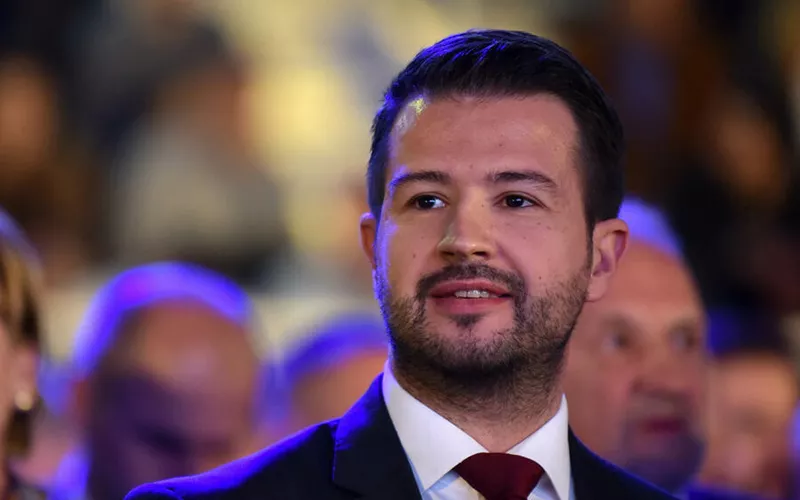
On the other hand, on the international stage, he is presenting a narrative that our international partners expect. However, the understanding of international partners is unfortunately limited to that, meaning they do not look beyond that, and the first alarm is precisely that he is returning certain political favors and closeness with Zdravko Krivokapić precisely by choosing his advisors. To be very open, I am talking about Mr. Vukšić and Mr. Stijović, who are very close, if not spokespersons for the views of the SOC. This speaks to the difficulty for Milatović to truly be a factor contributing to regional stability, for whom such choices, and I would say attitudes towards key issues in the region's political life, represent a burden.
I am not sure how capable he is of such political balancing, one towards the region, one towards the Montenegrin public, and one towards international partners, because it requires political experience that Mr. Milatović does not have. The most correct path is for him to position himself on these issues of regional cooperation as a bearer of political continuity with his predecessors, and that would be the only way to truly support regional stability. Everything else calls into question certain things, introduces politically unskillful balancing, and touches upon the sore points of various countries in the region, both regarding Kosovo for Serbia, and regarding Srebrenica and the war in the nineties for Bosnia and Herzegovina, as well as relations with Republika Srpska and their intentions to endanger the integrity and sovereignty of BiH.
Finally, do you expect the government to be formed within the legal deadline and last for a full term?
“Forming a government will not be quick, due to everything I have said so far. Second, it will depend on the concept and political wisdom of those who will form that government. Unfortunately, everything has become possible in Montenegro in the last three years. I believe that the government will not be stable and that the policy of that government, and I say this based on the political capacities of its potential actors, can lead us to an unstable concept that will very likely lead us to new extraordinary elections.
This does not mean that we will actually go to elections after a year and a half or two, but a new redistribution within the parliament can easily happen, which would give a new mandate, which is actually a continuation of what we have been experiencing in the previous period, that someone can be in a technical mandate longer than in a formal one. We have not made further progress towards full democratization of social and political conditions, so narrow party interests will certainly prevail, and every effort will be made to stay in power as long as possible, even if it means reforming the newly formed majority within the parliament.
Such redistributions are devastating in the Montenegrin context on several lines, relating to internal consolidation and the pronounced influence that redistributions have on the functioning of our institutions, which are already very weak, and have been ruined since 2020, and which do not tolerate frequent political changes, because this has a direct impact on maintaining institutional memory, on maintaining lower, middle, and upper management personnel in positions that are key to moving the wheel of reforms, which is essential for our EU integration process.
All of this leads to further relativization of the accession process, with attention paid only to the division of electoral spoils. I would not doubt how far the political imagination of subjects in Montenegro can go, who can devise various concepts, whether constitutional or not. The political instability that we continue to experience does not necessarily mean going to new elections, which also depends on those who remain in the opposition and their hopefully more productive opposition activities, which can lead to a redistribution within the parliament and certain changes about which citizens will unfortunately have no say, but it will continue along the lines of narrow party interests and something that goes beyond the general interest of the citizens of this country.
Komentari (0)
Prijavite se za komentiranje
PrijavaJos nema komentara. Budite prvi!
Minuta
Sve →Iz drugih kategorija

High Representative Not Elected: Germans, French and British Against Americans, New Attempt at End of June

ČOVIĆ WITHOUT MERCY: How Those Who Brought Ademović to Office Created a Political Hell for Him



Sunny Saturday, quite warm



Tragedy in Albanian resort: Two minors drown












