
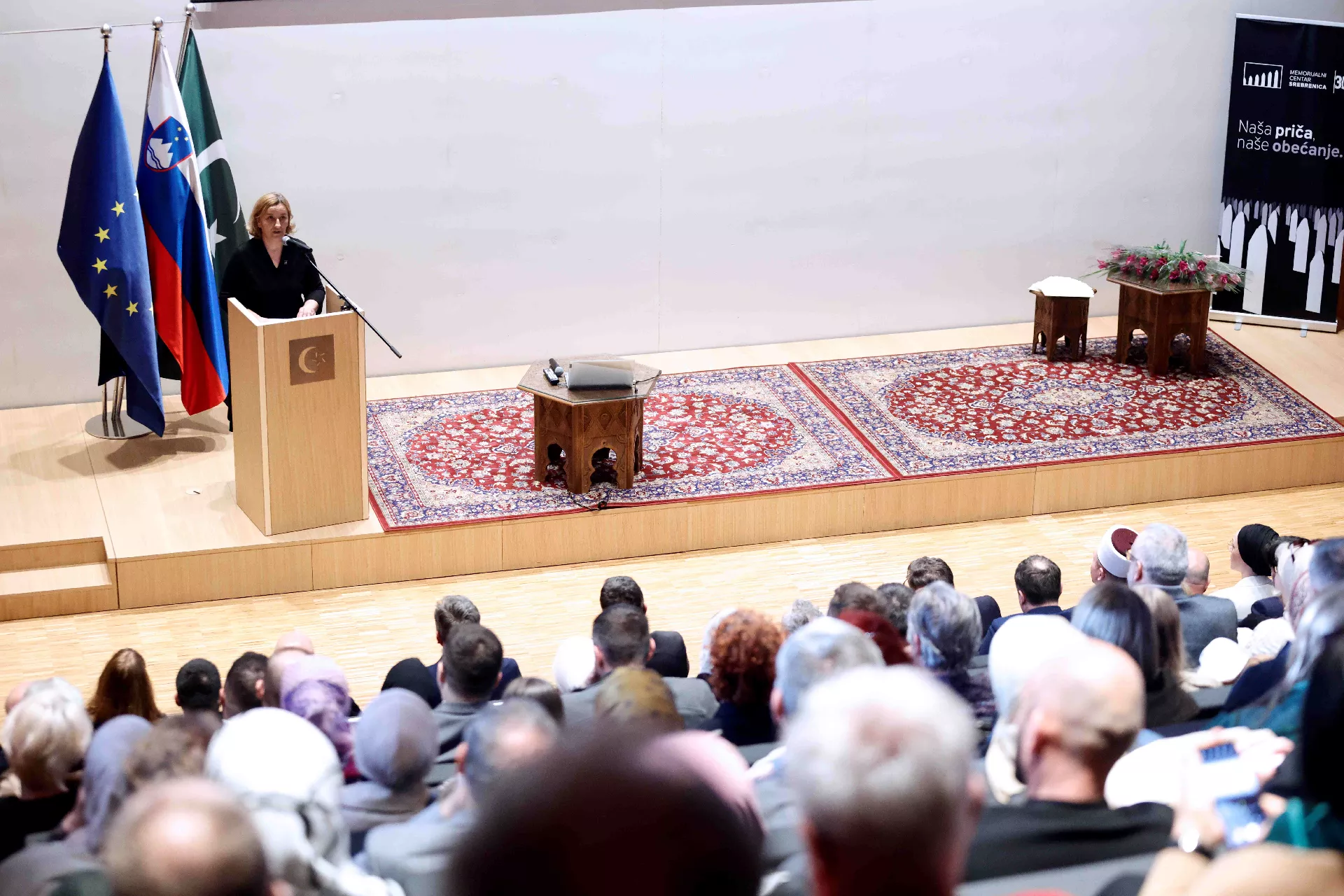
(Patria) - An exhibition featuring testimonies of Srebrenica genocide survivors who now live in Slovenia has opened at the Muslim Cultural Center in Ljubljana.
The exhibition was opened by historian Oto Luthar and former Chairman of the Collegium of Directors of the Institute for Missing Persons of Bosnia and Herzegovina, Amor Mašović.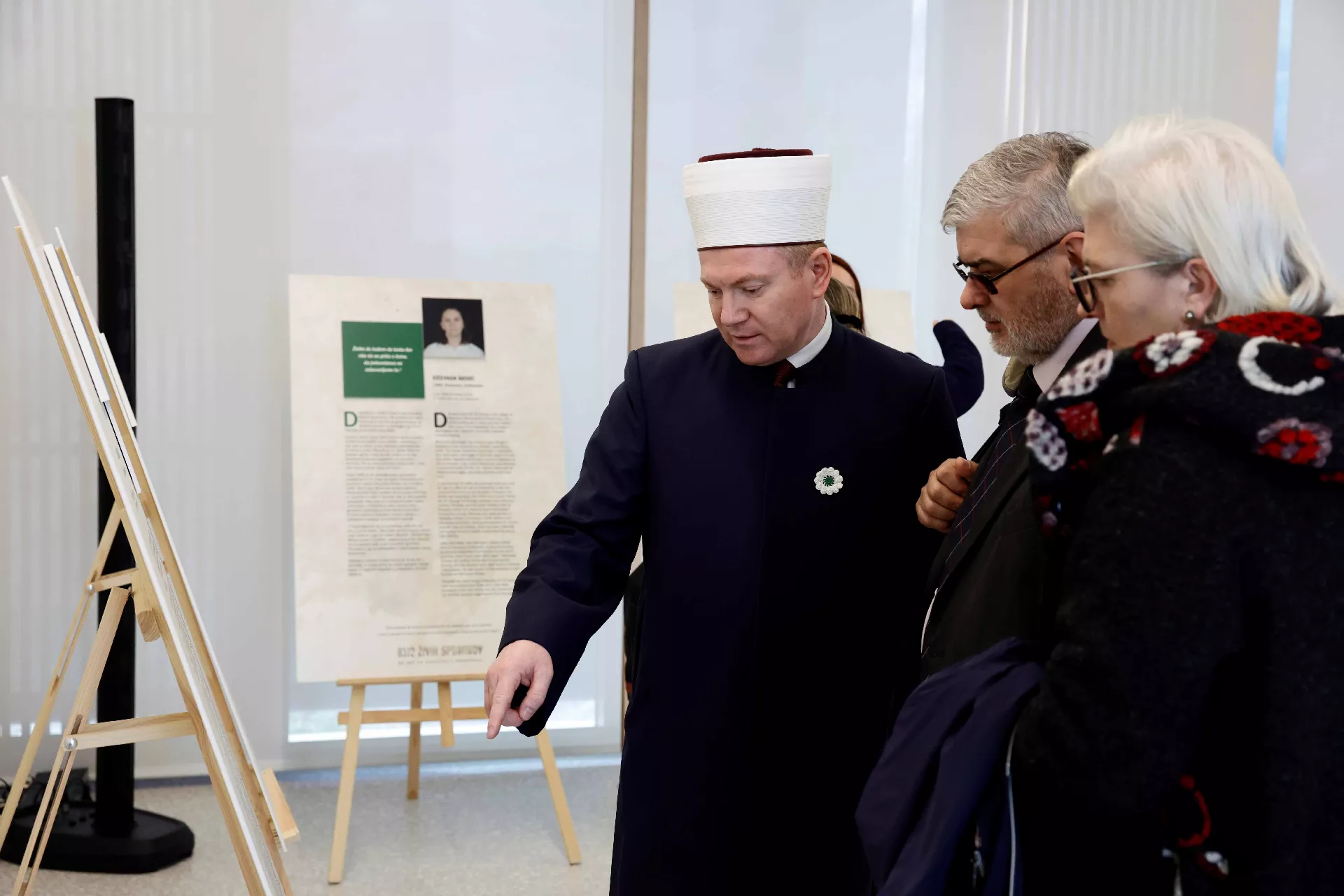
At the opening of the exhibition, jointly organized by the Memorial Center and the Muslim Cultural Center in Ljubljana, the Assistant Director of the Memorial Center, Amra Begić Fazlić, also spoke.
The exhibition presents the life stories of 15 genocide survivors – through video recordings, textual displays, and personal items preserved from the war period.
The testimonies were created over a year and a half through careful and ethically responsible research.
The Srebrenica Memorial Center team, which has extensive experience working with genocide survivors, recorded two-hour interviews with each survivor, and then adapted them into concise video formats lasting up to five minutes, which are available to exhibition visitors.
- In these summaries, we tried to cover various aspects of the Srebrenica genocide – from very intimate memories of losing loved ones, to testimonies about the broader context of preparations for the genocide that began with the crimes in Prijedor in the summer of 1992 – explained Ela Porić, coordinator of the memorial program '8372 Living Memories'.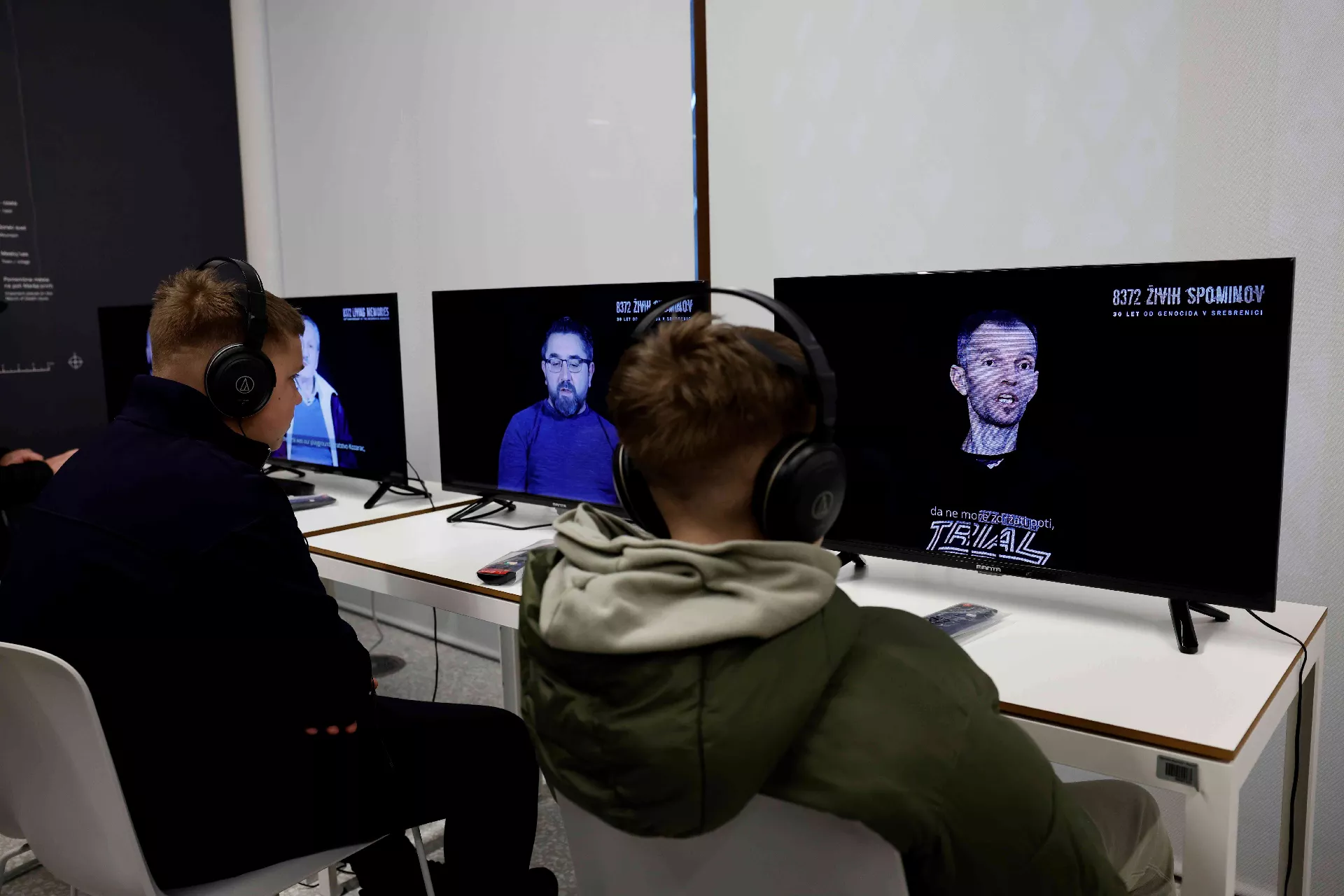
As she added, the exhibition is designed to be understandable even to those who know little or nothing about the war in Bosnia and Herzegovina.
Through video, textual, and spatial displays, the exhibition helps visitors understand the broader historical, social, and political context.
The Mufti of the Islamic Community in Slovenia, Nevzet Porić, emphasized that the program has a dual mission.
- First, to convey the message about Srebrenica to young people. Second, to highlight Slovenia's relationship and connection with the site of the worst crime in Europe after World War II – said Porić.
He also stressed the importance of consistent and truthful presentation of history.
- Slovenia, when it comes to recognizing the genocide in Srebrenica, is always on the side of proven facts. On the side of those who fight against relativization and denial – added Porić.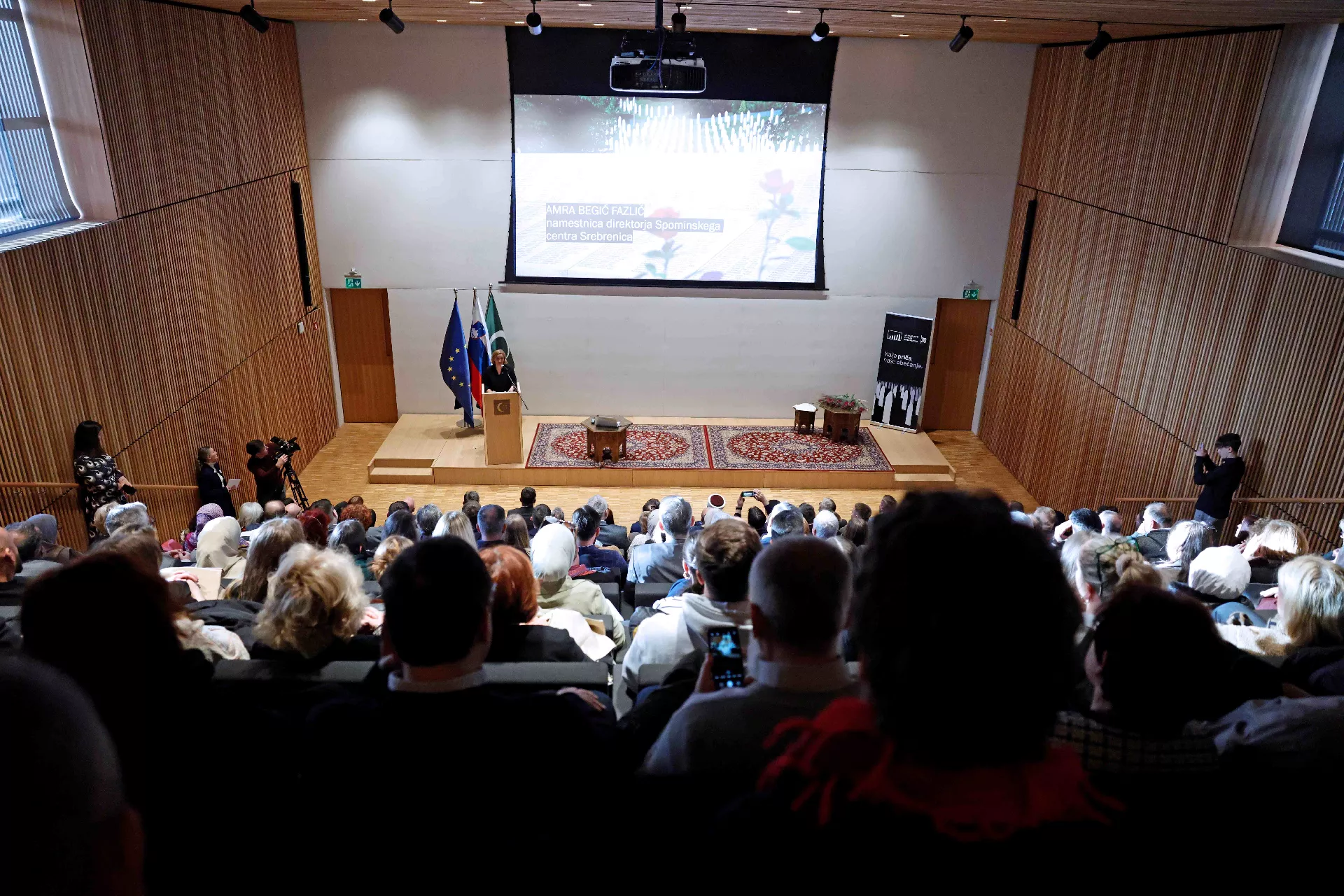
Amra Begić Fazlić, Assistant Director of the Srebrenica Memorial Center, described the exhibition in Ljubljana as "a small but powerful step in the process of building collective awareness about the Srebrenica genocide – it motivates us to remember the past and fight for a world without violence and hatred".
- When we talk about crime research, the development of educational activities, and numerous other endeavors, the Srebrenica Memorial Center has undergone a complete transformation in the last five years and has become a recognizable center in the field of museology and historiography.
They collaborate with numerous leading institutions from around the world, and thanks to many partners, they have become an institution that is in no way inferior to the largest memorial centers in the developed world – said Begić Fazlić.
She also announced the preparation of three major exhibitions that will mark three decades since the genocide in Srebrenica.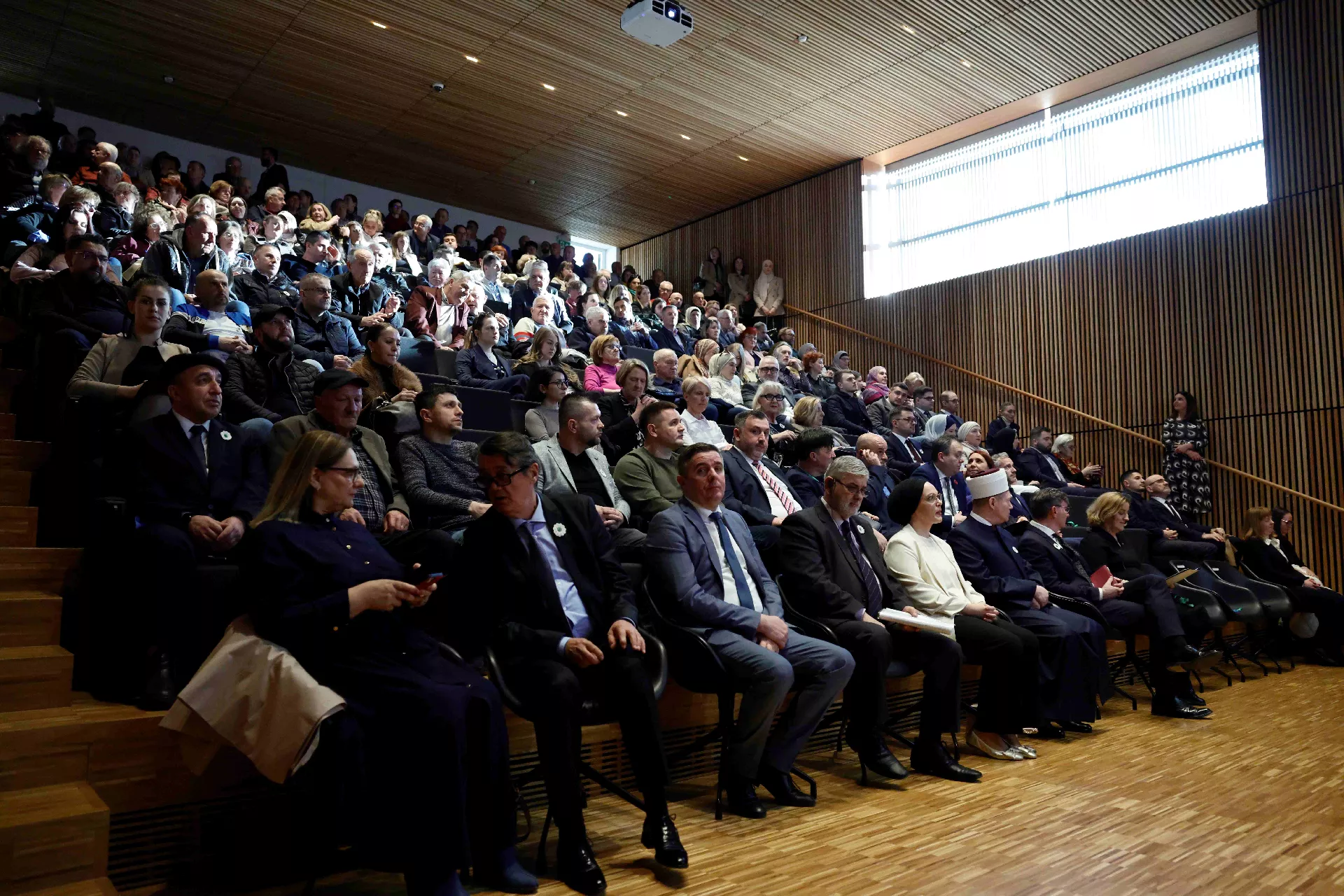
- The United Nations Resolution on the Srebrenica Genocide emphasizes the role of educational institutions in the fight against genocide denial, therefore the Memorial Center is developing a series of tools to help teachers and others in the education system explain the most serious crimes against humanity and facilitate the approach of these topics to young people, not only in Bosnia and Herzegovina but also around the world – stated Begić Fazlić.
The exhibition, which was originally planned for the Museum of Contemporary and Modern History of Slovenia, attracted the interest of the wider public. The only reason for its relocation was the museum's final proposal to omit the first part of the introductory panel.
The omission of the introductory context cannot in any way be part of recognized museological principles and professional procedures.
According to the organizers, relocating the exhibition to the premises of the Muslim Cultural Center was necessary because the presentation of genocide must not be subject to compromises and attempts to soften certain facts.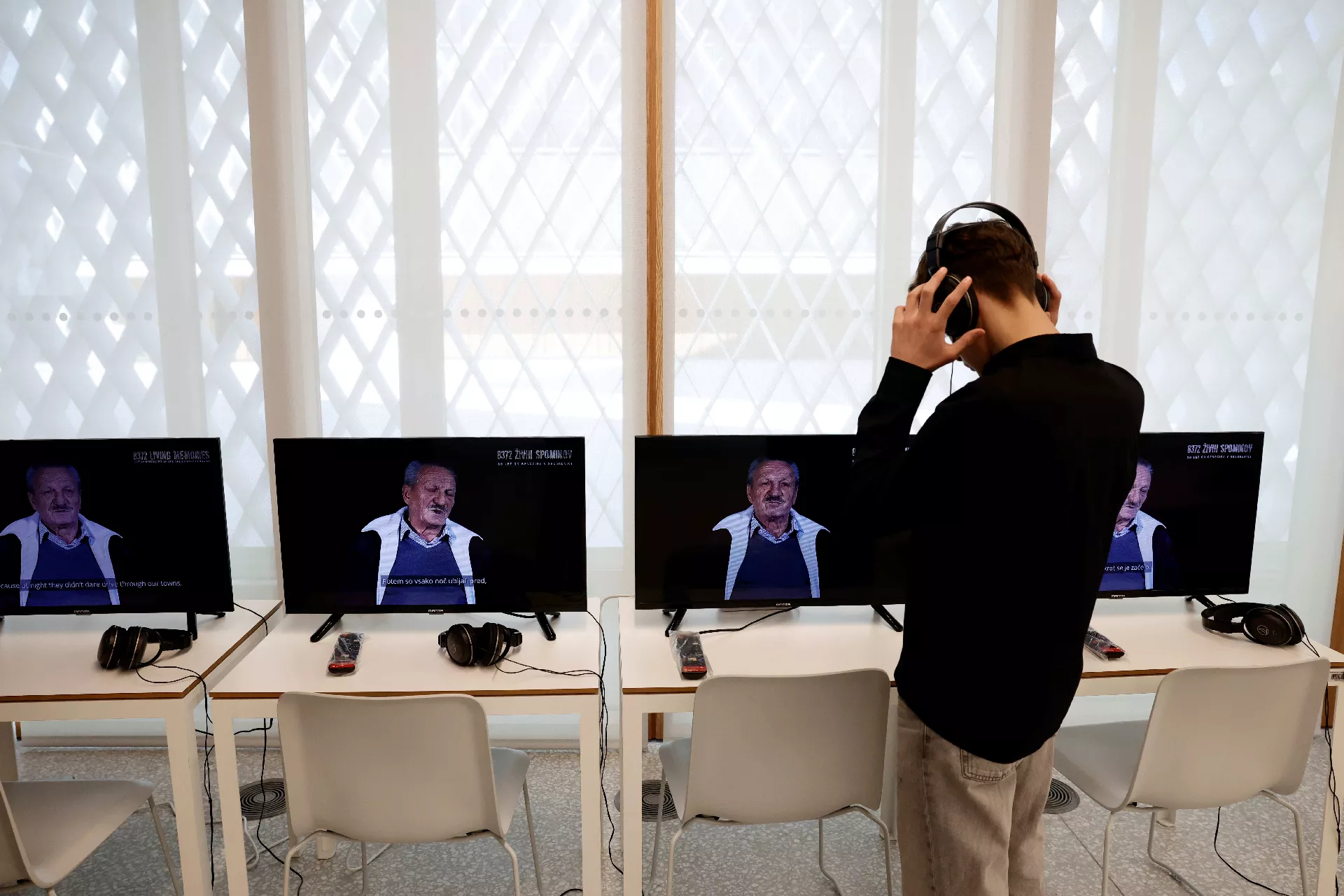
The exhibition will be open in Ljubljana until July 13, 2025, and will then tour other cities across Slovenia.
The program will also be accompanied by a series of public discussions with distinguished Slovenian experts such as Matjaž Nahtigal, Jasminka Dedić, and Darja Zaviršek.
Komentari (0)
Prijavite se za komentiranje
PrijavaJos nema komentara. Budite prvi!
Minuta
Sve →Iz drugih kategorija

High Representative Not Elected: Germans, French and British Sabotaged Americans, New Attempt at End of June

ČOVIĆ WITHOUT MERCY: How Those Who Brought Ademović to Office Created a Political Hell for Him



Sunny Saturday, quite warm



Tragedy in Albanian resort: Two minors drown












