
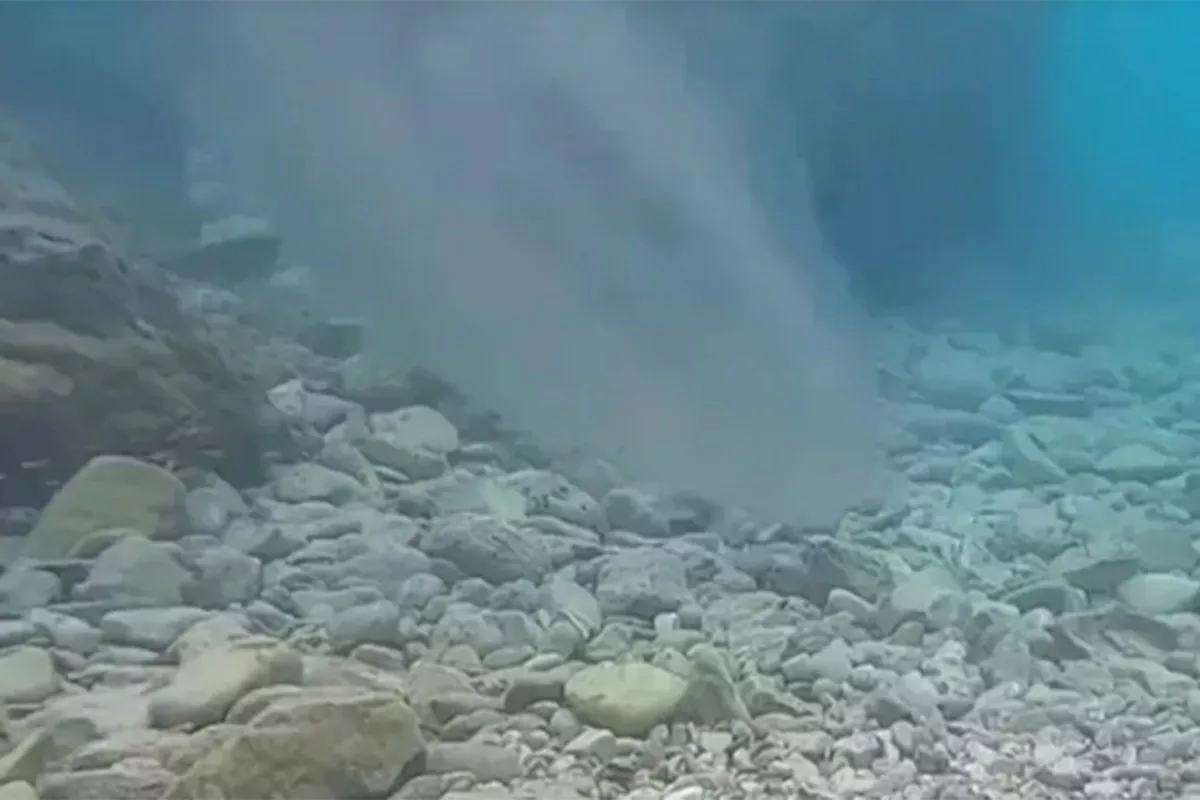
(Patria) - In recent weeks, numerous beaches on the western coast of Istria have once again been affected by groups of ctenophores. In the evening hours, in some of the most beautiful Istrian bays, swimmers have the impression of swimming in a thick gelatinous mixture. Sea currents bring large groups of these organisms to the shore, and people colloquially call them "slimy creatures".
"It is important to emphasize that ctenophores are not dangerous to humans. They are not cnidarians, they do not have stinging cells or venom, so although the feeling of swimming among them is not pleasant, they cannot harm swimmers," explains Tjaša Kogovšek, a research associate at the Ruđer Bošković Institute in Rovinj.
According to her, the number of ctenophores this year is significantly higher than in previous seasons, but fortunately, there are no reports of jellyfish, writes Jutarnji.
"This is not just the case in the Pula area, but throughout the entire northern Adriatic. These are planktonic organisms with a very effective reproduction strategy. An individual can produce 1,000 to 10,000 eggs per day, and young individuals develop very quickly and soon become capable of reproduction. Thus, the population can suddenly 'explode' in a short period," she adds in a statement to Jutarnji.
The ctenophores appearing in the Adriatic are not actually a native species. It is a comb jelly, which entered the sea in the ballast waters of ships into the Black Sea, and then spread throughout the Mediterranean. Today, we find it along the coasts of Italy, France, Spain, Greece, and even in the Atlantic Ocean. This species has a wide tolerance for temperature and salinity, so it easily adapts and quickly establishes itself in ecosystems that are out of balance.
Unlike jellyfish, ctenophores do not have stinging cells or tentacles that can sting swimmers. Their bodies are made of a gelatinous mass, are almost transparent, and are characterized by eight longitudinal "ribs" of cilia that are visible under a microscope as tiny hairs. They use these for movement.
When light falls at a certain angle, the cilia create colors resembling a rainbow's glow. It is precisely because of these rainbow reflections that many swimmers stop and observe them in the shallows. While some find them repulsive, others find them fascinating, especially children. However, it is important to remember that this is an alien species that is altering the Adriatic marine ecosystem.
The problem arises because it is an organism that does not have enough natural predators in the Adriatic.
"Therefore, the population develops almost uncontrollably. The northern Adriatic is the most productive region of the Mediterranean in terms of plankton, which is precisely why ctenophores find an abundance of food here," says the scientist.
They feed on plankton, including the eggs and larvae of many fish: "Thus, they enter into direct competition with small pelagic fish, such as sardines and anchovies, which are of immense importance to fisheries. When such a population 'explosion' occurs, it fits poorly into the food chain and can cause serious consequences for fish stocks."
In addition to the direct impact on fish resources, ctenophores can also disrupt the dynamics of the plankton community. This indirectly changes the living conditions for many other organisms, from crustaceans to larger predators. Ctenophores were first recorded in the Adriatic in 2005.
"Every year, the same pattern is observed: they are most numerous from July to November, with a peak in August and September. They are most abundant in the Gulf of Trieste, and their numbers decrease towards the south. Their distribution is strongly influenced by currents and winds. The sea can carry them to the shore or push them out, depending on the weather conditions. When the sea is rough, they retreat deeper," emphasizes the scientist from Rovinj.
The lifespan of ctenophores is less than a year, but due to their incredible fertility, this is not an obstacle to their spread. "Warmer seas, which we are experiencing more and more often, favor their spread. This precisely explains why there are so many of them this year," adds the scientist.
She compares the situation to that in the Black Sea, where a natural balance has been somewhat established.
"There, after the appearance of the comb jelly, another species of ctenophore that feeds on them also entered the ecosystem. Thus, a balance was established, although it is a balance between two alien species. In the Adriatic, there is no such predator yet, so control of their population is lacking," she explains.
The institute in Rovinj has been developing a system for monitoring citizen reports in recent years: "When people notice large groups of ctenophores, they often send us photos or information about the location. Based on this data, we create maps of their occurrence, which helps us track the spread of the population. This is an important form of cooperation between science and the public."
Currently, there is no method that could directly reduce their numbers. Since they are planktonic organisms, their removal in the open sea is practically impossible. For swimmers, the most important thing to know is that ctenophores are not dangerous. However, for scientists and fishermen, they represent a serious challenge.
Komentari (0)
Prijavite se za komentiranje
PrijavaJos nema komentara. Budite prvi!
Minuta
Sve →Iz drugih kategorija

High Representative Not Elected: Germans, French and British Sabotaged Americans, New Attempt at End of June

ČOVIĆ WITHOUT MERCY: How Those Who Brought Ademović to Office Created a Political Hell for Him



Sunny Saturday, quite warm



Tragedy in Albanian resort: Two minors drown












