
(Patria) - The State Department late last night published the Report on the State of Human Rights in Bosnia and Herzegovina for 2024. Bosnian media that have reported on parts of this Report have mostly focused on the part about Milorad Dodik, largely ignoring the story about themselves – about media freedom in Bosnia and Herzegovina.
“Censorship by governments, militaries, intelligence or police forces, criminal groups, or armed extremist or insurgent groups,” is the chapter in which the State Department Report heavily accuses the current government led by SNSD, Trojka, and HDZ BiH of pressure and attacks on the media, Patria reports.
“There were instances in which public officials interfered with the work of journalists. Some media outlets reported being subjected to financial and political pressure from politicians and political parties on editorial decisions and content of media houses, and claimed that tax authorities used unjustified audits to punish them for non-compliance. Activists assumed that these authorities acted on the orders of ruling political parties, using audits and tax evasion charges to intimidate and censor the media,” the report states.
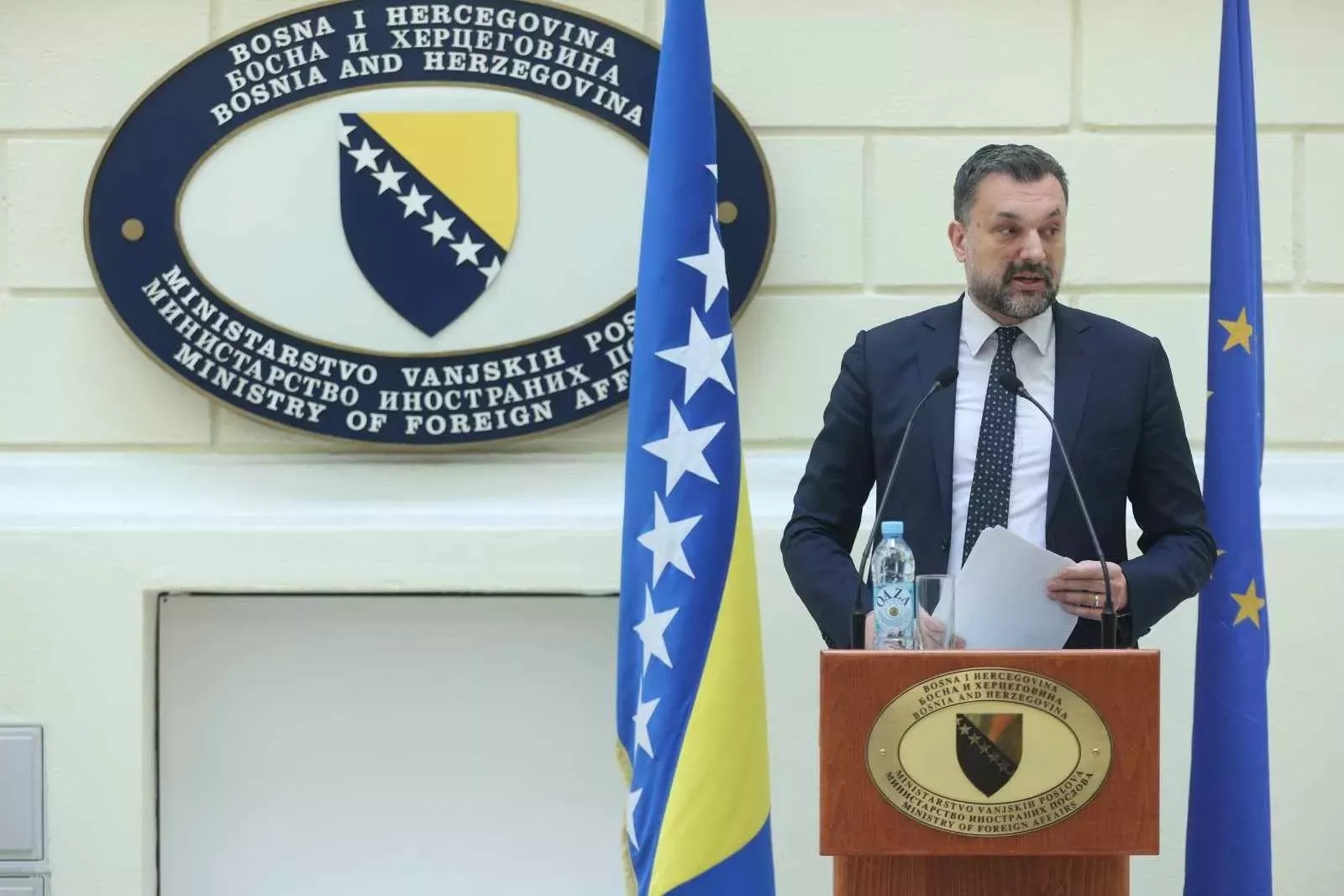
It adds: “In February, the Association of BH Journalists (BHN) condemned the statements of the Minister of Foreign Affairs of BiH and the leader of the Party of People and Justice, Elmedin Konaković. Konaković suggested at a press conference that public broadcasters in BiH and the Federation – FTV and BHRT – could solve their long-term financial problems if the broadcasters' management “worked according to the dictate“ of the ruling coalition’s policies. Non-governmental organizations monitoring media freedom assessed this statement as an admission of intent to politically influence the media environment. The “Free Media Help Line” registered this as a case of political pressure on the media,” the State Department Report highlights, Patria writes.
It also addresses RAK: “The Communications Regulatory Agency (RAK), which regulates the audiovisual media market, did not have full financial and political independence. Local analysts continued to warn that the Director-General of RAK was acting under political influence. The mandate of the RAK Council expired at the end of 2017, and the appointment of a successor was still pending at the end of the year. The mandate of the Director-General of RAK expired in July, and that position remained vacant at the end of the year. Non-governmental organizations dealing with media freedom warned that the position of the Director-General of RAK is subject to significant political pressure”.
“Several political parties and state institutions attempted to influence editorial policies and media content through legal and financial measures, as well as direct political pressure. As a result, some media outlets practiced self-censorship. State institutions restricted access to information on corruption cases involving alleged abuse of public funds and foreign investments. Authorities at all levels consistently refused to publish information regarding concession contracts and agreements with foreign investors, particularly companies connected to, owned by, or controlled by the People's Republic of China.
Transparency International BiH initiated legal proceedings in several cases, but reported that authorities refused to fully disclose the content of certain contracts even when ordered to do so by a court,” the Report states.
It is also stated that “media critical of the ruling parties claimed to have had difficulties obtaining certain business contracts, especially from advertisers”.
“According to non-governmental organizations focusing on media freedom, the Law on Freedom of Access to Information, adopted in August 2023, restricted access to information of public interest due to a long list of exceptions that public authorities can use to refuse the disclosure of data, thereby introducing new obstacles for journalists and weakening transparency. The new law did not provide for an independent body to oversee the implementation of the law, thus weakening access to public information. BHJA reported that the Ministry of Justice of BiH largely ignored the comments and recommendations of the European Commission to establish a new independent body to oversee the implementation of the law,” it was stated in the part of the Report on the state of human rights in BiH for last year in Bosnia and Herzegovina.
We remind you that Konaković was also mentioned in the State Department report in 2020, but in the chapter related to religious freedoms due to his statement that he did not mind a school in Sarajevo being named after Mustafa Busuladžić.
What is also a fact is that the report was published just a day after the meeting of Trojka (of which Konaković's NiP is one-third) with representatives of the Quint countries, in which the US plays one of the key roles.
Komentari (0)
Prijavite se za komentiranje
PrijavaJos nema komentara. Budite prvi!
Minuta
Sve →Iz drugih kategorija

High Representative Not Elected: Germans, French and British Against Americans, New Attempt at End of June

ČOVIĆ WITHOUT MERCY: How Those Who Brought Ademović to Office Created a Political Hell for Him



Sunny Saturday, quite warm



Tragedy in Albanian resort: Two minors drown












