
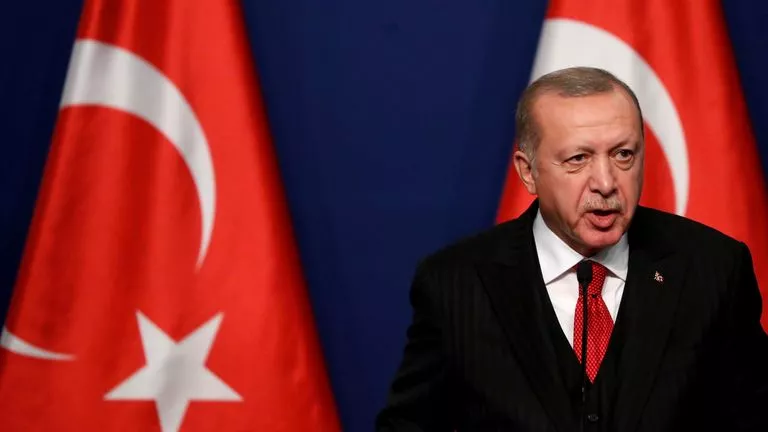
*Turkey's vision of a "neo-Ottoman empire" corresponds to the idea of the "British Commonwealth"
*Growing military presence and delivery of military equipment from Turkey to Balkan countries
Written for Patria by: Fuad Đidić
History is full of paradoxes.
This is evidenced by Turkey's increasingly widespread military, economic, and political presence in the Balkan countries. Once the "sick man of the Bosphorus," as Europe called Turkey, now Europe itself is sick. At the moment when the "HTS" military forces, with full logistical and strategic support from Turkey, were entering Damascus on December 8, 2024, which is an undeniable historical triumph of Turkish diplomacy, a large contingent of 350 soldiers arrived in Kosovo, as part of KFOR, replacing Italian soldiers deployed towards the border with Serbia.
Less than a week later, news was published that Turkey plans to build an ammunition factory in Kosovo, which simply shocked the public in the entire region. This was followed by another piece of news, like a "cold shower" for some, that Turkey plans to equip the Armed Forces of BiH with 15 new Kirpak I combat vehicles. Before that, Turkey donated 3 million worth of military equipment to Albania and signed an agreement for the delivery of a larger quantity of "kamikaze drones".
To this, it should be added that Turkish military forces have long been present at a number of strategic locations in the Mediterranean region and beyond. In addition to the EUFOR forces in BiH, which include a contingent of over 100 Turkish soldiers who are the backbone of maintaining EUFOR forces in BiH, there are about 15,000 in Cyprus, 5,000 in Qatar, and 2,000 in Somalia, and more than 15,000 soldiers are deployed along the border with Iraq.
Turkey does not have its own forces in Libya, but its "proxies" are present in this country, which Turkey supplies logistically and with intelligence. This is an impressive number of soldiers for a regional power like Turkey. The deployment of Turkish armed forces represents a "map" that assures us of the strategic and political goals that Turkey intends to defend with its own military presence on the ground.
Almost all Balkan countries have shown open interest in broader military cooperation with Turkey. Their primary interest is to be placed on the list of countries, potential buyers of the well-known Turkish drone "Bayraktar" TB2. Turkey has, in the meantime, shown readiness to respond positively to these requests.
The procurement of "Bayraktar" drones, as well as "kamikaze drones", is just the tip of the iceberg of growing cooperation between the countries of the region and Turkey in the procurement of other military and defense potentials. This fact also points to several other important details.
Among other things, it is the growth of the production capacities of the Turkish defense industry, which is significantly changing the strategic importance and role of Turkey in the region as a country whose defense no longer depends on the procurement of weapons from abroad.
It should be recalled that Turkey currently completely controls the passage of the Russian navy to warm waters, primarily the Mediterranean. When Russia entered Crimea in 2014 and occupied the port of Sevastopol, they hoped that through this route, which leads through the Black Sea and further through the Bosphorus, they would be able to reach the Mediterranean.
However, after the war in Ukraine, things have radically changed here. Russia, according to the application of the Montreux Convention, cannot use this passage. Meanwhile, in 2015, Russia established the naval port of "Tartus" in Syria to use it for the same purpose. But, here too, things have changed "overnight". After December 8, 2024, Turkey will most likely seek major concessions from Russia for the Russians to continue using the newly equipped Syrian port of "Tartus" for the presence of its navy in warm waters.
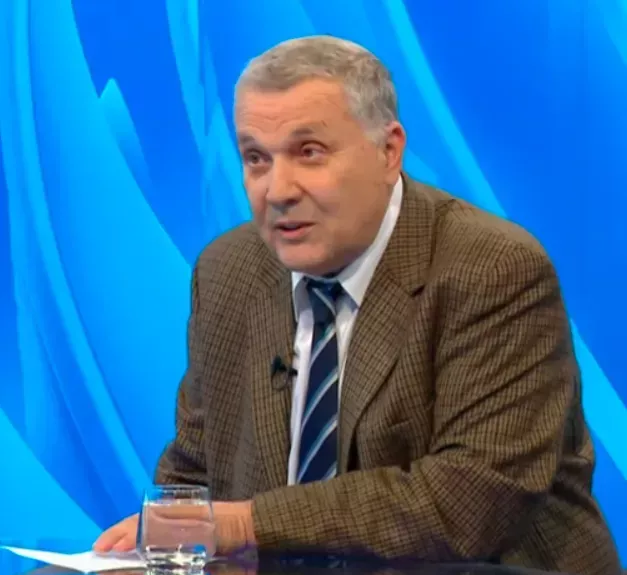 Fuad Đidić: Turkey's vision of a "neo-Ottoman empire" corresponds to the idea of the "British Commonwealth"
***
President Recep Tayyip Erdoğan was the most frequent guest in Sarajevo from 2012 to 2022. He visited as many as five times for various occasions.
After his great electoral victory in June 2011, in his first public statement, Erdoğan placed Sarajevo on a large "verbal map" of an imagined Ottoman Empire.
“Sarajevo won today as much as Istanbul did. Beirut won as much as Izmir. Damascus won as much as Ankara.”
This spirit of historical reversal towards a neo-Ottoman design was convincingly and strikingly reinforced by Erdoğan through a series of "soft diplomacy" events, starting with statements that surprised many observers, such as his claim that his country is the "son of Fatih" or that every "nation seeks its future and greatness in its past".
On all these occasions, Erdoğan presented himself more as a "republican statesman" and much less as a "sultan", as some media tendentiously tried to describe him.
Despite the fact that the immediate reason for his visits was the opening of renovated "symbols" of Sarajevo, such as the Emperor's Mosque (2015), the Baščaršija Mosque (2021), the Ishak Bey Ishaković Hamam (2012), as well as receiving the "Isa Bey Ishaković" award (2015) on the occasion of the 550th anniversary of Sarajevo, Erdoğan clearly showed that the inspiration for Turkey's greatness comes from the legacy of Ottoman civilization.
The impression is that his idea of "neo-Ottoman Turkey" largely corresponds to the idea of the "British Commonwealth". His visits were dominated by "public diplomacy" or, more specifically, "religious diplomacy", which he effectively used to send messages to the West, revealing a much different and more confident Turkey that would be capable of being a secure axis of a new "Commonwealth alliance" from "Azerbaijan to Bosnia".
The best illustration of this is this example from Sarajevo. Despite loud objections from some European countries (primarily Austria and Germany), Erdoğan held a central pre-election rally for his AKP party for Europe in the "Zetra" hall in June 2018, where about 15,000 of his supporters from several European countries gathered. It was an unprecedented move, as Sarajevo was then described as the "westernmost city" of an imagined neo-Ottoman empire, or a "neo-Ottoman Commonwealth".
However, during his visit in 2022, which some media called "scandalous", Erdoğan sent a warning about the West's policy not only towards Turkey but also towards BiH.
"The West exists to divide and tear apart Muslims. It wants to divide them, tear them apart, and then swallow them. You yourselves are and will be the biggest obstacle to that. Therefore, we must not give them that opportunity..."
The unified message of all of Erdoğan's visits to BiH is, therefore, the rehabilitation of the most difficult taboo topic, the "neo-Ottoman idea". With this vision, Erdoğan wants to transform the "defeated", "divided" nation, the "islands of the West in Asia", into a nation of "winners", a nation of "great ideas" and "vision", which now communicates and contacts all blocs equally, without relying on any of them.
This idea draws its strength from the tradition of the Ottoman Empire, imbued with the "eternal principles of Islam" and its culture.
During his visit to the region in September 2022, after visiting Serbia and Bosnia and Herzegovina, Erdoğan also visited Zagreb, where he met with President Milanović. It can be said that this visit of the leader of the second strongest NATO member, Croatia, a member of the NATO alliance, passed quite poorly, without reaching any agreement on crucial issues concerning BiH.
Milanović used this conversation to pressure the High Representative Christian Schmidt in Sarajevo and send very clear messages about the "disenfranchised position of the constituent Croats in BiH", pretending not to know how Schmidt would act on election night. The meeting ended without an agreement and left a very bitter taste of arrogance and the already agreed-upon game of "Croatian diplomacy and High Representative Schmidt".
On the other hand, Erdoğan's visits to Serbia and Montenegro (September 2024) were mainly designed on the principles of "economic diplomacy", with which Turkey opened excellent economic cooperation, especially with Serbia, and investments are now measured at close to a billion dollars.
In light of this meeting, the later actions of the Turkish embassy as a member of the PIC should also be understood.
Ambassador Sadik Girgin bravely opposed the statements and actions of High Representative Christian Schmidt after the imposition of amendments on election night. The Turkish embassy also supported the "Kovačević" verdict and expressed dissatisfaction in the PIC with Schmidt's action before the ECHR to overturn this verdict on behalf of Croatian diplomacy.
The ambassador stated that this deprives BiH and its citizens of the right to the future of a normal European country.
This dispute over BiH and the Dayton Agreement with a member of the EU is only an illustration of how the significantly strengthened and newly innovated Turkish diplomacy is becoming a "difficult and unpleasant interlocutor" that can no longer be "ignored" and placed among "mere Western epigones".
Turkey has in the meantime become a voice that must be respected and which even the EU itself cannot so rudely ignore as Milanović did in Zagreb in September 2022. Finally, it should be said that this determination of Turkish diplomacy, which seeks a different design for the social order of BiH, completely coincides with Turkey's efforts to change its own "Kemalist-general" constitution towards establishing a much more flexible, civic constitutional order for Turkey.
Komentari (0)
Prijavite se za komentiranje
PrijavaJos nema komentara. Budite prvi!
Minuta
Sve →Iz drugih kategorija

High Representative Not Elected: Germans, French and British Against Americans, New Attempt at End of June

ČOVIĆ WITHOUT MERCY: How Those Who Brought Ademović to Office Created a Political Hell for Him



Sunny Saturday, quite warm



Tragedy in Albanian resort: Two minors drown












