
Written by: Amina Čorbo-Zećo
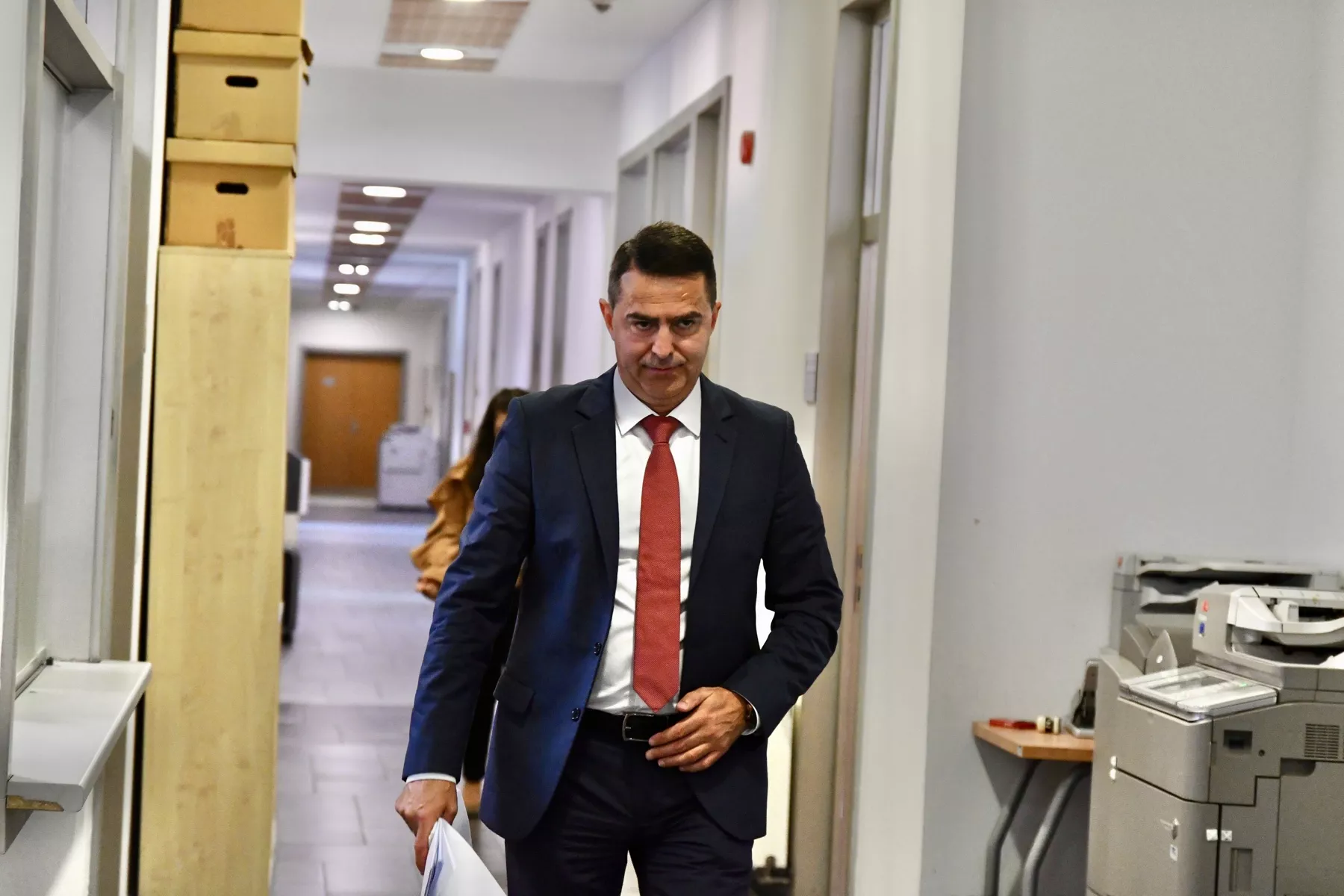
The press conference of the Chief State Prosecutor Milanko Kajganić was supposed to present the results of the work of the Prosecutor's Office of Bosnia and Herzegovina.
This is not a joke, that is how they titled the media invitation, although it would sound more accurate as the results of the inaction of the Prosecutor's Office of BiH.
But, regardless, the conference opened a series of serious questions about the functioning of this key judicial institution, its priorities, and internal relations. It has long been known that nothing is right there, and every new case in which the compromise of a prosecutor is revealed proves what we know – there is little that is healthy in the Prosecutor's Office of BiH.
No matter how much Kajganić tries to justify himself, it is clear that the fish always stinks from the head. Because it is not as if Kajganić just came to the helm of the Prosecutor's Office of BiH yesterday.
At first glance, the figures presented by Kajganić seem impressive. The percentage of convictions in war crimes cases is 80 percent, while second-instance verdicts have a rate of 71 percent. However, behind these statistics lies a reality that is much more complex and devastating for the state of Bosnia and Herzegovina.
Even three decades after the end of the war, the Prosecutor's Office of BiH has 162 active war crimes cases where the perpetrators are known. In as many as 86 cases, the suspects are unavailable to the judiciary and are located in regional countries.
Then, in their absence, prosecutors, at the behest of Serbia, proceeded to prosecute those who are available. As a rule, these are members of the Army of the Republic of BiH and the Ministry of Interior of the Republic of BiH, the only legal military forces on the territory of BiH at that time.
They are being tried for defending the state of BiH, the only one they love and have, while these unavailable ones are mostly aggressors against BiH, hiding in Serbia and Croatia. And where is the justice in that? We know it has long ceased to reside on Kraljice Jelene Street.
Kajganić is one of those who actively participated in indictments based solely on revisionism. We remind you that he represented the indictment against Ramiz Dreković (finally acquitted), and then he also signed the most controversial indictment when it comes to war crimes, the Dobrovoljačka case!
Incidentally, this case was concluded in The Hague, as well as in the courts in Vienna and London.
And this is no longer just a judicial problem, but also a political and diplomatic defeat for a state that has failed for three decades to build an effective regional mechanism for prosecuting war crimes. Quite the opposite, at the behest of Belgrade, cases are being formed and work is being done on revisionism.
An equal paradox lies in the other priority of the Prosecutor's Office of BiH and the fight against organized crime. Kajganić emphasized that cases arising from the decryption of the Sky and Anom applications are an absolute priority. However, it is precisely in this context that the public received information about an internal upheaval in the institution. Aside from the fact that prosecutors of the Prosecutor's Office of BiH use Sky evidence blindly, without having established and found other evidence besides it, the subject of these disputes most often goes to Strasbourg. The case from Tuzla, where the court rejected Sky evidence, could complicate the whole story.
The transfer of Deputy Chief Prosecutor Džermin Pašić from the Department for Organized Crime to the Department for War Crimes was formally presented as a "redistribution." However, the explanation that followed casts a completely different light on that decision. Kajganić confirmed that Pašić is mentioned in several cases and that he filed a disciplinary complaint against him due to questionable handling of official notes and information.
If what Kajganić claims is true, that Pašić was a 'participant,' how is it possible that the complaint goes only to the disciplinary prosecutor, is there possibly a criminal offense and responsibility here?
If that is indeed the reason, then the logical question arises as to why the public learned about it only after journalists' questions? And why are such information revealed only when personnel changes have already aroused suspicion?
Particularly concerning is Kajganić's claim about the leaking of information from investigations. If it is true that orders for financial investigations appear on portals before the suspects even know they are under investigation, then this is a serious security problem within the judicial system.
However, the public did not get an answer there either as to who is leaking the information and why no one has been held accountable to this day.
The most questions, however, are still raised by the "Villa on Dedinje" case. But it is interesting that the suspicious decisions of the Prosecutor's Office that dismissed cases of subversion of the constitutional order of BiH orchestrated by Milorad Dodik are not mentioned.
Kajganić thus spoke only about the case against the President of the Republika Srpska, Milorad Dodik, regarding the 'Villa Dedinje', in which there is still no prosecutorial decision.
The explanation that Serbia did not provide evidence may be part of the problem, but it can hardly be the only reason for years of waiting. In a country where politically sensitive cases are often dragged out indefinitely, such explanations no longer inspire public trust.
Kajganić finally stated that anyone who believes he has broken the law can file a complaint against him. That statement sounds principled, but it does not solve the fundamental problem of the crisis of trust in the judiciary. Because everything often boils down to 'the judge who accuses you is the judge who judges you.'
It should be borne in mind that the arrival and departure of chief prosecutors have not brought prosperity. Something is dangerously rotten.
Therefore, Kajganić should know that trust in institutions is not built through press conferences and statistics. It is built through transparency, consistency, and results, especially in cases that have been waiting for justice for years. One such case is the siege of Sarajevo!
And it is precisely these cases that remain the greatest silence of the Prosecutor's Office of Bosnia and Herzegovina.
And we know that Easter and the Resurrection are approaching, but we are not eggs, do not dye us!
Komentari (0)
Prijavite se za komentiranje
PrijavaJos nema komentara. Budite prvi!
Minuta
Sve →Iz drugih kategorija

High Representative Not Elected: Germans, French and British Against Americans, New Attempt at End of June

ČOVIĆ WITHOUT MERCY: How Those Who Brought Ademović to Office Created a Political Hell for Him



Sunny Saturday, quite warm



Tragedy in Albanian resort: Two minors drown












