
The thesis “Why can’t the RS be an independent state if Kosovo can” is being promoted within the framework of Aleksandar Vučić’s constant repetition of the phrase that "Kosovo (Albanians) cannot get everything, and Serbia nothing!”
Vučić knows that he cannot get anything from Kosovo because Kosovo is already a state with its own borders, territory, and constitutional system. Kosovo's independence is the result of the breakup of Yugoslavia, in which Kosovo had its constitutional identity and was a constituent element of the Federation. It is also the result of the fact that Serbia, contrary to the provisions of the SFRY Constitution, which is still in force, forcibly and unconstitutionally, violently, trampled on Kosovo's then legal constitutional status in 1989. By doing so, it violated the human and ethnic rights of Albanians, who constituted over 80% of Kosovo's population. Albanians did not reconcile themselves to this. Thus, Serbia shook the foundations of Yugoslavia as it was until then.
Vučić, by saying that Serbia must get something, is actually targeting the RS, i.e., half of Bosnia and Herzegovina. Hence, Milorad Dodik adds: “If Kosovo is to be a state, then the RS, on the same basis, will seek independence!”
Bosnia and Herzegovina, according to the last SFRY Constitution, was a republic like all others. When it became clear that Yugoslavia was on the verge of dissolution (breakup), the European Community formed the so-called. Badinter Commission with the task of determining or interpreting the principles of international law by which new states could emerge. This was to help avoid chaos and wars in the process of Yugoslavia's dissolution. According to the principles of the Badinter Commission, BiH gained the right to statehood, as did other republics. Of course, as within the SFRY, it was a state of equal peoples and citizens living in it.
However, with direct support from Belgrade, the political representatives of the Serb entity demanded that BiH remain part of the rest of Yugoslavia, without Slovenia and Croatia, which, according to Belgrade's ideas, would transform into some kind of “Greater Serbia”.
Bosniaks, Croats, and other citizens from BiH, as well as a good number of Serbs who considered Bosnia their homeland, did not agree to this. They opted for an independent state, given that the SFRY no longer existed according to the 1974 Constitution. After declaring independence, BiH was internationally recognized and admitted to the UN, as were Slovenia, Croatia, and Macedonia.
Kosovo was under Serbian occupation at the time and remained within Serbia by force. Montenegro voluntarily remained in the so-called Federal Republic of Yugoslavia until the 2006 referendum on independence. It is known how Montenegro's statehood was violated by Serbia in 1918.
Albanians of Kosovo did not reconcile themselves to the violent violation of Kosovo's constitutional status in 1989, nor to the state of occupation and apartheid. As Serbia's repression of Albanians intensified, they resisted. Significant factors in the international community supported the legitimate rights of Albanians. Finally, in 1999, with the help of the democratic world and Albanian resistance, Kosovo was liberated from Serbia. The UN Security Council adopted Resolution 1244, which introduced the UN Interim Administration Mission in Kosovo (UNMIK) pending the final status settlement. A NATO contingent (KFOR) was deployed to maintain peace. By this Resolution, all segments of Serbian sovereignty (army, police, administration, constitutional powers, and everything else) were abolished in Kosovo.
In 2008, again with the help of the UN Security Council, through the so-called. Ahtisaari Plan, Kosovo was declared an independent state. Therefore, it was not “unilaterally declared” as persistently repeated in Belgrade. The International Court of Justice, precisely when considering Serbia's request, stated that Kosovo's declaration of independence is not contrary to International Law and is not contrary to UN Security Council Resolution 1244.
Kosovo is recognized as a state by 115 countries, including the USA and other Western European countries.
Therefore, there is no similarity whatsoever with the history and facts of how Kosovo gained independence in the RS entity.
The RS was originally created through heinous crimes, unseen in Europe after World War II. Genocide, ethnic cleansing, war crimes, crimes against the civilian population, destruction of places of worship... And all this with the direct initiative and support from Belgrade, with the help of the JNA, and then leaving the entire arsenal of that army in the possession of those who committed these crimes. All of this has been proven by the verdicts of the Hague Tribunal for war crimes and the sentences for the founders of the RS.
The “Dayton Agreement” had the primary goal of stopping these crimes and wartime atrocities. At the same time, this agreement made Bosnia and Herzegovina a dysfunctional state. Two entities were established, which had never existed before, with certain competencies. Despite all these shortcomings, the Dayton Agreement, without alternative, recognizes Bosnia and Herzegovina as an independent and sovereign state within the borders and territory it had as a federal unit of the SFRY. It was and remained a member of the UN as such. The RS, according to this structure, is merely an ENTITY within the state of BiH and nothing more.
The efforts to promote this entity into a state that would join Serbia are merely invoking the specters of the recent past with the aim of undermining BiH as a state. Bosnia has always been what it is, even under foreign rule, with its specificities and identity. Despite the agreements and efforts of its neighbors to destroy and annex it. But west of the Drina, there has never been Serbia, nor will there be.
In fact, all efforts in this direction only harm Serbia as a state, and they also create illusions for Bosnian Serbs and complicate their normal lives in their country, Bosnia and Herzegovina.
In short, it is obvious that there is absolutely no similarity between Kosovo and the RS entity. Everyone knows this. Especially in Serbia. However, the rulers from Belgrade, due to their internal needs, continue to hold Bosnian Serbs hostage to Greater Serbian illusions.
* Azem Vllasi was a high-ranking state and party official during Yugoslavia. He is now a lawyer. He is one of the advisors to the Kosovo authorities on relations with the countries of the region.
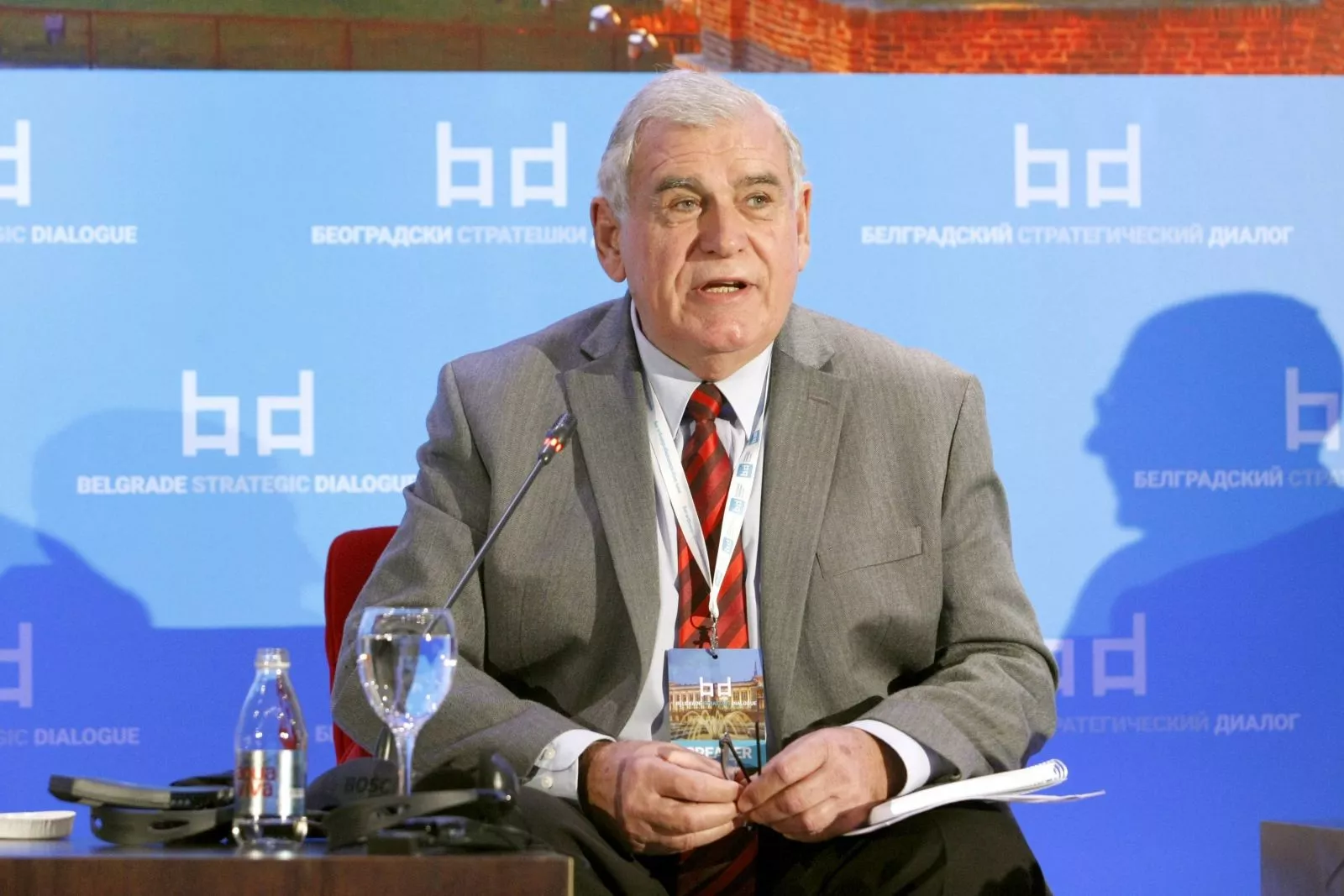
* The photo for this column was taken from the Beta news agency.
Komentari (0)
Prijavite se za komentiranje
PrijavaJos nema komentara. Budite prvi!
Minuta
Sve →Iz drugih kategorija

High Representative Not Elected: Germans, French and British Sabotaged Americans, New Attempt at End of June

ČOVIĆ WITHOUT MERCY: How Those Who Brought Ademović to Office Created a Political Hell for Him



Sunny Saturday, quite warm



Tragedy in Albanian resort: Two minors drown












