
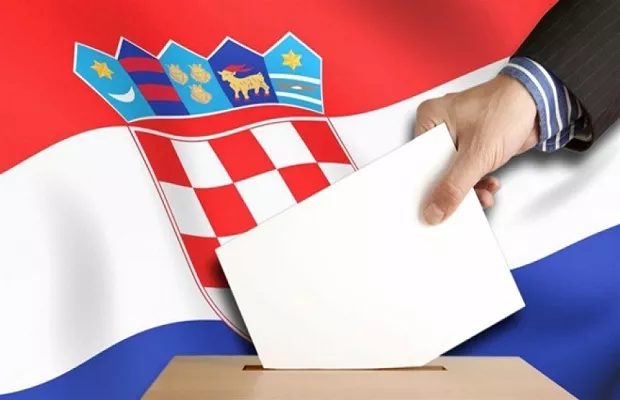
On the occasion of the 9th (early) parliamentary elections in the Republic of Croatia since its declaration of independence, to be held on September 11, 2016, the international institute IFIMES has prepared an analysis of the current pre-election events. The last regular parliamentary elections were held on November 8, 2016.
The current Government of the Republic of Croatia was appointed on January 22, 2016. The Prime Minister became Tihomir Orešković, a Canadian Croat, an independent candidate of the HDZ, who was previously the financial director at the Israeli pharmaceutical multinational TEVA (Pliva). The government was formed by the "Homeland Coalition" led by the Croatian Democratic Union (HDZ) and several smaller parties and representatives. The party of independent lists MOST, led by Božo Petrov, then mayor of Metković, played a key role in forming the new Croatian government. Although everything indicated that the "Croatia is Growing" coalition led by the Social Democratic Party (SDP) would form the parliamentary majority after the elections, a change of coalition partner by MOST occurred at the last moment. Observers believe that this decision was heavily influenced by the Roman Catholic Church (RCC), which is extremely influential in Croatia and holds a strong position in social and political life.
RECONSIDER THE POSSIBILITY OF (NON)VOTING OF THE CROATIAN DIASPORA?
Members of the Croatian Parliament are elected directly, by secret ballot using a proportional system whereby each party or candidate is entitled to a number of parliamentary seats proportional to the number of votes received. The electoral threshold is five percent. 140 representatives are elected to the Parliament from the territory of the Republic of Croatia, which is divided into 10 electoral districts, with 14 representatives elected from each electoral district. These are the second parliamentary elections to introduce a preferential vote. Very little has been done to promote the preferential vote. It is expected that in these elections, due to recognizable candidates such as former Croatian president Stjepan Mesić, the possibility of electing through a preferential vote will be affirmed.
177 candidate lists are participating in the elections, of which 174 are party lists and three are independent lists. There are a total of 2,456 candidates, of which 1,480 (60.26%) are men and 976 are women (39.74%). The average age of the candidates is 47.4 years.
The Republic of Croatia has about 4.4 million inhabitants, with 3,799,609 eligible voters, of whom 3,740,200 reside in Croatia, including 11,267 previously registered. 59,409 voters have registered to vote outside Croatia (diaspora - expatriate Croatia). The largest numbers registered in Bosnia and Herzegovina, Germany, Serbia, Switzerland, and Austria. The diaspora will vote in the 11th electoral unit, while members of national minorities have the right to vote for eight of their representatives and will vote in the 12th electoral unit.
The voting of the diaspora is precisely what is controversial. Although officially part of the Croatian diaspora in the constitution, Croats in Bosnia and Herzegovina are a constituent people who participate in the government at the state level in BiH on a parity basis with the other two peoples, Bosniaks and Serbs. The issue of permanent residence and, most importantly, the payment of taxes and other duties to the Croatian state is also raised. The Croatian diaspora does not participate in this. The number of polling stations in Bosnia and Herzegovina has been reduced, which prevents numerous Croats in BiH, who formally have the right to vote, from exercising that right.
A SOCIETY BASED ON THE PAST AND LIES
Croatian society is deeply ideologically divided, primarily by divisions from the past, especially divisions stemming from World War II. The political scene is extremely polarized, symbolized by two strong political blocs-coalitions - HDZ and SDP (People's Coalition).
HDZ is the leader of the center-right and on its own list, alongside candidates from the Croatian Democratic Union (HDZ), there are also candidates from smaller parties such as HSLS and HRAST.
The center-left coalition "People's Coalition" is led by the Social Democratic Party (SDP), which includes SDP, Croatian People's Party (HNS), Croatian Peasant Party (HSS), and Croatian Pensioners' Party (HSU).
Positioned between the two existing political blocs is the party of independent lists MOST, which fundamentally criticizes both political blocs and the two leading parties, HDZ and SDP, which it believes are the source of almost all problems in the Croatian state since independence.
HDZ's program focuses on economic growth, new jobs, and social justice. They are campaigning under the slogan "Credible." HDZ promises 5% growth, the creation of 180,000 new jobs, a reduction in VAT, an increase in salaries, the write-off of debts for blocked citizens, and amendments to the Enforcement Act. They promise to increase the employment rate to 68% by 2020 and to make Croatia a prosperous and orderly state in the next four years. HDZ is a party burdened by numerous issues. It is considered responsible for the distorted privatization of social property and for fostering the emergence of numerous Croatian tycoons who have plundered the Croatian economy. It is the only political party being prosecuted for corruption. Its former president and prime minister, Ivo Sanader, is also being prosecuted for corruption. The upcoming early parliamentary elections were precisely caused by HDZ due to the shady dealings of their then-president Tomislav Karamarko and his wife. HDZ is again involved in non-transparent financing, having taken a loan from a private company, which the public only learned about later. The new president, Andrej Plenković, is being criticized for not presenting his assets. Although HDZ is campaigning with the slogan "Credible," its credibility is clearly being questioned, as synonyms for credibility are truthfulness, convincingness, honesty, accuracy, reliability, and trustworthiness.
In Croatia, before the lustration that HDZ insists on, it is crucial to pass a law on the origin of property, as the state has been plundered primarily during the long rule of HDZ. The process of decriminalization of that party and its cadres is still ongoing within the party. Plenković has the difficult task of Europeanizing HDZ, which is still a movement with Balkan manners, rather than a modern European people's party. HDZ is trying to present itself as a Christian democratic party that follows the policies of the founder of HDZ and the first president of independent Croatia, Franjo Tuđman, who did not found it as such, because he never wanted HDZ to be seen as a Christian democratic party.
The program of the "People's Coalition," which considers itself a progressive coalition of the left, center-left, center, and center-right, is based on creating a country of satisfied people who will live and express themselves in accordance with their beliefs and their free understanding of their own identity. Freedom, equality, solidarity, and fair pay for fair work are the fundamental goals of this coalition. The coalition's slogan is "A Secure Path for Croatia," aiming to return Croatia to a path of stability and growth, a path for the protection of human rights, media freedom, and public healthcare accessible to all, and the implementation of educational reform. A secure path for Croatia and all its citizens, regardless of religion, race, nationality, financial status, gender, and sexual orientation. SDP's burden is that its government from 2011-2016 was considered one of the weakest Croatian governments.
MOST's program is based on conditions for coalition, which the leaders of MOST sent to the two leading parties, HDZ and SDP. MOST demands the adoption of the Law on the Rights and Duties of Members of Parliament, a proposal for amendments to the Law on the Croatian National Bank, i.e., the demand that the State Audit Office can enter the Croatian National Bank (HNB), their waste management strategy, amendments to the Law on Financing of Political Parties, and the first part of the reform package on local government and self-government as conditions for coalition. Petrov is introducing a psychiatric approach to Croatian politics - diagnosing the problem and setting conditions for therapy.
Critics of MOST and Božo Petrov believe that the current Government of the Republic of Croatia, composed of MOST, has, as soon as they had the opportunity to lead the country, forgotten all points of their program and solutions and have exclusively engaged in staffing and political intrigues. Due to such policies, upon coming to power, MOST has lost significant support from the electorate, but also due to unsuccessful coalition with HDZ. As a result, the electorate's support for this party or list has halved. MOST has proven to be an inconsistent and unreliable political partner.
In addition to the two leading political blocs-coalitions, the "People's Coalition" or SDP and HDZ, and MOST, smaller parties such as the Istrian Democratic Assembly (IDS) and the Croatian Democratic Alliance of Slavonia and Baranja (HDSSB), as well as the coalition gathered around Živi zid, and minority representatives can play an important role.
Discussions about World War II and the role of partisans and Ustaše, as well as divisions stemming from the recent Homeland War and the role of individuals in it, are very frequent in Croatia. In this context, numerous lies have emerged (Headquarters for the Defense of Vukovar), which are fetishized, with individual leaders of Croatian veterans playing a key role, manipulating facts. It is not surprising that one of the leaders of the veteran population wants to participate in a possible conversation with Serbian Prime Minister Aleksandar Vučić solely for his private business interests in Serbia, while in Croatia he tries to present himself as "the measure and symbol of Croatian identity."
In a closely contested election race, a very tight electoral result is expected between the two leading coalitions/parties, thus increasing the importance of smaller parties if they cross the 5% electoral threshold. According to current estimates, the "People's Coalition" has a greater coalition capacity for forming a post-election coalition so far, as MOST's coalition with HDZ was a complete fiasco for it. The President of the Republic of Croatia, Kolinda Grabar Kitarović, plays a significant role in forming the new Government of the Republic of Croatia, depending on whom she will first grant the mandate to form the new Government of the Republic of Croatia.
DECRIMINALIZATION OF THE STATE, FREE MEDIA, AND ECONOMY
Although Croatia has achieved significant results in the fight against corruption and crime, the process of decriminalizing Croatia is still below what is needed and expected. Crime and corruption are the cancer of Croatian society, and the media and economy are only partially free.
According to Transparency International's Corruption Perceptions Index (CPI), Croatia ranked 50th out of 167 countries in 2015, along with Bahrain, Hungary, and Slovakia. In terms of media freedom (2015 World Press Freedom Index), it ranks 63rd out of 180 countries, with the status of a partially free media country. In the 2015 economic freedom rankings, compiled by the Heritage Foundation and the Wall Street Journal, Croatia ranks 103rd out of 166 countries, representing a significant drop and setback, and a serious warning that the state must take numerous measures and efforts to improve economic freedoms.
Croatia is one of the few EU countries where committed crimes and corruption are linked even to the highest state representatives, such as prime ministers, deputy prime ministers, and individual ministers, who are undergoing judicial proceedings or are in prison.
Since its independence, the Republic of Croatia has not managed to find appropriate economic solutions to accumulated economic and social problems, including the current government of Tihomir Orešković (HDZ), which shows slight progress primarily due to favorable economic trends within the EU and a successful tourist season. Croatia's public debt has long exceeded the upper permissible limit of over 80% of GDP. Croatia is in a deep crisis, and the deficit is mainly covered from three sources: tourism, remittances from Croatian citizens abroad, and the sale of domestic real estate and companies. Tourism, according to economists, is a very vulnerable sector that can be shaken by economic crises, the current refugee/migrant crisis, climate or security/political conditions, including instability and the presence of more intense terrorism in the region.
NUMEROUS PERSONAL INSULTS BETWEEN POLITICAL LEADERS
Political polarization has turned into a personal confrontation between leaders Zoran Milanović (SDP) and Andrej Plenković (HDZ), and to a lesser extent Božo Petrov (MOST).
The election campaign is marked by numerous insults, offenses, belittling, disinformation, and numerous personal attacks, primarily between the two leading political blocs-coalitions and their personifications - Milanović and Plenković. In addition to the campaign being relatively short, largely due to summer holidays, there is very little clearly articulated political content and messages, especially those related to economic recovery and improving citizens' living standards.
The understanding of anti-fascism still represents a problem for a part of Croatian society. HDZ often does not understand anti-fascism, because if they did, they would protect and cherish anti-fascism and nurture the anti-fascist tradition, rather than making outbursts that can sometimes be assessed as neo-fascist. SDP has not yet profiled itself as a spokesperson for the disenfranchised citizens of the Republic of Croatia, primarily the working class and lower social strata.
The rehabilitation of Draža Mihajlović, the Chetnik military commander during World War II, in Serbia has provided an impetus for neo-fascism in Croatia, or "wind in its sails." This has spurred similar processes in Croatia, such as the reincarnation of Ustašism and the revision of World War II history, which represent an example of informal cooperation and support between (neo)fascists and their followers in Croatia and Serbia.
THE CATHOLIC CHURCH IN THE FUNCTION OF DESECULARIZATION?
The secularity of modern Croatia is threatened by the privileged position of the Roman Catholic Church (RCC) compared to other churches and religious communities and its interference in numerous social and political issues. The property of the RCC has been almost entirely returned, while it has not been fully returned to Jews and other groups. Representatives of the RCC, in their sermons, guide citizens/voters on how they should vote in elections, almost regularly suggesting that they should not vote for left-oriented parties.
Cardinal Josip Bozanić has often emphasized in public appearances that "it is easy for a believer to decide who to vote for, it is enough, he says, to choose whether an option is willing and able to defend human life from conception to natural death, whether it advocates for freedom of religious practice, understands marriage and family as a union of a man and a woman, respects and helps families who want to have more children, incorporates Christian and universal human values into upbringing and education or follows new ideologies that seriously harm Croatia, respects important state and social institutions, how it reacts to the remarks of Croatian veterans, how it shows that it will advocate for progress and the common good in the economy, not for narrow party and private interests, and whether they have the desire and strength to unite Croats in Croatia and abroad."
Religious education in schools, crosses in state offices, and church blessings of state investments justifiably raise the question of the separation of the Croatian state from the Church.
Croatia is facing economic collapse and certainly cannot fulfill the enormous financial obligations arising from the agreements with the Holy See, which requires amendments or redefinition of the signed agreement with the Vatican.
Political support from abroad, such as from German Chancellor Angela Merkel (CDU) and other recognizable European right-wing politicians (EPP), cannot help HDZ, nor can the support of European social democrats (S&D) help SDP, as early parliamentary elections are primarily an internal Croatian political issue.
However, it is observed that the ruling elites in neighboring countries, primarily Serbia and Hungary, have an interest in HDZ winning the upcoming elections and Andrej Plenković becoming the new Croatian prime minister. Viktor Orbán (Fidesz) and Aleksandar Vučić (SNS) and their parties are members of the European People's Party (EPP), thus coming from the same political family of right-wing and center-right parties.
The European People's Party (EPP) is actively working to bring Plenković and Vučić closer. Estimates are that if Zoran Milanović were to become prime minister again, he would be far more successful in countering Aleksandar Vučić and Serbian politics, as well as Hungarian Prime Minister Orbán and Slovenian Prime Minister Miro Cerar. Croatia shares a thousand-kilometer-long border with Bosnia and Herzegovina, and it is foolish to believe that BiH is irrelevant. On the contrary, BiH is far more important to Croatia than any other country, as the situation in BiH directly affects the situation and economy/tourism in Croatia.
WHO CAN OPPOSE SERBIA, HUNGARY, AND SLOVENIA?
Analysts warn that Croatia needs a government that is not ideologically burdened by the left or right extremes, but a government that will ensure general social consensus for numerous much-needed reforms and restore the lost trust of citizens in the politics and institutions of the modern Croatian state. It is very important that the new Croatian government works on national reconciliation, which has its roots in World War II (1941-45), as well as on eliminating divisions from the recent Homeland War (1991-95). Delayed lustration in Croatia, 26 years after the introduction of a multi-party system, would be harmful and likely misused for internal political settling of scores. It is far more important for Croatia to conduct an examination of the origin of property in the period after independence and to compensate the state for the damage caused through appropriate legal solutions.
The connection and cooperation of various political entities in leading Croatia out of the economic crisis, achieving economic prosperity, and solving youth unemployment is an area where the president of the state can play an important role.
Certain political options and individuals/candidates are trying to manipulate patriotism during the campaign, which rightly raises the question of redefining the role of patriotism in Croatian society, as patriotism has often been a cover for crime and the plunder of social (state) property.
Croatia must conclude the period of national romanticism. Croats have a national state; they must ensure its future for generations to come. The newly elected government will have to face numerous problems. Insisting on historical divisions among Croats is a return to the past, and Croatia and its citizens need a better future. There are no nations without historical divisions and traumas, but such a strong emphasis on the past at the expense of their future is detrimental to Croats, Croatia, and the region.
CROATIA IS LOSING INFLUENCE IN THE NEIGHBORHOOD
The political adventure with Orešković and Karamarko has cost Croatia dearly. Croatia's withdrawal from the Arbitration Agreement on the border with Slovenia (Piran Bay) was an additional impetus to increase patriotic and nationalist rhetoric not only towards Slovenia but primarily towards Serbia, and partly towards Bosnia and Herzegovina. The current government in Croatia, at the beginning of the year, immediately after taking power, abolished the region and introduced "neighborhood" as a new term for cooperation. Thus, according to this criterion, Albania also became Croatia's neighbor. The impression is created that when Croatia tries to escape the Balkans, it becomes closer to it.
The verbal conflict between Milanović and Serbian Prime Minister Aleksandar Vučić (SNS) was used for a strategic shift in the election campaign. HDZ is no longer the measure of "patriotism." Milanović himself has shifted those standards. With less intensity, Milanović verbally opposed Hungarian Prime Minister Viktor Orbán (Fidesz), with whom, in addition to ideological differences, he must resolve the issue of ownership of the INA oil company.
Relations with neighbors will still be a challenge and a test for the new Croatian government, as Croatia has lost influence and primacy in the region. Serbian Prime Minister Vučić has taken the lead, and therefore it is important who will become the new Croatian prime minister who can counter Vučić and others in the neighborhood.
Croatia has an inherited and defined state border only with Hungary, while with Slovenia, Bosnia and Herzegovina, Serbia, and Montenegro, it does not have defined border lines and signed interstate border agreements. Experts believe that Croatia needs constitutional changes, and opinions differ regarding the content and scope of constitutional changes. Croatia must face the rationalization of the number of counties (21), cities (127), and municipalities (428). In Croatia, mayors and city leaders can be elected as members of parliament, which is rare in developed democracies, as local self-government must be separated from legislative power.
According to relevant research, both leading political blocs-coalitions, the "People's Coalition" and HDZ, are quite evenly matched, with the "People's Coalition" in slight favor, and the final outcome of the campaign will determine who will be the relative winner of the upcoming early parliamentary elections in Croatia. Therefore, it would be extremely important to have a new televised debate between the leaders of both blocs-coalitions, Milanović and Plenković. The mobilization of voters of both leading political blocs at the end of the campaign could influence smaller political parties not to cross the 5% electoral threshold.
The votes of representatives from minority national communities and smaller parties, if they enter the Croatian Parliament, can tip the scales when forming a new ruling coalition.
Without an increase in the birth rate and a halt to the emigration trend, Croatia will face additional problems. In the election campaign, the topic of the EU and Croatia's role in it is peripheral. Croatia has not yet clearly positioned itself within the EU, apart from constantly "parrot-like" repeating that Croatia must utilize more funds from EU funds. Croatia's role in NATO also needs to be stronger. The impressive figure of a 24% increase in tourism and increased foreign investment is largely a consequence of NATO membership as a common security umbrella. This is also a strong message to Croatia's neighbors about what NATO membership means for economic development and foreign investment.
The upcoming early elections may be Croatia's last chance, as unfavorable developments within Croatia, in the region, and on the international stage due to political instability could lead the country in an undesirable direction. Croatia must decide whether it will live torn between the past and the future or definitively opt for the future. That decision rests with Croatian voters!
Komentari (0)
Prijavite se za komentiranje
PrijavaJos nema komentara. Budite prvi!
Minuta
Sve →Iz drugih kategorija

High Representative Not Elected: Germans, French and British Sabotaged Americans, New Attempt at End of June

ČOVIĆ WITHOUT MERCY: How Those Who Brought Ademović to Office Created a Political Hell for Him



Sunny Saturday, quite warm



Tragedy in Albanian resort: Two minors drown












