
Written by: Amina Čorbo-Zećo
Exactly twenty years ago, in 2005, the Parliamentary Assembly of Bosnia and Herzegovina and the House of Peoples of the Parliamentary Assembly of Bosnia and Herzegovina adopted the Law on the Service for Foreigners' Affairs, thereby establishing the Service as an independent administrative organization within the Ministry of Security of Bosnia and Herzegovina. As Dodik would say, this institution is not in Dayton. But there is also no desire from Milorad Dodik to manipulate and act unconstitutionally towards this institution. There isn't, because he has calculated well.
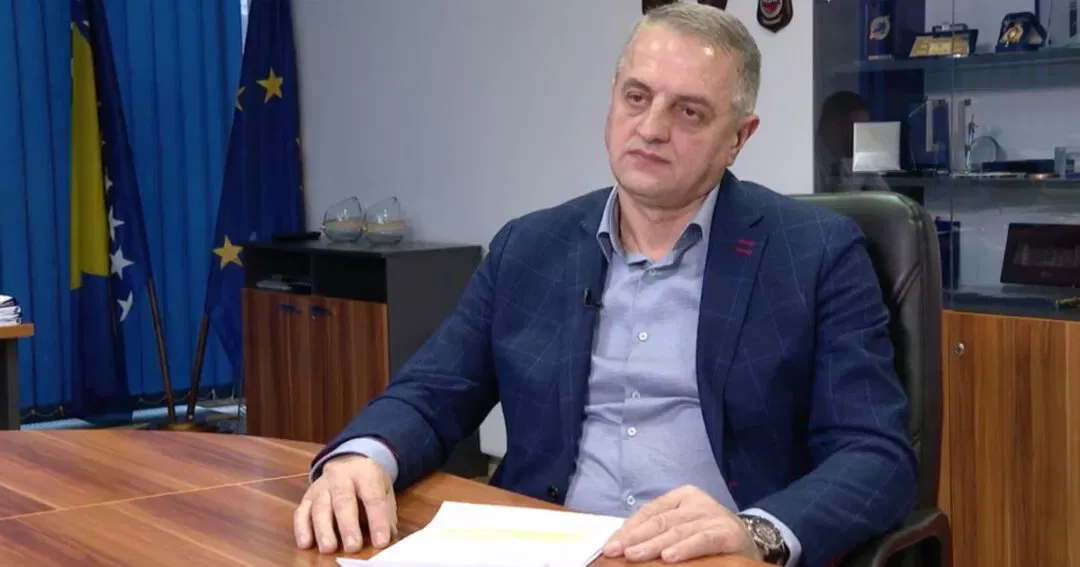
After its establishment, the Service for Foreigners' Affairs set up its headquarters in Sarajevo, ten field centers in the Federation of Bosnia and Herzegovina, five in the Republic of Srpska, one in the Brčko District, and one immigration center in East Sarajevo. Since then, the Service has been headed by directors from the Serbian people: Dragan Mektić (SDS), Slobodan Ujić (SDS), and the current director Žarko Laketa (SNSD).
However, recently, statements from the Republic of Srpska have increasingly claimed the alleged unconstitutionality of state institutions, including the Prosecutor's Office and the Court of Bosnia and Herzegovina, SIPA, and the Border Police. Yet, interestingly, as in the case of the Indirect Taxation Authority, these statements rarely or never mention the Service for Foreigners' Affairs.
Calculating Milorad Dodik knows that if the Service were to cease operations in the territory of the Republic of Srpska, a large number of companies, sports clubs, educational institutions, and other organizations would be directly threatened, and many jobs and projects could be halted.
This is because the Service for Foreigners' Affairs certifies invitation letters and approves stays for foreign nationals coming to the Republic of Srpska for various reasons, including economic and sports engagements.
Patria has investigated which companies operating in the Bosnian entity of the Republic of Srpska employ foreign workers.
According to the data we obtained, these are: JOKIĆ INVEST d.o.o. Zvornik – employs workers from Bangladesh, EURO EXPRESS d.o.o. Banja Luka – brings workers from Nepal, KRAJINA KLAS d.o.o. Banja Luka – employs workers from India, BELI-BORNA d.o.o. Laktaši – employs workers from China, CHINA STATE CONSTRUCTION ENGINEERING CORPORATION d.o.o. Banja Luka – engaged in highway construction with support from the Government of the Republic of Srpska, CHINA OVERSEASE ENGINEERING GROUP d.o.o. Banja Luka – employs workers from China, AGROIMPEX NOVA d.o.o. Banja Luka – brings workers from India, CHINA GEZHOUBA GROUP COMPANY d.o.o. Trebinje – engaged in the construction of the Dabar hydroelectric plant, an important project for the Government of the Republic of Srpska.
In addition, a large number of companies founded by citizens of the Russian Federation, who came to Bosnia and Herzegovina due to sanctions imposed on Russia, operate in the Republic of Srpska. Also, many foreign students, professors, humanitarian organizations, athletes, and even hospitality workers depend on approvals from the Service for Foreigners' Affairs.
Without the Service, foreign footballers of FK Borac or basketball players of KK Igokea could not play in Bosnia and Herzegovina, nor could foreign companies legally employ workers in the Republic of Srpska.
Although the Service for Foreigners' Affairs directly contributes to filling the state budget through fees it collects in the Republic of Srpska, its existence is not questioned. Unlike other state institutions that the authorities of the Republic of Srpska consider "unconstitutional," the Service is necessary for them to maintain the economy and smooth operations of foreign investors.
The question that remains open is whether in the future the Service for Foreigners' Affairs will also become a target of the authorities of the Republic of Srpska or whether its connection with other state institutions will continue to be ignored.
Time will tell whether the director of the Service, Žarko Laketa, a cadre of SNSD (who regularly meets with Dodik), will become subject to pressure due to his cooperation with the Prosecutor's Office of Bosnia and Herzegovina, SIPA, the Border Police, and OSA, especially after the recently adopted law of the Government of the Republic of Srpska that criminalizes cooperation with state institutions, or whether he will simply remain a cadre of SNSD in a state institution, as there are increasingly loud rumors that even in the event of a change in coalition at the state level, Laketa will remain at the head of the SPS.
What is certain now is that the Republic of Srpska economically depends on an institution it simultaneously tries to politically deny.
Komentari (0)
Prijavite se za komentiranje
PrijavaJos nema komentara. Budite prvi!
Minuta
Sve →Iz drugih kategorija

High Representative Not Elected: Germans, French and British Against Americans, New Attempt at End of June

ČOVIĆ WITHOUT MERCY: How Those Who Brought Ademović to Office Created a Political Hell for Him



Sunny Saturday, quite warm



Tragedy in Albanian resort: Two minors drown












