
The International Institute for Middle Eastern and Balkan Studies (IFIMES) from Ljubljana, Slovenia, regularly analyzes events in the Middle East and the Balkans. On the occasion of the 100th day of the election of the new Government of the Republic of Macedonia, IFIMES has prepared an analysis of the current political situation in that country. From the analysis "Republic of Macedonia: New Government, New Hope for Macedonia", we highlight the most important and interesting parts.
After a multi-year political crisis, the Republic of Macedonia (RM) got a new government only on May 31, 2017, led by Prime Minister Zoran Zaev (SDSM), although early parliamentary elections were held on December 11, 2016. The ruling coalition consists of the Social Democratic Union of Macedonia (SDSM), the Democratic Union for Integration (DUI-BDI), and the Alliance for Albanians (DR-ADP, UNITETI, NDP).
The new Macedonian Government inherited a difficult situation in the country in all sectors, but it is aware of the fact that it is necessary to ensure the prosperity, peace, and stability of that country and the region. The political crisis in Macedonia is a difficult and dramatic lesson for everyone. The Government of RM has offered an ambitious plan called "3-6-9", which stems from the Reform Program of the Government of RM (2017-2020), and takes into account the political agreement from Pržino (2015) and follows the recommendations of meetings with the highest representatives of EU institutions, guidelines from the European Commission's priorities on urgent reform (2015), recommendations of senior experts on systemic rule of law issues related to illegal wiretapping (2015), as well as a series of recommendations to the Government of RM from the past through permanent bodies of the Council of Europe (Venice Commission, GRECO), OSCE/ODIHR, findings and recommendations of the annual reports of the European Commission, including high-level accession dialogue, conclusions of the ministerial dialogue on the economic reform program, conclusions from regular meetings of various bodies of the Stabilization and Association Agreement (SAA), a document prepared by a group of non-governmental organizations called "Proposal for urgent democratic reforms", and numerous consultations with representatives of civil society.
The proposed "3-6-9" Plan needs to be implemented. The first group of measures was implemented in the first three months, i.e., by the local elections. The second group of measures is being implemented within six months, by the Council of the EU session in December 2017. The third group of measures is being implemented within nine months, by March 2018, i.e., by the publication of the regular European Commission Report on the Republic of Macedonia. The "3-6-9" reform plan is the first step of the RM Government towards Macedonia's serious breakthrough towards full membership in Euro-Atlantic integrations after years of stagnation.
The new measures are aimed at ensuring a fair and honest electoral process based on the recommendations of the OSCE/ODIHR and the Venice Commission, which will be implemented in the short, medium, and long term. Important issues in this regard are the voter list, media regulation and their reporting, updating the voter list, and ensuring the smooth and transparent operation of the State Election Commission (SEC).
The measures listed in the "3-6-9" Plan include the obligation to restore the democratic environment in the work of the Parliament of the Republic of Macedonia (Sobranie). It is important to establish parliamentary oversight over the Administration for Security and Counterintelligence (UBK), the Intelligence Agency of RM, and the process of secret communication surveillance.
Improving the Ohrid Agreement is one of the priorities of the RM Government, i.e., adopting the Law on the Use of Languages in consultation with the Venice Commission.
The new RM Government emphasizes continuous transparent and inclusive cooperation with the civil sector, which is involved in the decision-making process.
A very important issue is media regulation and strengthening civil society, as well as reforming public administration in the interest of citizens and the public.
The reform of the judicial system is one of the key goals that need to be achieved with recommendations and cooperation with the European Commission, the Council of Europe (Venice Commission and GRECO) with the aim of building and strengthening an independent, credible, impartial, transparent, professional, and efficient judiciary. In this regard, it is necessary to consider the "Assessments and Recommendations of the High-Level Independent Expert Group on Systemic Rule of Law Issues from 2017", led by Reinhard Priebe.
The reform of intelligence and security services and that sector is a demanding and challenging task. The fight against organized crime, corruption, and building a state of law will face numerous obstacles and obstructions. Migration presents a particular challenge, where cooperation with the countries of the region, the European Commission, and FRONTEX will have to be established.
The "3-6-9" Plan is being implemented by the RM Government according to the planned dynamics, despite the election campaign for local elections and constant sabotage by parts of the former regime of Nikola Gruevski (VMRO-DPMNE), who still do not want to accept the practice of candidate countries for NATO and EU membership that the process of joining NATO and EU requires the mobilization of all actors on the political and social scene of Macedonia, i.e., the government, the opposition, and civil society.
The reconstruction of the destroyed economy is the "priority of all priorities" of the new Macedonian Government. The intentions of the ambitious economic reform program and the projected economic growth of 5-7% are encouraging, which will affect the reduction of enormous unemployment and poverty. Also important is the new approach to cooperation with the large diaspora, which will be involved in the reconstruction of the faltering economy and society in terms of personnel and resources, and which can become an important investor in the homeland.
Neighborly and Regional Cooperation
The new Government of the Republic of Macedonia has made intensive efforts to develop neighborly relations, which are key to ensuring stability and peace and regional cooperation. Therefore, the new Macedonian Government has set developing and improving friendly relations with all neighbors as its priorities. Since Macedonia's path to NATO membership is blocked by Greece due to its opposition to the constitutional name Republic of Macedonia, relations with Greece are being restored, and a completely new positive environment is being created in relations between the two countries.
Zoran Zaev's government signed an intergovernmental agreement on good neighborly cooperation between Macedonia and Bulgaria without external assistance, which can be compared to the historic agreement between Germany and France after World War II.
Macedonian Prime Minister Zaev chose Bosnia and Herzegovina and the Chairman of the Council of Ministers of BiH, Denis Zvizdić, for his first visit to the region.
Analysts believe that the visit of Macedonian Prime Minister Zaev to Bosnia and Herzegovina as the first destination in the region after taking office as prime minister was not chosen by chance. The visit of Macedonian Prime Minister Zaev contains a number of geopolitical messages and hints at future positive political processes in the region, with which Macedonia and BiH will gain new momentum and support from the international community on the path to accelerated membership in NATO and the EU. Analysts believe that the new Macedonian Government is currently one of the few governments in the Western Balkans region that is fully committed to the rule of law and pro-European reforms.
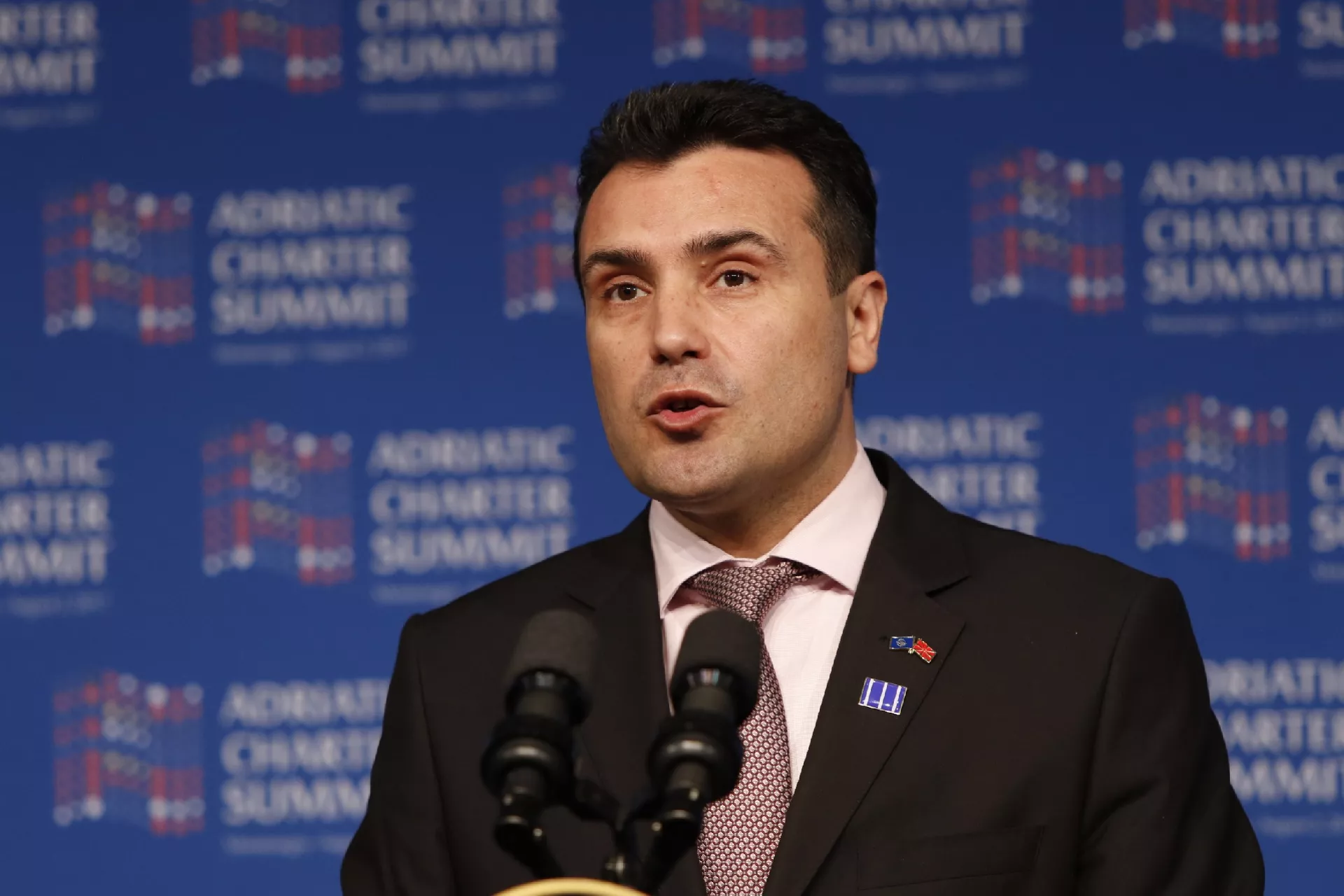
Support for the new Macedonian Government was also expressed through the American-Adriatic Charter at the summit in Podgorica, co-hosted by Macedonian Prime Minister Zoran Zaev, where US Vice President Michael Pence confirmed Washington's support for Macedonia and the region, stating that they will work to strengthen ties between the European Union, the Balkans, and the US within the framework of the American-Adriatic Charter, which further positioned Macedonia on the international stage.
Vučić's and Dačić's Debacle in Macedonia
Although the new Macedonian Government showed a sincere commitment to cooperation with its neighbors, a fabricated affair followed about alleged wiretapping by Macedonian security agencies of the Serbian Embassy in Skopje and Serbian officials. In doing so, attempts are made to ignore the fact that it was precisely Serbian President Aleksandar Vučić (SNS) who supported the regime of Nikola Gruevski and VMRO-DPMNE, which illegally wiretapped more than 25,000 Macedonian citizens.
Analysts warn that the attack on Macedonia and Prime Minister Zoran Zaev, orchestrated by Vučić and Serbian Foreign Minister Ivica Dačić (SPS), is partly intended to cover up and possibly prevent the publication of increasingly frequent information about alleged illegal wiretapping by Vučić's regime in Serbia, and to help and support VMRO-DPMNE in the upcoming local elections in Macedonia on October 15, 2017. Intelligence data shows that Vučić has been issuing instructions for a long time to help VMRO-DPMNE stay in power in Macedonia.
The new Macedonian Government did not react to the fabricated wiretapping affair it was supposed to be drawn into, so Vučić and Dačić suffered a complete debacle in Macedonia and lost all credibility as supposed factors of stability and peace in the region until recently. Analysts believe that Serbia needs to withdraw its widespread security and intelligence apparatus from Macedonia as soon as possible and stop conducting intelligence activities in Macedonia on behalf of a third country.
National security experts warn that the Serbian-Russian Humanitarian Center in Niš, Serbia, located in the immediate vicinity of Macedonia, poses a threat to Macedonia's national security. Increased Russian presence and activity in Macedonia have been observed, as well as by official representatives of the Serbian-Russian Humanitarian Center in Niš, who are already offering services and cooperation to some Macedonian institutions.
What Does Leadership Mean?
The change of regime of Nikola Gruevski and VMRO-DPMNE in Macedonia represents a strong impetus for democratic forces in the region, as most countries in the region have autocratic and, in many aspects, undemocratic governments dominated by crime, corruption, nepotism, intimidation, and non-free media.
Analysts assess that the emergence of Zaev and the new Government of the Republic of Macedonia represents a political danger to autocratic regimes and autocratic leaders in the region. Leadership requires a responsible attitude towards the state, towards citizens, and acceptance not only by its own ethnic community of Macedonians but also by other ethnic communities and their members in Macedonia (Albanians, Serbs, Turks, Roma, Bosniaks, Torbeši...). Zaev has succeeded in this, which represents a new quality on the political scene of the region and gives a new dimension and hope for a better future not only for the Republic of Macedonia but also for the region.
The International Institute IFIMES believes that Western countries made a mistake by tolerating undemocratic and authoritarian regimes in the Western Balkans region, as they focused on security rather than democracy in their approach to the region. Macedonia can be an instructive example to correct past mistakes, as democracy must be above all else, since all developed Western countries are primarily democratic and with developed private property and initiative, unlike the economically devastated and failed countries of the Western Balkans, which have been destroyed by political and criminal structures. That is why regimes in the countries of the region fear the civic project and movement "Truth about Macedonia", as the confrontation of democracy and citizens with hated regimes and their bearers is inevitable.
Analysts believe that it is of utmost importance for the Republic of Macedonia to soon become the 30th full member of NATO, and until then, Serbia and Russia will work intensively to destabilize that country, which is slowly becoming a hope and a locomotive of positive processes in the Western Balkans region.
Komentari (0)
Prijavite se za komentiranje
PrijavaJos nema komentara. Budite prvi!
Minuta
Sve →Iz drugih kategorija

High Representative Not Elected: Germans, French and British Sabotaged Americans, New Attempt at End of June

ČOVIĆ WITHOUT MERCY: How Those Who Brought Ademović to Office Created a Political Hell for Him



Sunny Saturday, quite warm



Tragedy in Albanian resort: Two minors drown












