
By: Amina Čorbo-Zećo
In the political life of Bosnia and Herzegovina, resignation should, at least in theory, represent an act of taking responsibility. However, recent examples show that this institution is increasingly turning into a procedural trick, a political maneuver to avoid legal or political consequences, while real power remains untouched.
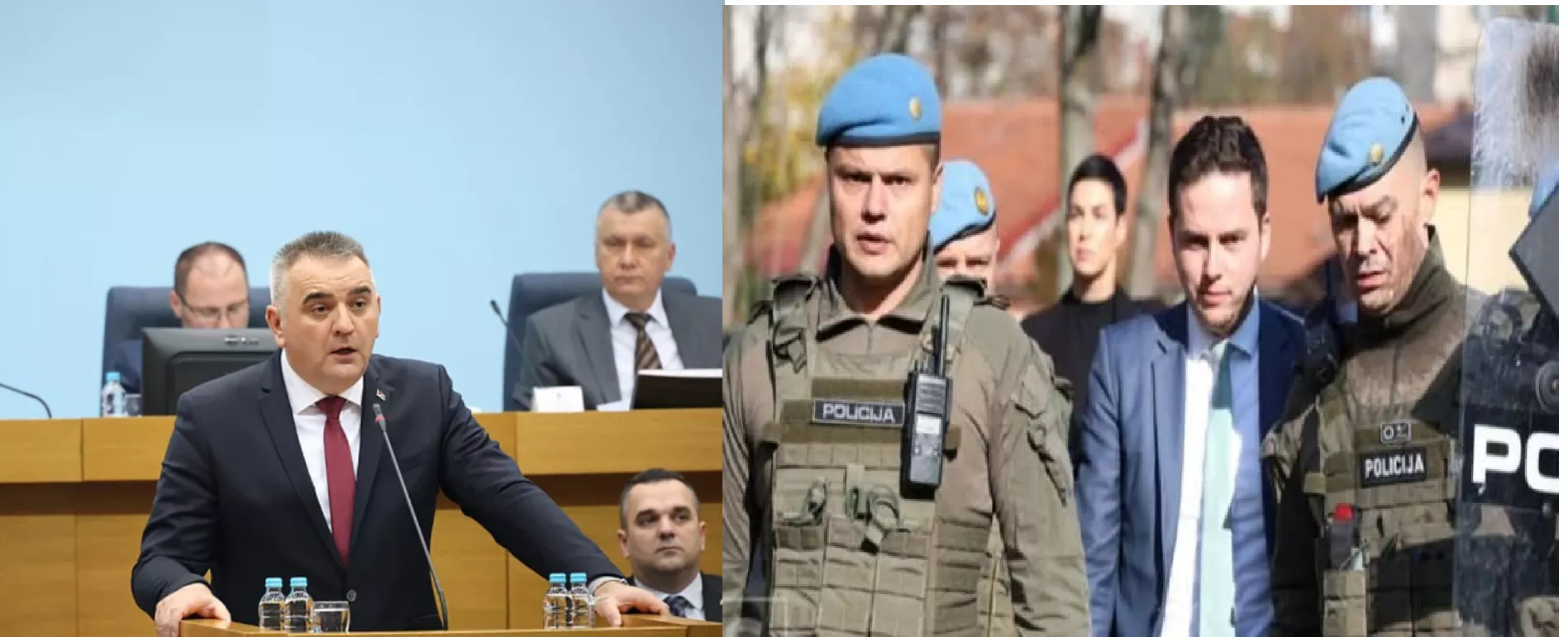
The latest case comes from Republika Srpska. Prime Minister Savo Minić has once again resigned from the position of President of the Government of RS, practically following the same scenario as in January this year. The reason, according to sources from the RS Government, is to avoid a possible blockade of power if the Constitutional Court of Bosnia and Herzegovina were to challenge the legality of the Government.
Minić has been in an almost identical situation before. The Constitutional Court of BiH had already declared the Government he led unconstitutional, because he was appointed as mandatary by the decision of Milorad Dodik at a time when his mandate as President of RS had already ended after a final verdict of the BiH Court. Instead of political responsibility or an institutional reset of the system, a solution was found in resignation, which opens the way for a new appointment.
The plan, according to available information, is simple: Minić resigns, RS President Siniša Karan then re-appoints him as mandatary, and the National Assembly of RS confirms a new Government at the end of March, again with the same prime minister. Thus, a formal change without a real change.
A similar pattern was seen in Sarajevo Canton. Prime Minister Nihad Uk has already resorted to resignation as a political instrument twice. The first time he did so to enable the dismissal of ministers from the Party for BiH, after which he returned to his position with a new coalition majority. He submitted his second resignation on February 15, three days after the tragic tram accident in which young Erdoan Morankić died, while four people were injured.
However, even after that resignation, Uk remained the primary political figure in Sarajevo Canton. The Government continues to function, and political responsibility remains formal. The only one shaken was SDP's Adnan Šteta, who had to justify for days why he did not resign. He claimed that he had placed his mandate at the disposal on the same day, but Uk told him to wait.
Gossipers say that the restraint of SDP deputies in the dismissal of the Speaker of the House of Peoples of the FBiH Parliament Dragan Mioković (Our Party) is precisely a consequence of the events in Sarajevo Canton.
But that is another topic. It is important now for the public to recognize that in both cases, resignation has lost its essence. It no longer means withdrawing from office or accepting responsibility, but becomes a technical tool for crisis management or avoiding legal obstacles.
This creates a dangerous precedent: politicians remain in power while simultaneously formally "leaving" their positions. A procedure that should protect the institutional order is turning into a means of circumventing it.
Such practice further undermines public trust in institutions. If resignation does not mean departure, if court decisions do not produce real political consequences, and if governments can be "reset" with the same names, then the question arises: what are procedures for, anyway?
Komentari (0)
Prijavite se za komentiranje
PrijavaJos nema komentara. Budite prvi!
Minuta
Sve →Iz drugih kategorija

High Representative Not Elected: Germans, French and British Against Americans, New Attempt at End of June

ČOVIĆ WITHOUT MERCY: How Those Who Brought Ademović to Office Created a Political Hell for Him



Sunny Saturday, quite warm



Tragedy in Albanian resort: Two minors drown












