
By Armin Sijamić
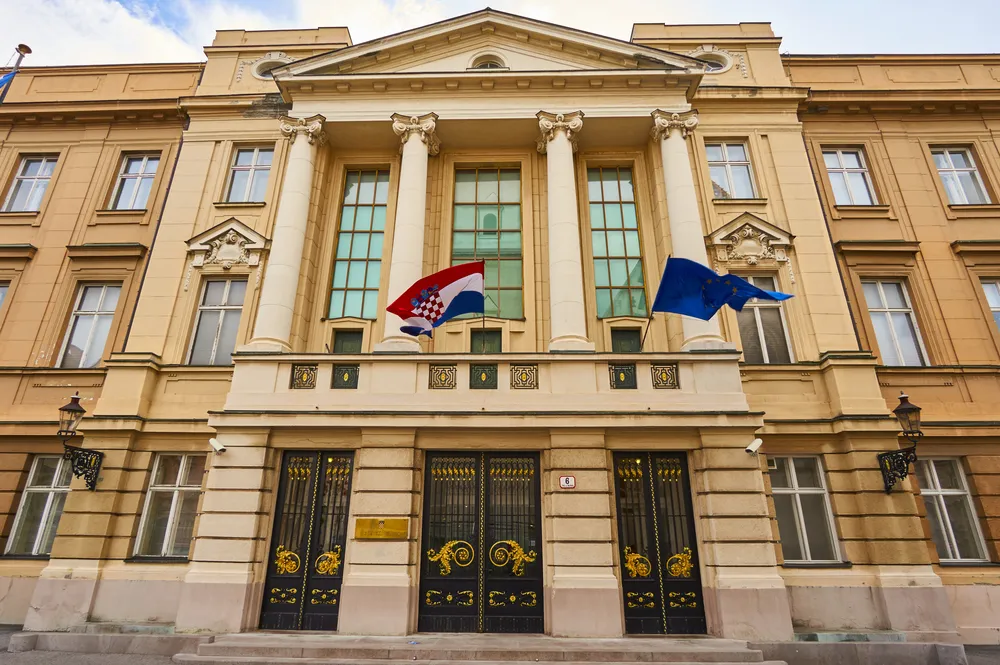
One of the most beautiful Adriatic cities hosted the sixteenth Dubrovnik Forum on July 7 and 8, attended by dozens of officials, mostly from Europe. Several topics were discussed, from the war in Ukraine, migrations, energy, and the Western Balkans.
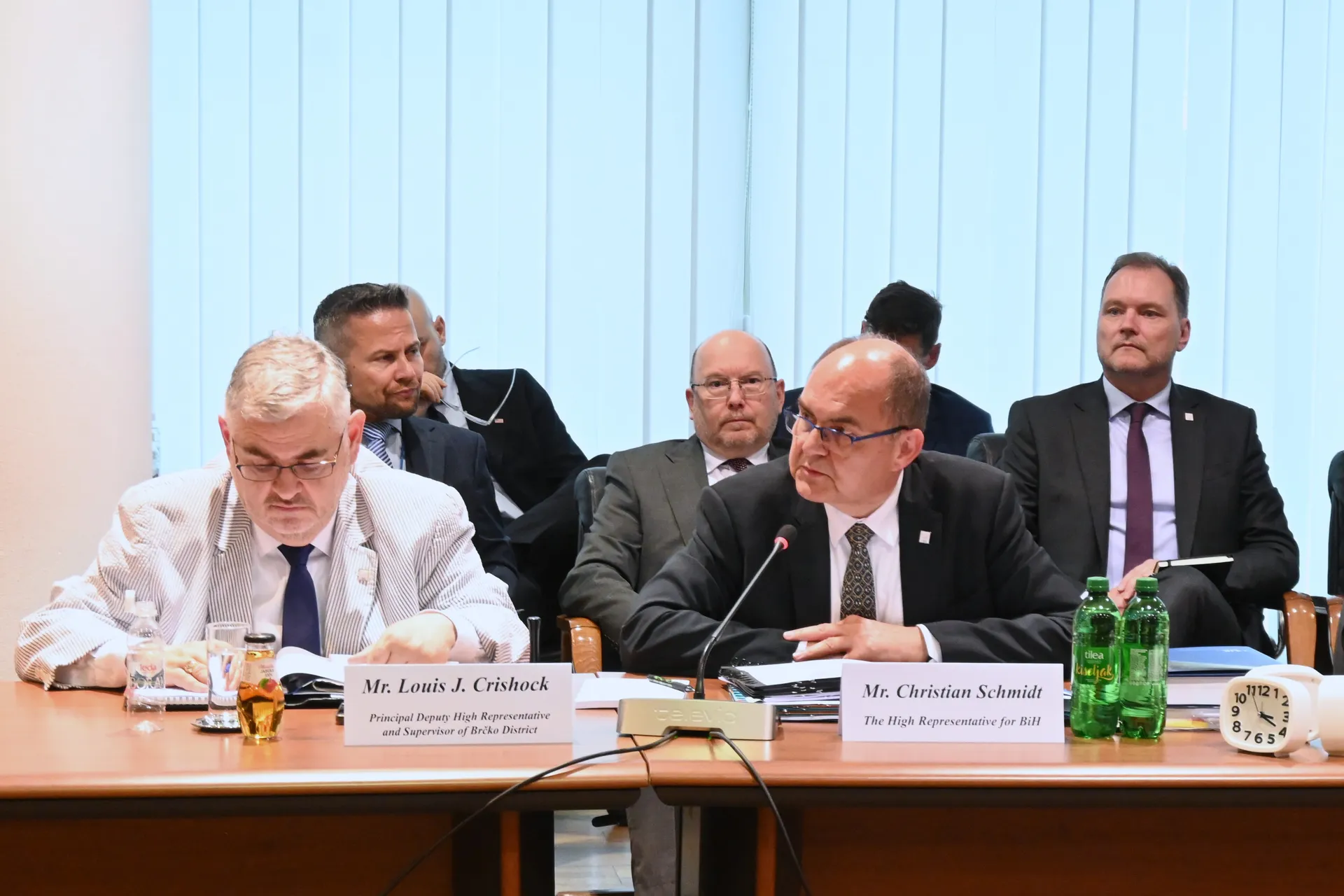
In several panels, participants, mostly from Croatia (prime minister, ministers, advisors, MEPs...), spoke in a conciliatory tone, presenting problems and challenges, but sending messages full of optimism. Such messages were also sent regarding the situation in Bosnia and Herzegovina and Kosovo, despite numerous reasons for concern. In addition to the Minister of Foreign Affairs of Bosnia and Herzegovina, Elmedin Konaković, and his deputy, Josip Brkić, the High Representative for Bosnia and Herzegovina, Christian Schmidt, also participated, from whom the public expects reactions after a series of moves by Bosnian Serbs.
Much important information was likely exchanged on the sidelines of the forum, but what has become public, at least concerning Bosnia and Herzegovina, does not inspire confidence. Namely, from the reactions of Schmidt, Josep Borrell, the High Representative of the European Union for Foreign Affairs and Security Policy, and Gabriel Escobar, the US envoy for the Western Balkans, one can infer that everything in the region is under control, or that they are not managing the processes.
Almost conciliatory tones towards the actions of Milorad Dodik, who has begun to disobey the central authorities in Sarajevo and the OHR, could also be a sign that the leaders of the aforementioned trio have not yet decided what to do in Bosnia and Herzegovina. Moreover, Schmidt says that Dodik "has a chance to show that he is constructive" and hopes "he will show it in the coming weeks." He also posed the question of the "drug" that Dodik "uses," calling on him to wake up from his slumber, as he will not allow "Republika Srpska to be transformed into Transnistria," alluding to the part of Moldova controlled by Russia.
Preserving the Dayton Agreement
Schmidt and Escobar emphasized that the Dayton Agreement must be preserved and that the international community will do so. Before the forum began, Escobar said that he would act against Dodik if he held a referendum on independence. This stance could mean that Dodik can do whatever he wants, as long as he "adheres" to the Dayton Agreement, which is absurd. If the West stands by Escobar's position, it means that Dodik could do anything while "adhering" to the agreement.
Therefore, it is not superfluous to quote HRT journalist Danko Družijanić, who reported from the forum that the Western Balkans are "being asked to fulfill their obligations under international law. In the case of BiH, this means a kind of return to the factory settings of the Dayton Agreement." If this observation is accurate, it means that the country could go back 28 years.
However, the issue of implementing the Dayton Agreement and its protection was previously resolved in Washington. President Joseph Biden issued "Executive Order 14033" on June 20, extending by one year his decision made a year earlier, which states that undermining the Dayton Agreement is a "national threat" to the US. Biden's order states that hindering progress towards "full integration into transatlantic institutions" is also a threat to national security. Hence, the dilemma from the beginning of the text about who (does not) control the processes in BiH takes on a new dimension. In other words, the issue of what constitutes preserving the Dayton Agreement is, in fact, a matter of perception, at least according to Escobar's statement. It can be assumed that the positions of the aforementioned trio are conditioned by the upcoming NATO summit, i.e., waiting for the stance of the alliance, which has the mandate to protect the Dayton Agreement.
Moscow or Belgrade
One of the topics at the Dubrovnik Forum was Russia's aggression against Ukraine. Participants sided with Ukraine. There was also talk of Russian influence in the Balkans, and Escobar and others linked Dodik to Moscow. From this familiar rhetoric, one can conclude that Moscow and Vladimir Putin personally are to blame for all the problems in the Balkans.
Russia's interest in undermining Western efforts worldwide is well-known, as is Moscow's desire to "distract" Ukraine's allies with the Balkans or other regions. Great powers often undertake such operations, and success depends on many circumstances. However, the question here is what kind of influence Russia has had on Balkan crises in the last 16 months, since the aggression against Ukraine began. Let's recall that Russian Foreign Minister Sergey Lavrov could not visit his allies in Belgrade because NATO member states did not allow his plane to fly over. On the other hand, all three crises that have shaken former Yugoslavia in recent years (Bosnia and Herzegovina, Montenegro, and Kosovo) have one common denominator – official Belgrade.
Serbian President Aleksandar Vučić is the undisputed leader among the Serbian people, and there is no significant Serb political party in the region that does not align with his views. After all, that is precisely why he has become a partner to many. However, all these crises are not enough for the West to identify the main culprit in the region. The crises in Bosnia and Herzegovina and Montenegro have intensified and deepened as Vučić consolidated his power, and when some in the West thought it would be wise to separate Belgrade from Moscow.
One of the main proponents of this idea is Escobar, who could not hide it again. At the Dubrovnik Forum, the Deputy Prime Minister and Minister of Foreign Affairs and Diaspora of Kosovo, Donika Gërvalla-Schwarz, spoke, disrupting the image of unity sent from Croatia. She said what everyone sees, even the European Parliament, but what EU officials, and especially Escobar, do not acknowledge. Gërvalla-Schwarz, targeting Vučić, said that some in the neighborhood have been helping Russia in its aggression against Ukraine for two years, adding that without the US and NATO, the EU is a "paper tiger" in terms of security, and that is why Brussels is lenient towards autocrats in the region to escalate crises and perhaps go to war.
The minister said that the Western Balkans does not need reconciliation because all countries are on good terms, with the exception of Serbia. The successors of Milošević must go to their neighbors and apologize, and after that, reconciliation is possible, said Gërvalla-Schwarz.
Escobar did not remain silent. "All the positive things that have happened in the last generation stem from American-European cooperation," he said, dividing the Western Balkan countries into those that contribute to regional stability and those led by populists and nationalists. He classified Kosovo among the latter. Thus, this issue also became a matter of perception. Albin Kurti, who was in Milošević's prison while Vučić was the minister of information in the then government, is a populist and nationalist who needs to be removed from power because he is trying to build Kosovo on European foundations. On the other hand, Vučić is presumably not a populist and nationalist, and that is why he receives Western support.
Let us recall that Kurti won free elections, while Vučić's opposition refuses to participate. Such moves were made by the Belarusian opposition.
Finally, there were no high-ranking officials from Serbia at this year's Dubrovnik Forum. If we recall the statement of the Croatian Prime Minister from the same forum two years ago, they were not needed. "If there is one topic where President (Zoran) Milanović and I agree, it is Bosnia and Herzegovina," Plenković said then. Three months later, Vučić said that "Belgrade and Zagreb have 90 percent aligned views on Bosnia and Herzegovina, especially on the Dayton Agreement and legitimate and legal representation."
Milanović has repeatedly stated that "Serbs are his allies in Bosnia and Herzegovina." A few days ago, Vučić said that the situation in BiH "will be much more serious and difficult after July twelfth or thirteenth." Fortunately, Putin is not pulling the strings in the region, as he is busy interfering in neighboring Ukraine.
Komentari (0)
Prijavite se za komentiranje
PrijavaJos nema komentara. Budite prvi!
Minuta
Sve →Iz drugih kategorija
High Representative Not Elected: Germans, French and British Sabotaged Americans, New Attempt at End of June
ČOVIĆ WITHOUT MERCY: How Those Who Brought Ademović to Office Created a Political Hell for Him

Sunny Saturday, quite warm
Tragedy in Albanian resort: Two minors drown