
Written by: Rasim Belko
It is no longer news. It has become like the weather forecast from London: cloudy, with occasional arrests. The British missionaries of neocolonial democracy in their own backyard have once again done what they do best: arrested several hundred dissidents to preserve their own version of “freedom of speech” — the one that ends the moment something disrupts the global narrative.
Nearly 500 people, in chains and on record, simply because they stood on the street for Palestine and against Israel's intentions. Great Britain has, quite literally, arrested democracy. The reason? The image of citizens on the streets does not fit the PR package being sent to the world audience.
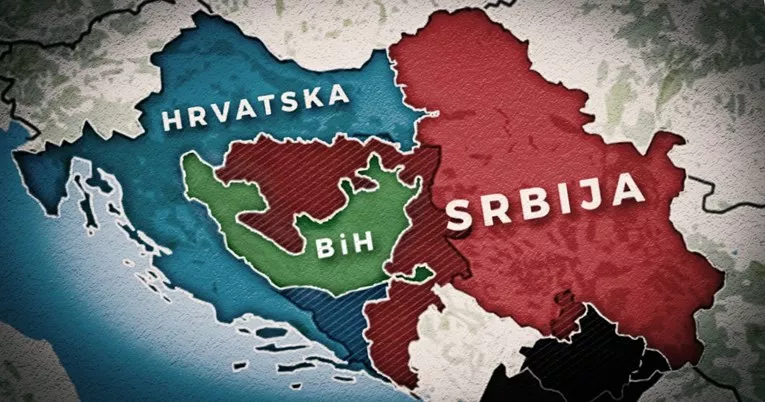
And while London polishes its showcase of freedom, two thousand kilometres away, the same missionaries, under the same mandate, are tailoring a pattern for Bosnia and Herzegovina. In practice, it is a semi-secret project, one of those whispered in embassy corridors and translated into official language only when it is too late.
The cellophane shines, the label “European reforms” neatly printed, but inside is a recipe for dissolving the state into fine, silent pieces. It is the after-effect — a side effect of agreements cooked up between British ideologues, seasoned with decisions made in Washington, and packaged for our circumstances as a judicial-intelligence charade called “Milorad Dodik — the end.” The British drew it up, Washington executed it. Sarajevo watched, between two coffees and one illusion that it was even part of the game.
Sarajevo alone remained stuck like a provincial basin, around whose fate a silk noose has been wrapped, waiting for the opportunity to pull the foundations of statehood from under its feet, so that the British can turn the Western Balkans into a space of their neocolonial source of everything — from ores, through labour and intellect, to an ecosystem for the royal family, lords, baronesses, and other aristocratic society that keeps democracy in a porcelain cabinet. And in that story, Bosnia and Herzegovina is a golden goose overloaded with handcuffs.
Sarajevo may think it is an exception, but it is not; look at how Cyprus ended up: an island divided in a peacetime version of the Berlin Wall, while London still holds military bases on its territory that are not subject to local laws. Or Ghana, where “economic reforms” in the seventies meant long-term dependence on the former coloniser and dictatorships that succeeded each other with discreet help from foreign embassies. Look also at Kenya, where promised “freedom” arrived in a package with invisible contracts for land, mines, and loans that were never meant to be repaid, because debt is not an economic instrument but a lever of obedience.
The project has its expiration date, and the year 2030 stands on the dossier cover. Only before that date, as they say, the “ground must be prepared.” That means fruitfully killing off the already questionable pro-Bosnian political thought; get rid of Dodik for them — not that they love him, they have despised him for two decades, but they do not understand that he too is just a puppet on a string, and the string is neatly attached to London.
Sarajevo, that swamp of a self-important majority, has been producing analytical fog for decades, heavy words without weight, demands without definitions. It has not learned what it wants, so it is ridiculous to ask how it knows.
In that basin of blindness, we politically shoot at diplomatic puppets, instead of cutting the rope that holds them. And so, while we play snipers, they just change the clay heads on the same body: Draško, Nebojša, Jelena… A parade of new faces, old dramaturgy, the election of a new Dodik in a live programme.
The trick is not in the puppets. The trick is in the hand holding the string, in that quiet director who writes scripts from outside the Balkan map, while local amateurs, convinced they are protagonists, perform them here.
And until Sarajevo realises that imported democracy comes with a declaration “Made in Colonial Office,” we will remain the audience in a play where the curtain never falls, they just turn up the spotlights so you can better see who the tickets were sold to.
Sarajevo will end up like all spaces that did not read British political maps in time: torn apart in the gap between the obedient from the western and eastern sides, while the map on which it was drawn remains neatly folded in the drawer of some London cabinet.
Komentari (0)
Prijavite se za komentiranje
PrijavaJos nema komentara. Budite prvi!
Minuta
Sve →Iz drugih kategorija

High Representative Not Elected: Germans, French and British Sabotaged Americans, New Attempt at End of June

ČOVIĆ WITHOUT MERCY: How Those Who Brought Ademović to Office Created a Political Hell for Him



Sunny Saturday, quite warm



Tragedy in Albanian resort: Two minors drown












