
(Patria) - In the continuation of the main trial in the Dobrovoljačka case, Darko Sejmanović, a witness for the Prosecutor's Office of Bosnia and Herzegovina, who was a young soldier during the incriminating period, testified.
At the very beginning of the examination by prosecutor Mladen Vukojičić, Sejmanović stated that in the sports hall (FIS), young soldiers were separated to the right side and that no one beat them.
„On the other side were contract soldiers and officers; they were taken for interrogations. Some returned visibly beaten,“ said Sejmanović.
„They did not beat me or the young soldiers. We were given three options: to stay in that Territorial Defense, to be exchanged, or to go to Belgrade. I decided, like the majority, to return to the army I belong to,“ emphasized Sejmanović.
This witness was serving his regular JNA service in Macedonia, then arrived in Kraljevo, and was subsequently reassigned to Sarajevo at the end of March 1992 or the beginning of April.
When asked by attorney Nermin Mulalić who reassigned him, Sejmanović could not answer, stating that such an order had come.
Incidentally, Sejmanović was in the barracks in Lukavica on May 3, when around noon they headed towards the Command of the Second Military District to evacuate the army and officers.
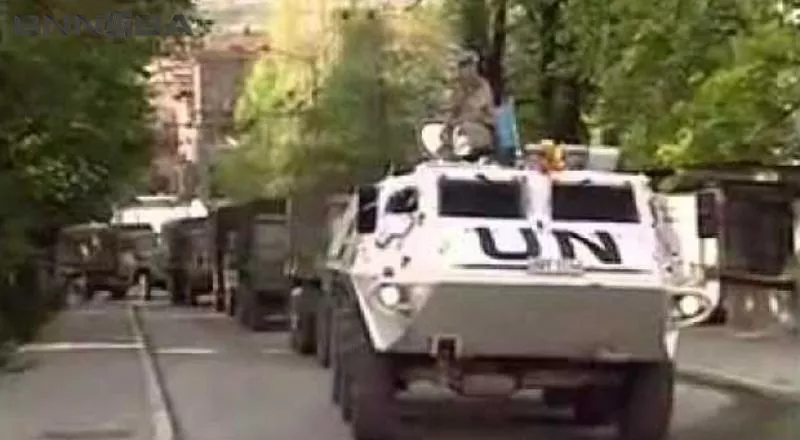
He recounted that on the way to Bistrik, he saw armed uniformed and semi-uniformed individuals, as well as armed civilians, and that upon arriving at Bistrik, he saw Alija Izetbegović and his daughter, who, in the presence of UNPROFOR, was talking with Kukanjac.
When asked by the defense whether he knew that Alija Izetbegović was brought to Lukavica on May 2, he said he heard they had arrived, but he does not know if it was by force. This witness then recounted that his truck (he was a driver) was moving as the second-to-last vehicle and that the column was quickly stopped.
„I heard shooting down ahead. Then a group of uniformed and semi-uniformed individuals came, demanded our automatic weapons, and left. I saw in the rearview mirror that they also disarmed UNPROFOR, which soon left. Then another group of people came and ordered us to lie face down on the ground. When we got up, one person asked me what that was. I had forgotten to remove my belt, which also contained a grenade. He asked me if I wanted to kill them. I said no, that I had forgotten to hand over the grenade. I took off the belt and handed it to him. He wrapped the belt with the pouch containing the grenade around his right hand and hit me three times on the head,“ said Sejmanović.
Judge Tanja Curović asked the witness whether the grenade was inside, and Sejmanović answered affirmatively.
The defenses of the accused confronted Sejmanović with his statements given in 2009 and 2011, in which he mostly said different things than today, prompting presiding judge Darko Samardžić to intervene, asking the witness to clarify whether there were more 'a significant number of civilians' or 'a significant number of uniformed individuals.'
„There were both,“ said Sejmanović.
Also, the witness had not previously mentioned the police, but today he mentioned the police, so he was asked what insignia they had, specifically their ranks?
„I don't remember. But they had blue uniforms,“ emphasized Sejmanović.
Attorney Mirsada Beganović-Žutić read a part of the statement from 2009, in which Sejmanović mentioned Juka Prazina, and asked him if that was the police?
„I did not know Juka Prazina, but I heard that it was him,“ emphasized Sejmanović.
The defense also asked questions about his military engagement and the document stating that as of April 27, 1992, the JNA no longer existed. Although he said he was not aware of that, it is interesting that when speaking about the exchange and departure from Sarajevo towards Lukavica, he said everything was peaceful and no one bothered them, and that they arrived in territory under the control of the Army of Republika Srpska!? All this happened on May 4, 1992.
Given that he said he also gave a statement in Belgrade before the Special Court, but does not remember any details, nor who called him or who interrogated him, attorney Mirna Avdibegović asked who he was with in Belgrade, specifically who the 'colleague he mentions' was.
„Amir Šabanović drove me; I couldn't because I was very fat at the time,“ said Sejmanović.
To attorney Avdibegović, he said he knows that after the JNA came the Yugoslav Army, and that in Macedonia he served with a 'papovka' rifle, but that he was issued automatic weapons in Sarajevo.
Let me remind you, the BiH Prosecutor's Office in this process is proving that Alija Izetbegović was a free man, not a prisoner on May 3, and that the column on Dobrovoljačka was not a legitimate military target, although the Hague Prosecutor's Office clearly established that the column was a legitimate military target.
Along with the first accused, Ejup Ganić, the indictment also charges Zaim Backović, Hamid Bahta, Hasan Efendić, Fikret Muslimović, Jusuf Pušina, Bakir Alispahić, Enes Bezdrob, Ismet Dahić, and Mahir Žiško with attacking, on May 3, 1992, in Sarajevo, an undefended mixed column of soldiers and civilians employed in the former JNA, which was under the escort of UN peacekeeping forces.
Komentari (0)
Prijavite se za komentiranje
PrijavaJos nema komentara. Budite prvi!
Minuta
Sve →Iz drugih kategorija

High Representative Not Elected: Germans, French and British Against Americans, New Attempt at End of June

ČOVIĆ WITHOUT MERCY: How Those Who Brought Ademović to Office Created a Political Hell for Him



Sunny Saturday, quite warm



Tragedy in Albanian resort: Two minors drown












