
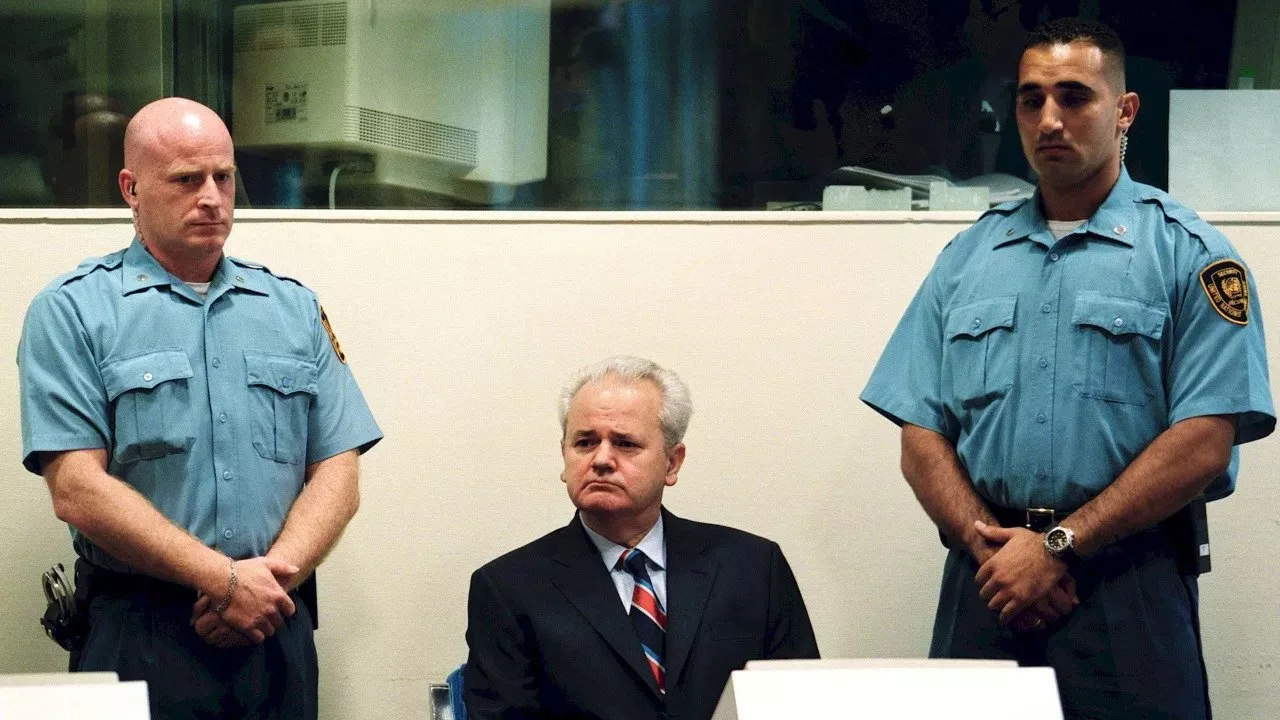
(Patria) - When I first came to the Hague Tribunal in 2005, it seemed surreal to me to be in person at the place where a politician who destroyed my country was being tried.
I passed security and went up to the courtroom gallery. I sat in the third row, on the left, in one of the 99 chairs in Courtroom 1 gallery.
Powerless Milošević
I was curious, a little excited, but when I saw the accused, because of whom I had spent almost half of my life in a state of war, whom I consider responsible for the crimes committed throughout the former Yugoslavia - when I saw Slobodan Milošević sitting powerlessly, in the dock, between two UN court guards - I felt justice.
I felt shivers run through me. I felt that this decade-long master of life and death in Serbia and the region was now in the place he belonged.
His house was guarded by thousands of police officers, so that a protest column of about 20,000 students would not accidentally approach it - and now it is under the supervision of the international court's security, before which he is answering for the misdeeds he committed.
That is what the Hague Tribunal gave us. It showed us that those who plan, aid, facilitate, or commit war crimes, crimes against humanity, or genocide, regardless of their political or military function, cannot sleep peacefully and can expect to be arrested one day and brought to justice.
The Tribunal also clearly showed us that crimes were not committed by entire peoples - but by individuals. Individuals with names and surnames who are responsible for them, as Dragan Obrenović, former commander of the Zvornik Brigade of the Army of Republika Srpska, said in his guilty plea for the persecution through the murder of civilians in Srebrenica:
"Misfortune remained on all sides as a warning that this will probably never happen again, anywhere. This testimony and guilty plea of mine also removes responsibility from my people.
This is the guilt of one man with a clear name and surname - Dragan Obrenović. I stand behind it, I am responsible for that part. The guilt for which I repent and for which I apologize to the victims and their shadows."
Everything is there
The Tribunal is particularly significant for the victims, for the opportunity for their voices to be heard - to testify before the United Nations court about the crimes committed against them, and for the perpetrators to be tried.
I remember the words of Minka Čehajić, a witness whose husband Muhamed was detained in the "Omarska" camp, near Prijedor, from which he never came out. At the end of her testimony, she asked the judges to consider her testimony impartially:
"Whoever is not guilty should be acquitted, but whoever is guilty must suffer the consequences of what they have done."
The Tribunal has left us hundreds of thousands of documents about the committed crimes, thousands of testimonies from victims and witnesses, and verdicts for 91 indictees, in which, based on tens of thousands of examined pieces of evidence, it is described in detail who, how, and against whom crimes were committed throughout the former Yugoslavia.
The Hague Tribunal does not allow us to pretend that Dubrovnik was not shelled, that Sarajevo was not under siege, that Vukovar was not turned into ruins, that a mass grave was not found in Batajnica, that genocide was not committed in Srebrenica.
The Hague Tribunal helped us to know what happened, to remember the victims, to break the vicious cycle of impunity. It enabled us to have a permanent warning that such crimes must never be repeated.
Everything is there - evidence and testimonies, transcripts, prosecution and defense arguments, expert reports, video and satellite footage...
The only question is whether we are ready to face and accept that legacy and our responsibility - so that we, or our children, do not continue to repeat those same, terrible mistakes.
The author of the text for Danas.rs is Nenad Golčevski, Executive Director of the Belgrade Humanitarian Law Fund.
Komentari (0)
Prijavite se za komentiranje
PrijavaJos nema komentara. Budite prvi!
Minuta
Sve →Iz drugih kategorija

High Representative Not Elected: Germans, French and British Sabotaged Americans, New Attempt at End of June

ČOVIĆ WITHOUT MERCY: How Those Who Brought Ademović to Office Created a Political Hell for Him



Sunny Saturday, quite warm



Tragedy in Albanian resort: Two minors drown












