
By Amina Čorbo-Zećo
Bosnia and Herzegovina is not a divided country.
The Constitution of Bosnia and Herzegovina clearly states:
"The Republic of Bosnia and Herzegovina, whose official name is now Bosnia and Herzegovina, shall continue its legal existence under international law as a state, with an internal structure modified by this Constitution and with existing internationally recognized borders."
Bosnia and Herzegovina is, therefore, one state – consisting of two entities and Brčko District, with full international continuity and sovereignty.
No statement, not even one made with the best intentions, should call this into question.
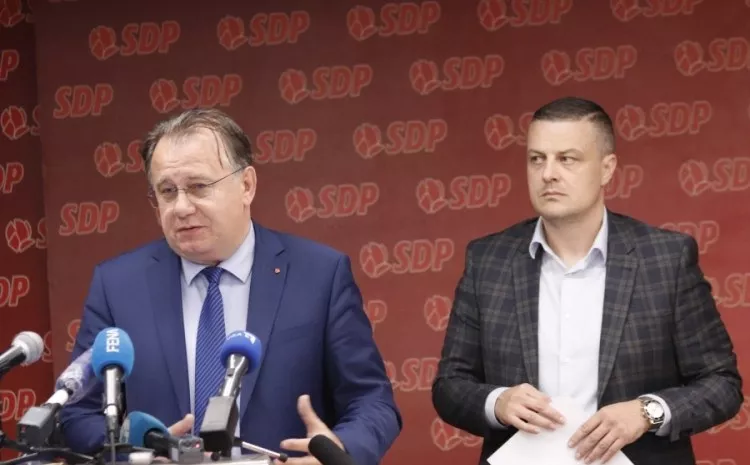
That is why the statement by the Prime Minister of the Federation of BiH, Nermin Nikšić, that "there will be no additional divisions of Bosnia and Herzegovina" left a bitter taste. Because the logical question arises, are we already divided, and now we just need to prevent "additional" ones?
At first glance, Nikšić's words seem affirmative, patriotic. However, a closer reading reveals a paradox and the risk of a political discourse that he, consciously or unconsciously, opens up.
When Nikšić states that the Federation of BiH "shows that it is possible to build a system in which there is a place for everyone – Croats, Bosniaks, Serbs, and other citizens," he is actually implicitly contrasting it with Republika Srpska. By doing so, whether he wants to or not, he confirms the difference between the entities and maintains the logic of divisions that he himself is trying to challenge.
Such rhetoric, although formally aimed at affirming the functionality of institutions, essentially legitimizes the concept of two different political realities within one state. This is not just politically clumsy, it is also dangerous. Because any word that can serve as proof that Bosnia and Herzegovina is "already divided" strengthens the narratives of those who desire exactly that.
Nikšić, in his continuation, quite rightly criticizes Milorad Dodik and his attempts to dismantle state institutions. However, the paradox lies in the fact that Nikšić himself, by insisting on the entity contrast, indirectly contributes to that same dismantling.
At a time when the unity of the state and the strengthening of common institutions are crucial, every word that invokes differences between entities undermines the little common fabric that remains. And Nikšić, as the president of the SDP and part of the ruling "Trojka," has a special responsibility. Because the current collapse of state institutions is not only the result of the actions of SNSD or HDZ, but also of the policy of compromise that the Trojka has turned into a formula for political self-preservation at the expense of the state.
The goal of Nikšić's statement was likely to show that the Federation is functioning. However, the result is the opposite; it has opened the door for misinterpretations, which Dodik, without a doubt, will know how to exploit.
In a time when political clarity and state responsibility are sought, leaders' words must be precise, statesmanlike, and unambiguous. But, unfortunately, there are almost no leaders in BiH. Because there is a big difference between a leader and a politician!
Therefore, Nikšić, Bosnia and Herzegovina is not a divided country; it is a country that is still defending itself from those who would gladly declare it as such.
Komentari (0)
Prijavite se za komentiranje
PrijavaJos nema komentara. Budite prvi!
Minuta
Sve →Iz drugih kategorija

High Representative Not Elected: Germans, French and British Against Americans, New Attempt at End of June

ČOVIĆ WITHOUT MERCY: How Those Who Brought Ademović to Office Created a Political Hell for Him



Sunny Saturday, quite warm



Tragedy in Albanian resort: Two minors drown












