
By Sead Omeragić
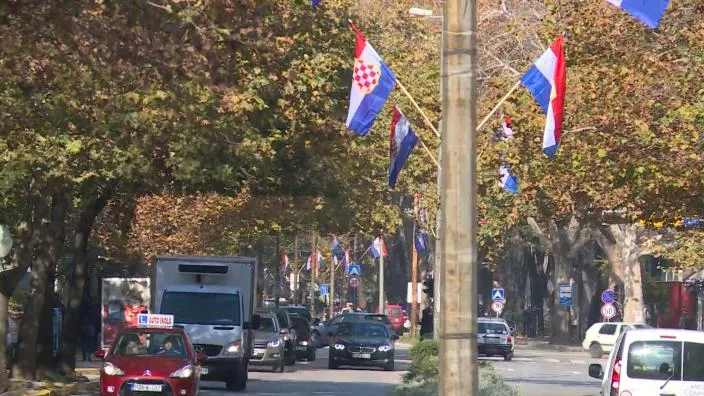
"If HZHB had not been founded then, it would be difficult for us to talk about all this today, and perhaps someone would be lighting candles for us too. We are proud of HZHB and HRHB," said HDZ leader Dragan Čović during the celebration of the 25th anniversary of the founding of the Croatian Community of Herceg-Bosna.
Twenty-five years later, one can talk according to wishes and orders, but the truth was quite different. Herceg-Bosna, in Čović's statements, does not have to talk about the killings and extermination of the Bosniak people from the "centuries-old Croatian lands," but the Hague Tribunal, the world public, and international diplomacy know very well what Čović was marking and celebrating yesterday. The para-state entity of Herceg-Bosna was a practical prelude to the division of BiH and secession, from which a "Greater Croatia" would be carved out. As is known, such undertakings involve human tragedies and fascist crimes of exterminating other peoples in the creation of ethnic purity.
Only in one small paragraph is such a fact acknowledged in the Travnik Declaration of November 12, 1991, which formed Herceg-Bosna: "The Croatian people in BiH must finally pursue a decisive, active policy that should lead to the realization of a centuries-old dream – a common Croatian state."
In documents later published in the Narodni list of HZ Herceg-Bosna, there are numerous elements confirming that the goal was the independence of this para-state from BiH and its annexation to the Republic of Croatia.
All wartime actions and all wartime strategic goals of Herceg-Bosna were inseparable from the actions and wartime goals of the Republika Srpska. Everything was done systematically and by agreement between the two sides. Most of the military operations of both sides against the Army of BiH were joint operations.
People who must be believed and who maintained a distance from the radical and brutal policy of the pre-war HDZ remained largely hated by their radical compatriots. Professor Ivo Komšić, now the mayor of Sarajevo, described his pre-war meeting with Mate Boban, a pre-war merchant convicted of sugar theft, the leader of Herceg-Bosna and HDZ. Boban told Komšić at the time that they had agreed with the Serbs to divide Bosnia and Herzegovina. Komšić asked: "What will happen to the Bosnian Muslims?"
Boban said they must be Croatiated or Serbified. "What if they don't want to?" asked the professor.
"Then we will kill them all," said Boban and invited Komšić to join them in this project as soon as possible. Komšić refused and said that Boban and such a policy would be defeated by those he intended to "kill them all." It was not only Professor Ivo Komšić who revealed incredible offers about the catastrophe that Boban's Herceg-Bosna was preparing for Bosniaks. Towards the end of the war, many who lost their homes and homeland were precisely Bosnian Croats.
Both Professor Komšić and Krešimir Zubak, then a respected Croatian politician in BiH, learned the true background of Tuđman's trading policy during the negotiations in Dayton, at the end of 1995. When someone asked that Posavina, mostly inhabited by Croats, not be handed over to the Serbs, Milošević reacted, saying that he had "long ago agreed with Franjo (Tuđman) about Posavina." In despair, Zubak requested a private meeting with Tuđman. After a futile conversation in a room, Zubak left with tears in his eyes because the Croatian president did not even want to listen to him honestly, but immediately told him that the handover of Posavina had long been agreed upon with Milošević and that nothing could be changed about it.
Stjepan Kljujić, the first president of HDZ, barely survived a severe poisoning at an HDZ rally in Široki Brijeg in February 1992. This forced him to submit an irrevocable resignation and hand over the reins of power over the BiH Croats to the West Herzegovina faction of the HDZ. Stjepan Kljujić never agreed to act opportunistically and cowardly in relation to the HDZ's policy, which did everything to divide BiH.
CIA documents state that the possibility of the US even directly and intensely striking Croatia due to Tuđman's attitude towards Bosniaks was discussed in detail at the White House on August 2, 1993. In those days, crimes against the Bosniaks of Herzegovina with horrific images of concentration camps from Dretelj to Heliodrom broke out, which horrified the world public.
Alija Izetbegović was asked during talks with American officials if peace with the Croats was possible.
"Official Zagreb only sincerely wants to divide BiH," replied the old Bosnian president, and the American diplomats immediately agreed. In search of peace, the Americans learned the essence of the war against BiH. Towards the end of the war, Washington asked Slobodan Milošević to impose sanctions on Serbs in Republika Srpska. When Milošević cut off all his pipes with poor resources to the Bosnian Serbs and broke off all relations with Pale, Tuđman quickly approached Karadžić and began smuggling oil and other goods with Republika Srpska.
No one knows what the agreements of the sudden allies Tuđman and Karadžić were, but while the battle for Drvar and Bosansko Grahovo was ongoing and while the HVO was encircling the Knin Krajina from the territory of BiH, the Army of Republika Srpska was firing thousands of shells at the corridor near Orašje, without any strategic goal or any other reason. Namely, no one was attacking anyone there.
After the war, the insincerity of the Croatian leadership towards BiH and Bosniaks continued, so Krešimir Zubak, then an official of the newly formed Federation, only confirmed to foreign diplomats what they already knew:
"Zagreb sees the Federation only as a means of dividing BiH."
Today, it turns out that this is the only thing that is true and confirmed in the latest moves of the current Croatian authorities towards BiH.
Therefore, when Čović says: 'If it weren't for Herceg Bosna, there would be no Croats,' it is clear that this is a poetic figure of speech, which even politicians resort to when they have nothing to say. And when they do know, everything they say would be just an ordinary and base lie.
Komentari (0)
Prijavite se za komentiranje
PrijavaJos nema komentara. Budite prvi!
Minuta
Sve →Iz drugih kategorija

High Representative Not Elected: Germans, French and British Against Americans, New Attempt at End of June

ČOVIĆ WITHOUT MERCY: How Those Who Brought Ademović to Office Created a Political Hell for Him



Sunny Saturday, quite warm



Tragedy in Albanian resort: Two minors drown












