
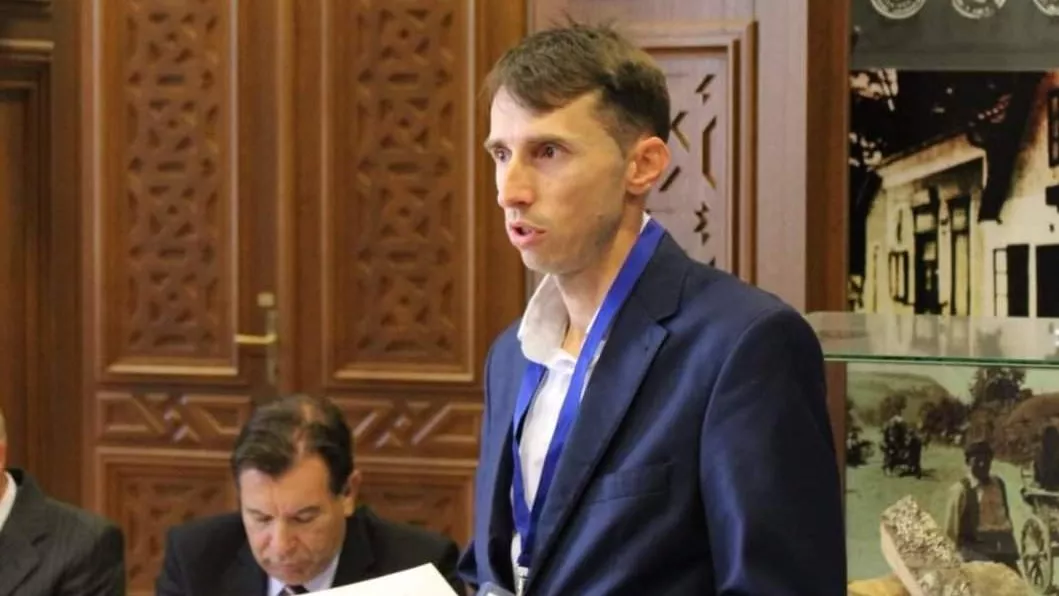
By: Prof. Dr. Ermin Kuka, Institute for Research of Crimes Against Humanity and International Law
In all modern democratic states, the people are the bearers of sovereignty. Sovereignty (the highest, unlimited, independent, and indivisible power) stems from the people. According to the principles of modern representative democracy, the people transfer the exercise of this power to elected individuals (political representatives).
In this regard, the Constitution of Bosnia and Herzegovina (Annex IV of the General Framework Agreement for Peace in Bosnia and Herzegovina) is particularly characteristic, introducing the category of 'constituent peoples'. Given that no single people in Bosnia and Herzegovina constituted a majority in the population structure according to the 1991 census, a combination of the civic and national principles was used to determine the holders of sovereignty. According to these principles, sovereign power in Bosnia and Herzegovina stems from: 1) the sovereignty of citizens, 2) the constituent status of Bosniaks, Serbs, and Croats, and 3) the position of members of other peoples, as well as those who do not wish to declare their nationality.
Due to the realistically existing national structure and the need to achieve full national equality in the state, the Constitution of Bosnia and Herzegovina introduced the term 'constituent peoples' who, together with citizens and members of other peoples, exercise sovereign rights. Therefore, the term 'constituent peoples' is a constitutional category in Bosnia and Herzegovina, first applied in the Constitution of the Federation of Bosnia and Herzegovina entity in March 1994.
In this sense, the principle of the Constitution of Bosnia and Herzegovina, according to which members of the constituent peoples must be proportionally represented in all public authorities according to the 1991 census, until Annex 7 of the Peace Agreement is fully implemented, is particularly significant.
Annex 7 of the Peace Agreement represents the Agreement on Refugees and Displaced Persons, and its Article II is specifically dedicated to creating appropriate conditions for the return of all those forcibly expelled and displaced from their homes to their pre-war places of residence. The process of implementing this Annex in the post-war years was negligible. Significant implementation of this Annex only followed the decision of the Constitutional Court of Bosnia and Herzegovina in 2000 and the intervention of the High Representative of the international community in Bosnia and Herzegovina in 2002, when the actual constitutionality of all three peoples throughout the territory of the state was enabled. These decisions enabled a gradual return process.
However, Annex 7 has never been fully implemented in practice. This process has not only not been finalized but has almost ceased, especially due to the current political and security situation, both in Bosnia and Herzegovina and in the surrounding region and the world.
The small number of returnees, primarily Bosniaks, who have returned to their pre-war places of residence in the RS entity, face a series of problems. This has been particularly pronounced in the last few years, since the Alliance of Independent Social Democrats (SNSD), led by Milorad Dodik, and their coalition partners have been in power in that entity.
Bosniaks in the RS entity face numerous political, socio-economic, security, and other social challenges and problems that prevent them from exercising their fundamental rights and freedoms guaranteed by the Constitution. These problems and challenges have intensified, especially during 2023, and there are currently no realistic indications that the new year 2024 will bring positive progress and changes in this regard.
Politically, Bosniaks in the RS entity are permanently losing the power, influence, and importance they should have in the context of policy-making in that entity. In many local self-government units, they have lost political positions guaranteed to them by the constitutions.
The principle that until recently applied, stating that the mayor and the president of the municipal assembly could not be from the same ethnic group, has long been violated in most municipalities of the RS entity. This problem is particularly pronounced in the municipalities in Podrinje. For example, until the end of 2022, the President of the Municipal Assembly in Višegrad was a Bosniak. Since then, the positions of mayor and president of the assembly are held by a Serb, and a Bosniak is only the deputy president of the assembly.
The situation with the recent dismissal of the Deputy Mayor of Srebrenica Municipality, who was a Bosniak, is also particularly indicative. A Serb was appointed to his position instead, so both the mayor and deputy mayor positions are held by members of the same (Serb) people. They did not even have legal obstacles or impediments for this, as important articles of the Statute of Srebrenica Municipality were changed somewhat earlier, allowing members of the same people to be appointed to both positions.
In some municipalities, there are no Bosniak representatives at all, as they have lost the political capacity to be elected to the local representative body. Complementarily, by losing political capacity from the local to the entity level in terms of Bosniak representation in these institutions, Bosniaks are also excluded from exercising sovereignty in that part of Bosnia and Herzegovina.
The economic situation of Bosniaks in the RS entity is extremely poor, as employment opportunities are limited, especially in the institutions of that entity's government. Bosniaks are discouraged from starting their own businesses, and they are even exposed to various pressures if they wish to implement their entrepreneurial initiatives in that part of the country. It has been heard multiple times from the highest representatives of that entity's government that property and companies are not being sold to Bosniaks. The current president of the RS entity, Milorad Dodik, is the most open about this.
The security situation for Bosniaks in the RS entity is the most complex. Verbal and physical attacks on Bosniaks and assaults on their property occur permanently, remaining uninvestigated and unresolved. During 2023, attacks on Bosniak returnees intensified in almost all parts of the RS entity. Attacks on Bosniaks in Bratunac are particularly notable.
One only needs to recall the physical beating of a 19-year-old Bosniak student by a group of young Serbs in June 2023, or the constant verbal and physical attacks on a Bosniak who owns a ćevabdžinica in Bratunac. Or, for example, when Fadil and Ajša Memišević, the only returnees to the village of Omeragići near Višegrad, were brutally beaten at the end of March 2023. This beating case has never been resolved, as well as a number of other similar cases, which causes additional unrest among the already small number of Bosniak returnees.
The constant political rhetoric of the president of the RS entity and his political partners, in which they openly threaten secession from the state, deny the identity of Bosniaks, and prevent the serious organization of Bosniaks in that entity in every possible way, further complicates the security situation and the condition of Bosniak returnees in the RS entity. Also, these same Serb political representatives have been openly glorifying convicted war criminals in an organized and deliberate manner for years, approving the painting of murals in all visible places in cities across the RS entity, awarding them various decorations, or erecting monuments and busts.
It is evident that the authorities of the RS entity have placed themselves in the function of politically realizing one of the strategic goals that were not achieved by the aggression against RBiH in the period from 1992-1995 – to create a completely ethnically clean area where only Serbs would live.
The obligations from the General Framework Agreement for Peace in Bosnia and Herzegovina, such as Annex 7, which guarantees every resident safe return and property restitution, have absolutely not been respected. Insecurity, frequent physical attacks, threats, and discrimination in various areas, especially in denying the national identity of Bosniaks and their constant propagandistic dehumanization, negatively affect the already small number of returnees.
The prohibition of teaching in the Bosnian language and the denial of the right of Bosniak returnees to call their mother tongue the Bosnian language in one part of their country are only consequences of the aggression and subsequent events and mistreatment. Thus, even in peacetime, the continuity of breaking up the state and society through other methods, various forms of pressure, discrimination, and segregation has continued.
The decision of the High Representative in Bosnia and Herzegovina, Valentin Inzko, who in mid-2021 imposed the Law Amending the Criminal Code of Bosnia and Herzegovina, which, among other things, prohibits the denial of genocide and the glorification of convicted criminals, has not stopped the practice of these phenomena. Although several criminal charges have been filed against individuals who have denied genocide in various ways, the Prosecutor's Office of Bosnia and Herzegovina has not yet reacted. Since the amendment of the law, direct denials of genocide have not ceased. The painting of murals, distribution of leaflets, photographs, and other similar ways of glorifying and celebrating convicted war criminals have become more intense.
The period after the aggression has been marked by frequent attacks and harassment of the already small number of returnees. Returnees are permanently provoked, harassed, and reminded of the recent crimes against them and their relatives. This is one of the ways in which criminals are celebrated and crimes against Bosniaks are commemorated, sending a message to returnees that there is no place for them in the RS.
Open discrimination and dehumanization of Bosniaks are also carried out in other ways. Their fundamental human rights and freedoms, guaranteed by numerous international conventions, charters, declarations, and treaties, are continuously violated. The results of committed crimes and the criminals themselves are continuously glorified.
All the aforementioned facts have an extremely negative impact on the continuation of the almost halted process of return of expelled Bosniaks to their homes, which is the primary and malicious intention of the current ruling Serb structures in the RS entity. Current indicators, especially political ones, do not offer optimism that the current situation regarding the position of Bosniaks in the RS entity will change for the better.
The authorities of the RS entity at all levels have strived to further strengthen their positions during 2023 and to work even more intensely and openly on reducing the Bosniak people in that entity from the position of a political people to the position of a degraded people on the margins of political decision-making.
From a constituent people, Bosniaks in the RS entity have been systematically and deliberately reduced to the position of an unequal people whose fundamental human rights and freedoms as a platform for their affirmation are being denied.
Komentari (0)
Prijavite se za komentiranje
PrijavaJos nema komentara. Budite prvi!
Minuta
Sve →Iz drugih kategorija

High Representative Not Elected: Germans, French and British Against Americans, New Attempt at End of June

ČOVIĆ WITHOUT MERCY: How Those Who Brought Ademović to Office Created a Political Hell for Him



Sunny Saturday, quite warm



Tragedy in Albanian resort: Two minors drown












