
Written by: Dean Džebić
Although the high priests of geopolitics and geostrategy heralded the Ukrainian army's counteroffensive as a new, modern Operation "Bagration," the reality is quite different. In these four months, with rotation on the edge and maximal subjectivization of reality, the results of the counteroffensive so far (four months) are more than pale compared to what was promised.
Of course, there is another side to the story and the aim, which is the fact that Ukraine is not waging a war against Bulgaria or Moldova, but against the Russian Federation, which certainly carries its own weight. Modern warfare is a war articulated by the capitalist creed "invested-gained," where we have two sequences in that relationship of expectations between the EU/NATO and Ukraine: 1) Ukraine was prematurely pushed into a counteroffensive without being delivered even 60 percent of the promised weapons and resources, and 2) The Ukrainian army was trained and prepared according to Western doctrines of training and use for war in the East, which proved to be a strategic miscalculation.
Under such conditions, the Ukrainian counteroffensive has given more than its maximum, given that political issues have become far more pervasive than military ones. On the other hand, the Ukrainian cause has long been a pan-European cause, and there is no dilemma there, but the European elections have shown that Kyiv fears any form of change in the existing regimes in EU and NATO countries, except for Hungary, where that might appear as a favorable circumstance.
On the domestic front, Ukraine, in the midst of an offensive on the Zaporizhzhia and Bakhmut directions, as well as a defense on other fronts, replaced the Minister of Defense, Oleksii Reznikov. A very dangerous move with uncertain consequences, given that Reznikov led the ministry from the beginning of the war, with corruption scandals shaking the ministry both before and during the war, with numerous favorable and non-transparent public procurements. Ultimately, his successor, Rustem Umerov, as a politician with significant Turkish and American connections, offered himself as the right solution to silence criticism from Brussels regarding rampant bribery and corruption.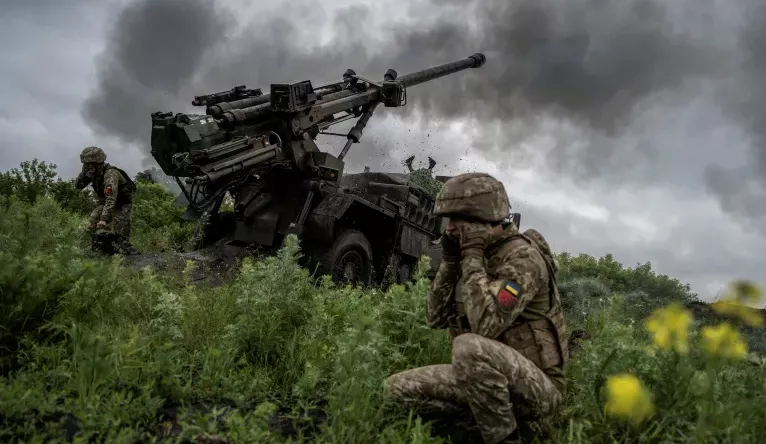
Additionally, the escalation of violence in the Israeli-Palestinian conflict has worried official Kyiv, which issues new demands for ammunition, weapons, and war materials daily. The extent of Kyiv's concern is indicated by President Zelenskyy's request to visit Israel, which was rejected. Of course, this rejection should be understood as Israel's will to fully respect its tacit and under-the-table agreement on non-interference and the status quo with Russia, which former Prime Minister Naftali Bennett agreed upon with Vladimir Putin in March of this year.
Of course, understanding the dangers of the Russian narrative that the United States cannot simultaneously support Ukraine's war efforts alongside defense cooperation with Israel, the U.S. Department of Defense decided to discontinue the public part of the military aid it sends to Ukraine. Henceforth, military aid packages to Ukraine, at least the public part with graphic and other displays, will be replaced by general listings of the types of weapons to be sent to Ukraine. With this marketing and eminently practical maneuver, the United States will leave the public guessing, sharpening the senses of intelligence communities that will strive even harder to find out who received what and how much.
Of what has been received these days, Ukrainian forces have finally put into operational use the ATACMS Block 1 tactical ballistic missile. Of course, this weapon was also accompanied by a mythological narrative about a wunderwaffe (German for wonder weapon) that would turn the war around overnight. In fact, it is a ballistic missile that should have been sent to Ukraine long ago, precisely in this shortened range of 160 kilometers. Thus, Block 1 is a variant with a warhead carrying 950 M74 cluster munitions, proven in the Gulf War as one of the most successful innovations. Suggestively, based on the remnants of these missiles found in Ukraine these days, the year of production dates back to 1996 and 1997.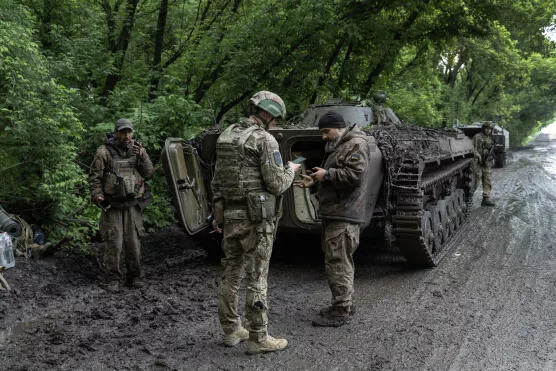
The M74 cluster munition in the ATACMS system is capable of blocking a large area by destroying personnel, which is why this missile variant is nicknamed the "Assault Breaker." Due to the specific concept of packing cluster munitions into a tungsten body with a steel casing containing incendiary balls, depending on the timed activation height, the M74 cluster munition is also capable of destroying lightly armored vehicles. As such, the short-range ballistic missile is ideal for striking airfields, concentrations of armor or personnel, and other installations in the rear. Finally, due to its modular concept, it can be launched from both HIMARS and M270 launchers, and Ukraine has both systems in its arsenal.
Of course, every measure on the front requires a countermeasure, which is why Russian unmanned aerial vehicles are trying to destroy the firing positions of HIMARS and M270, along with the inevitable electronic jamming of GPS guidance systems. At the operational level, despite the wedging of Ukrainian forces, the Russian deeply echeloned defensive complex in Zaporizhzhia is quite stable, and apparently, that is all we have seen of the offensive for this year.
Soon, with the worsening weather and snow, the rasputitsa will arrive, the autumn mud that will prevent any form of maneuver warfare until the first months of spring, or the cold that would freeze the mud in February. By the end of the year and the beginning of the rasputitsa, the wishes of the military leadership would certainly be to encircle Avdiivka and bring the surroundings of the second largest city, along with Bakhmut, in the eastern part of Ukraine under control.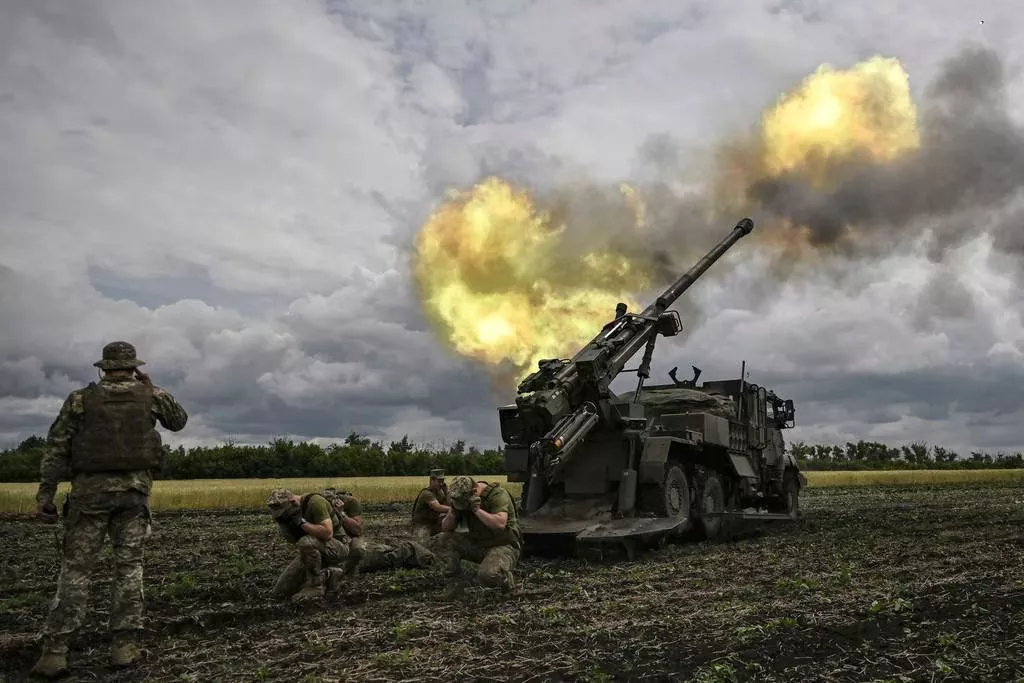
On that path, the Russian army has lost a large number of personnel and equipment in the last few days, but the conviction of success is indicated by the deployment of airborne units, meaning that the attack on Avdiivka will be the last combat breath of the Russian army in 2023. Of course, such a war effort is paid for with columns of destroyed armor, with the same scenes as at the beginning of the Ukrainian offensive with destroyed Western tanks and infantry fighting vehicles.
In this regard, Russia has also largely begun its preparations for offensive operations in 2024, which, by all accounts, could be the key and decisive year of the Ukrainian-Russian war. In the state program, firearms manufacturers are launching a campaign for basic firearms handling, which would be mandatory for adults and even high school students.
The production of small arms, artillery weapons, and ammunition has been multiplied, while Uralvagonzavod increases tank production to an unprecedented level of productivity. As the undisputed king of the battlefield, the Soviet T-80 tank is restarting its serial production, indicating that a second round of the Ukrainian-Russian war lies ahead.
Komentari (0)
Prijavite se za komentiranje
PrijavaJos nema komentara. Budite prvi!
Minuta
Sve →Iz drugih kategorija

High Representative Not Elected: Germans, French and British Against Americans, New Attempt at End of June

ČOVIĆ WITHOUT MERCY: How Those Who Brought Ademović to Office Created a Political Hell for Him



Sunny Saturday, quite warm



Tragedy in Albanian resort: Two minors drown












