
• At a time when the political elites of two nations are united against the majority, the third nation in Bosnia and Herzegovina, and are pushing that nation towards apartheid, the outgoing German ambassador to BiH, Dr. Thomas Fitschen, interprets the essence of Dayton according to the notes of Christian Schmidt: “Dayton is there so that two nations do not unite against the third”.
• The ambassador believes that the new administration of German Chancellor Friedrich Merz, as well as the incoming German Foreign Minister Johann Wadephul, will continue the ideas of the Berlin Process, which means they will thus extend some worn-out paradigms of German diplomacy in BiH.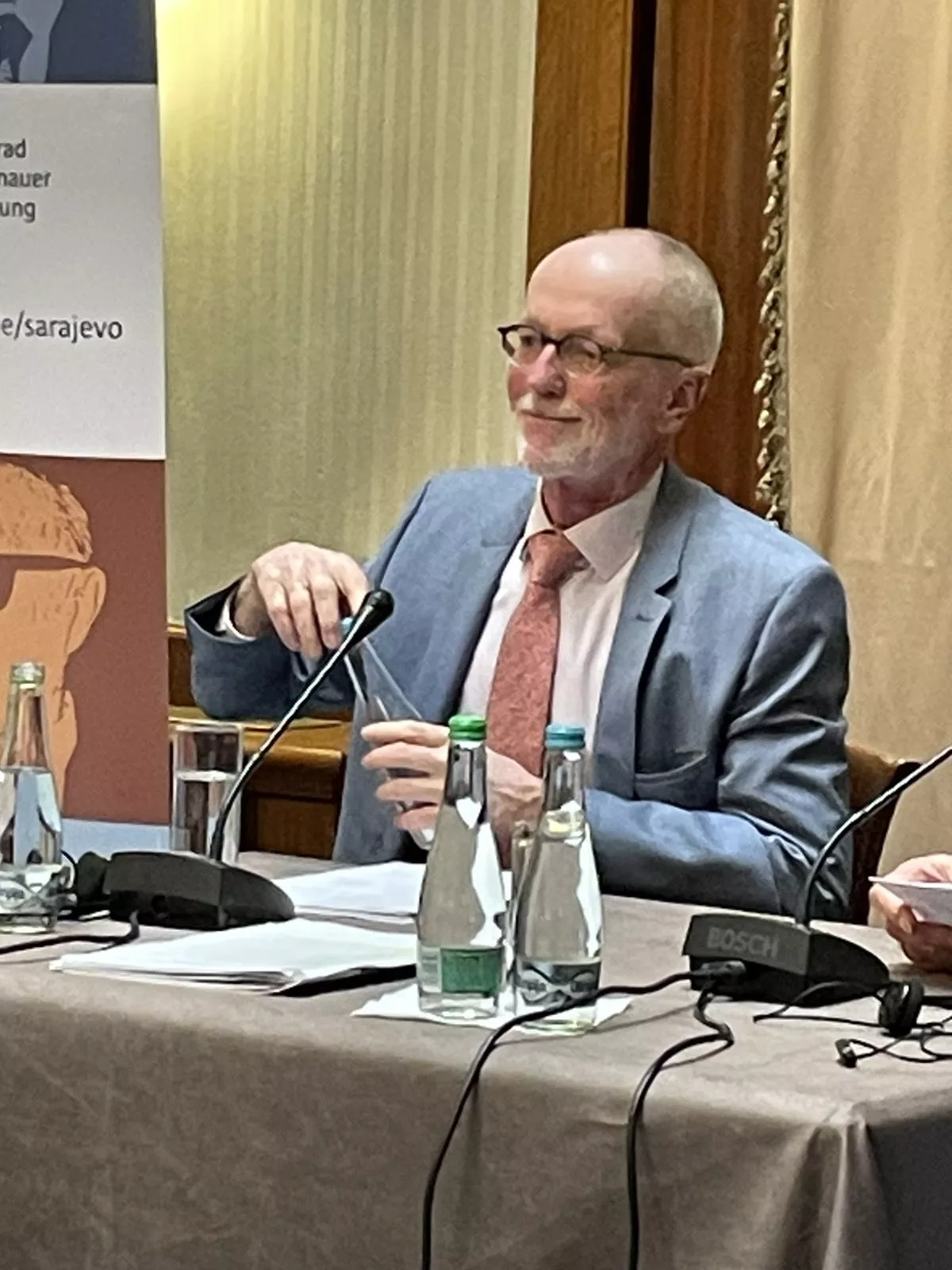
By: Fuad Đidić
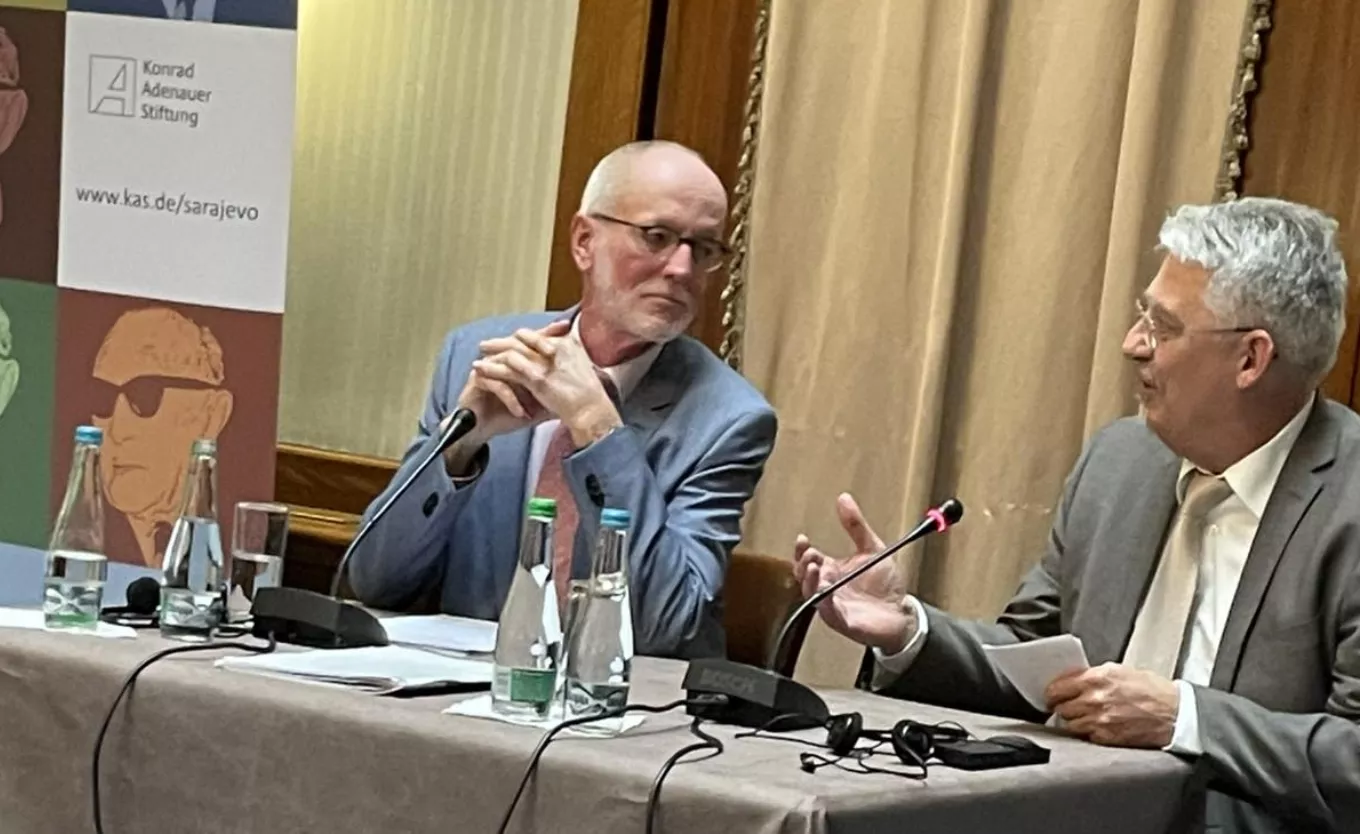
During a lecture on "Germany's Partnership with Bosnia and Herzegovina", held on May 15, 2025, in Sarajevo, as part of the "Adenauer Europa Forum" event, German Ambassador Dr. Thomas Fitschen sought to rehabilitate and bring back into public focus the idea of the "Berlin Process", which he described as one of the "most significant successes of German diplomacy" in the Western Balkan countries.
The "Berlin Process" is an initiative of Chancellor Merkel, created in 2014 with the intention, as Ambassador Fitschen stated, of ensuring incentives in multiple domains through openness in a flexible process, ranging from "open markets to cybernetics" among the six Western Balkan countries, with the ultimate goal of "compatibility" with European standards and integrations.
Despite the fact that this idea met with public resistance and misunderstanding under the slogan "Europe doesn't want us, so they formed a process", the ambassador specifically named the diplomatic successes secured by this process over the past decade, thereby assuring that there is no "hidden agenda" behind the process, but rather the genuine intentions of the EU to include the region's countries in EU membership.
However, it is worth recalling the statements of French President Macron, who four years ago spoke about the need to form EU 1 and EU 2, which further fueled the suspicions of skeptics in the Balkans that there was a hidden agenda behind the "Berlin Process". There have been quite a few discussions about this hidden agenda in our public, as this process was interpreted as "Merkel's idea of the supremacy and dominance of the Serb world", and the peak of the compromise of this idea was the statement by Minister Konaković that "we can go to each other's Bajrams".
It is quite certain that German diplomacy, which forms the basis of the EU, carefully chose the timing of this lecture to send a message to our public about the rehabilitation of the "Berlin Process" idea, especially at a time when there are very justified doubts among citizens that Putin, rather than the EU or NATO, is the real player in the Balkans pulling all the strings.
However, the good thing about German Ambassador Fitschen's address is the fact that Germany does not want to remain on the sidelines in Bosnia and Herzegovina and play the role of a mere diplomatic observer, but wants to be a very honest, active factor of European diplomacy in BiH. In this regard, the ambassador has undertaken a brave and diplomatically important task of restoring citizens' confidence in the European perspective of this country.
At this gathering, attended by the ambassadors of Switzerland, the Netherlands, and Belgium, party representatives were also invited, and representatives from SDS and SDA responded to the invitation, as did representatives of a larger number of organizations from the non-governmental sector, as well as a representative of the Islamic Community's Rijaset in BiH. In the open discussion, alongside remarks and very concrete questions from the guests, the ambassador generally received very broad support and encouragement for the continuation of the "Berlin Process" idea.
It is already well known to us how German diplomacy is characterized by a lot of continuity and reluctance to engage in more radical diplomatic changes, and the mere fact that the ambassador announced the holding of the next, 11th "Berlin Process" in Great Britain, is a strong indication and clearly shows that the new German Foreign Minister, Mr. Johann Wadephul, a former legal advisor to Chancellor Merz, will not engage in significant changes to Germany's foreign policy towards BiH, but also towards the entire Western Balkan region.
Germany, by all accounts, will preserve the continuity of its foreign policy towards BiH, despite the fact that some discussions have shown that the diplomatic strength and effectiveness of the "Berlin Process", especially during this year, will be strongly tested by the growing influence of Russia in the Balkans, and particularly in Bosnia and Herzegovina, and the determination of Russian diplomacy to provide support in the creation of a Greater Serbia, which will ultimately mean a test, not only for the survival of the "Berlin Process", but also a test for the EU as an agent in the political shaping of BiH and its future.
However, that is one side of the coin. The other side of the coin for the survival of this greatest idea of German diplomacy in the past decade will be the challenge – how to regain the lost public trust in the true intentions and goals of the "Berlin Process" and how to prevent its "abuses", as lucidly noted by the SDS representative.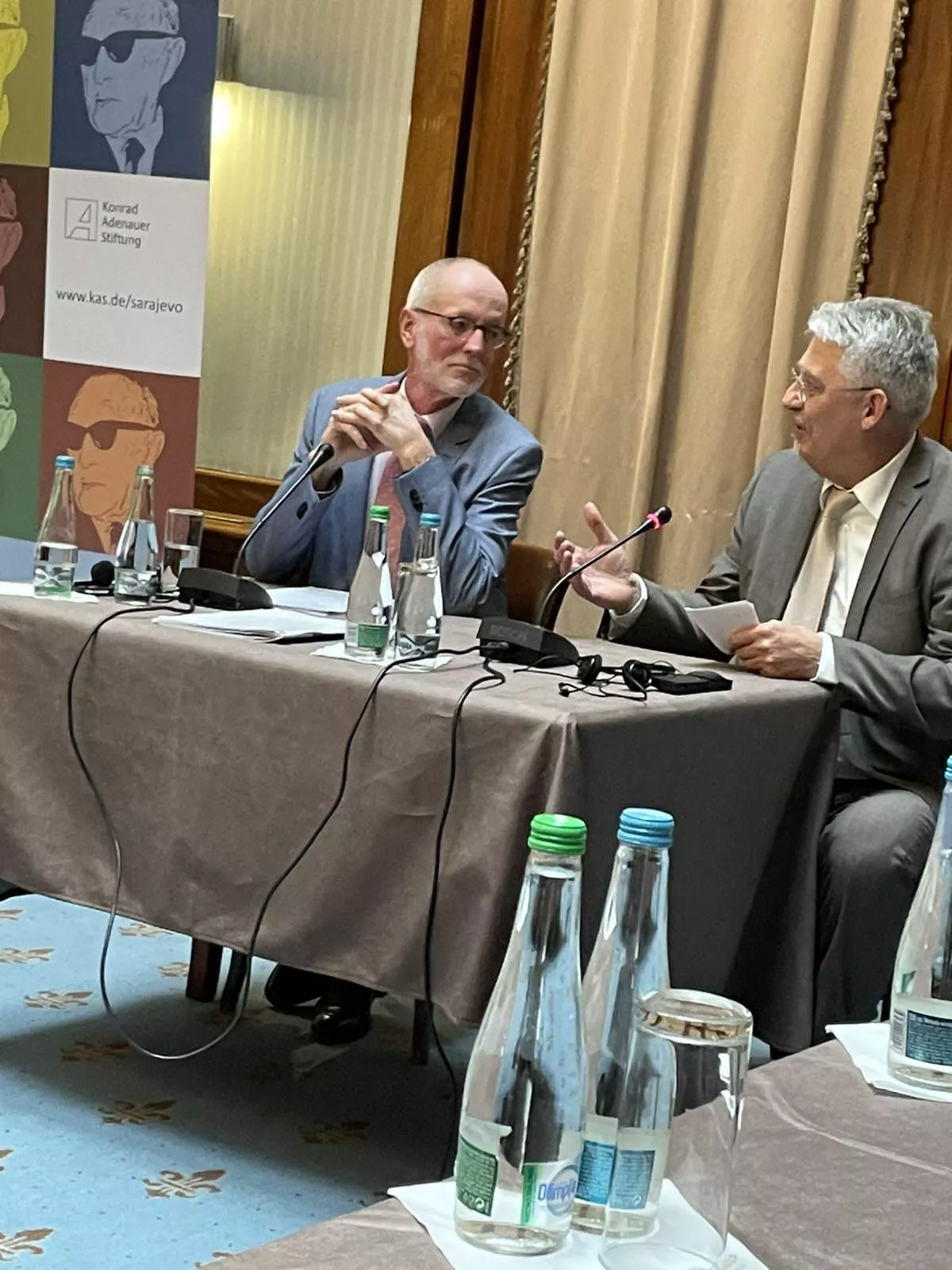
Judging by what we heard at the "Europa" Hotel, as well as based on the content of the document on the conclusions of the 10th Summit of the "Berlin Process" chaired by us, which we received before the lecture, we could get the impression that this greatest idea of German diplomacy, precisely because of a kind of, let's say rigid, insistence on continuity, has not yet sufficiently freed itself from a series of sterile and unproductive diplomatic phrases, as well as the worn-out paradigm of "reconciliation" and "agreement of peoples", and diplomatic illusions about abandoning the ideas of the "Serb world" through the introduction of a common market, or for example, ensuring freedom of movement for students, or strengthening democratic institutions.
The paradigm of "national reconciliation" is, it must be admitted, already worn out and is characteristic of post-conflict societies, while Bosnia and Herzegovina is living in a new pre-conflict phase.
The imposition of sanctions on Dodik, as well as Stevandić and Višković, for entering Germany, which Austria immediately followed, however, is an example that indicates the readiness of German diplomacy to react promptly and leadership-wise in "cases of unacceptable behavior", and to take such an "justified" step.
Regarding the security situation in Bosnia and Herzegovina, the ambassador believes that there is no great danger, but he admitted: "I am a little worried." He believes that EUFOR is doing everything to prevent insecurity and incidents, and he sees the main problem in the country as a "legal issue", i.e., the initiative from Republika Srpska to reduce the Court and HJPC to only the Federation of BiH.
The ambassador rightly claims that this affects not only the population but also their security, and he could not hide his underlying fear that there would be no incidents in the country. "Can incidents happen in the country? It is difficult to assess, I talk to everyone, including in other cities outside Sarajevo, and I find that people believe there is no real security threat in the country. That is also our hope".
Regarding the arrest of Dodik and others, Ambassador Fitschen emphasizes that we must be aware that the ball is now in the court of the security agencies. The ambassador calls for local institutions to demonstrate the functionality of the state and to react.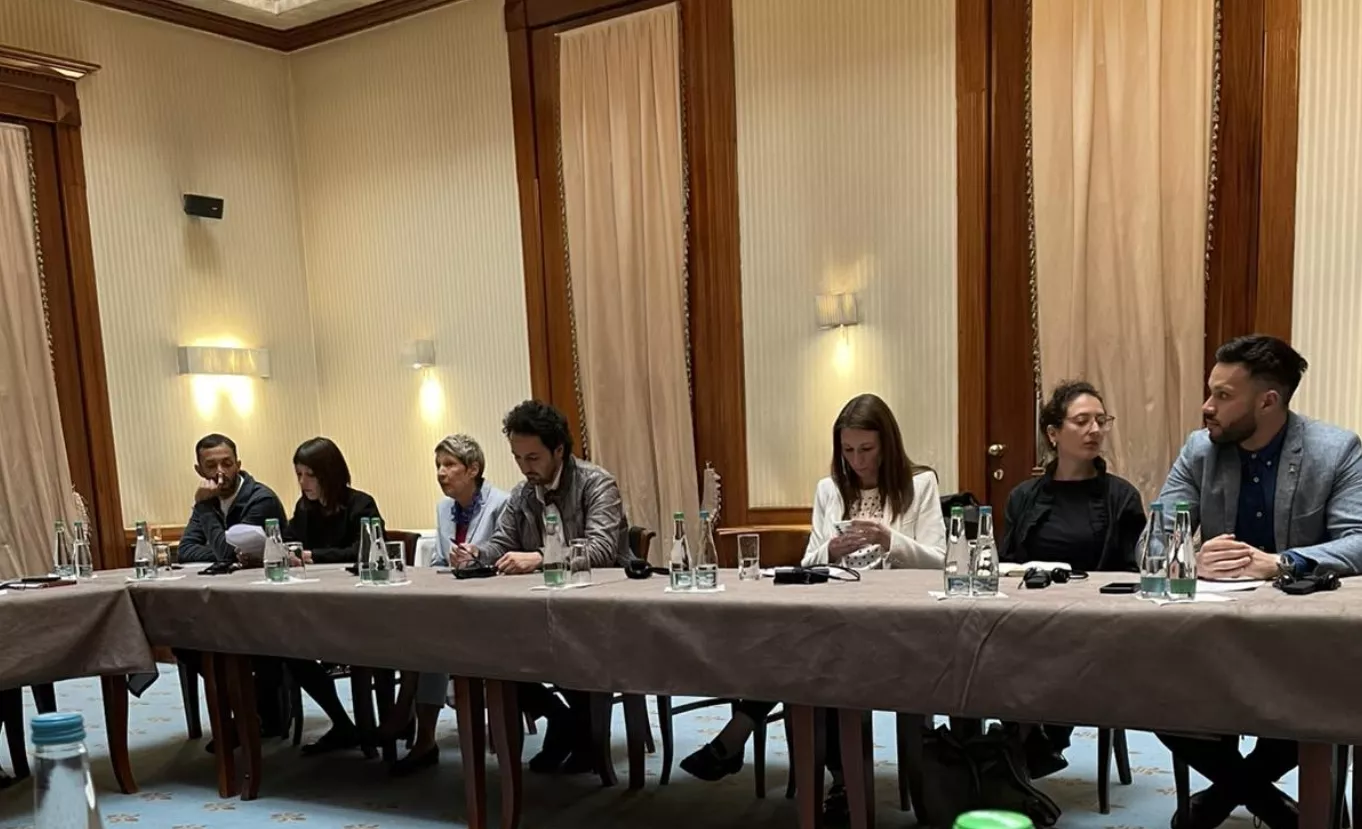
Regarding the Dayton Peace Agreement, Ambassador Fitschen said that this agreement is not the "main culprit" for the current state of political life in the country, which is perhaps partially an acceptable observation.
However, when he spoke about the very essence of Dayton, which he sees as preventing "two nations from uniting against the third", the ambassador made a completely unacceptable interpretation of Dayton that largely corresponds to how Christian Schmidt understands the essence of Dayton.
According to the interpretation of Dayton in the optics of German Ambassador Fitschen, as well as Christian Schmidt, Bosnia and Herzegovina can never be a prosperous and democratic state, because we are currently living in a political situation where two nations, or rather their political elites, have united against the third, majority nation, denying its democratic development, the country's European vision, and consciously bringing it into a state of apartheid.
Furthermore, in this regard, the ambassador overlooked another important fact about the roots and true reasons for the creation of Dayton as it is, since the war against Bosnia and Herzegovina itself began with the unification of two nations against one, as unequivocally shown by all Hague convictions for genocide and joint criminal enterprise.
This unusual "Daytonian conservatism" and blind rejection of any possibility for its different interpretation, and opening a vision towards civic democracy, in line with European standards and all judgments of the European Court of Human Rights (ECHR), the ambassador justified by stating that "in 2007, a very strong attempt was made to change it, which failed due to a 'lack of votes in Parliament'".
To the question of this author on behalf of the Circle 99 regarding how the ambassador assesses Christian Schmidt's sharp opposition to affirming a new vision of Bosnia and Herzegovina by overcoming the "agreement of peoples" paradigm, as this principle has yielded no results and has brought the country to the brink of survival, the ambassador did not explicitly answer, but only expressed nominal support for the work of the Circle 99, which could indicate that Schmidt is actually following Germany's policy in interpreting the Dayton Agreement.
To be fair, the ambassador showed diplomatic courage to speak about the "Berlin Process" and BiH's partnership with Germany at this moment, after the expulsion of Anna Lührmann from Banja Luka, as well as Dodik's recent return from Moscow.
However, the performance of outgoing Ambassador Fitschen at the "Adenauer Europa Forum" event in Sarajevo indicated a rather simplified, even unacceptable, interpretation of the essence of the Dayton Peace Agreement regarding the "uniting of peoples".
It remains an important task for Bosnia and Herzegovina that the incoming German Foreign Minister, Mr. Johann Wadephul, be informed about the interpretation of the Dayton Agreement, one that will be in accordance with European standards and norms of Bosnia and Herzegovina, and accordingly change this diplomatically worn-out stereotype.
Komentari (0)
Prijavite se za komentiranje
PrijavaJos nema komentara. Budite prvi!
Minuta
Sve →Iz drugih kategorija

High Representative Not Elected: Germans, French and British Against Americans, New Attempt at End of June

ČOVIĆ WITHOUT MERCY: How Those Who Brought Ademović to Office Created a Political Hell for Him



Sunny Saturday, quite warm



Tragedy in Albanian resort: Two minors drown












