
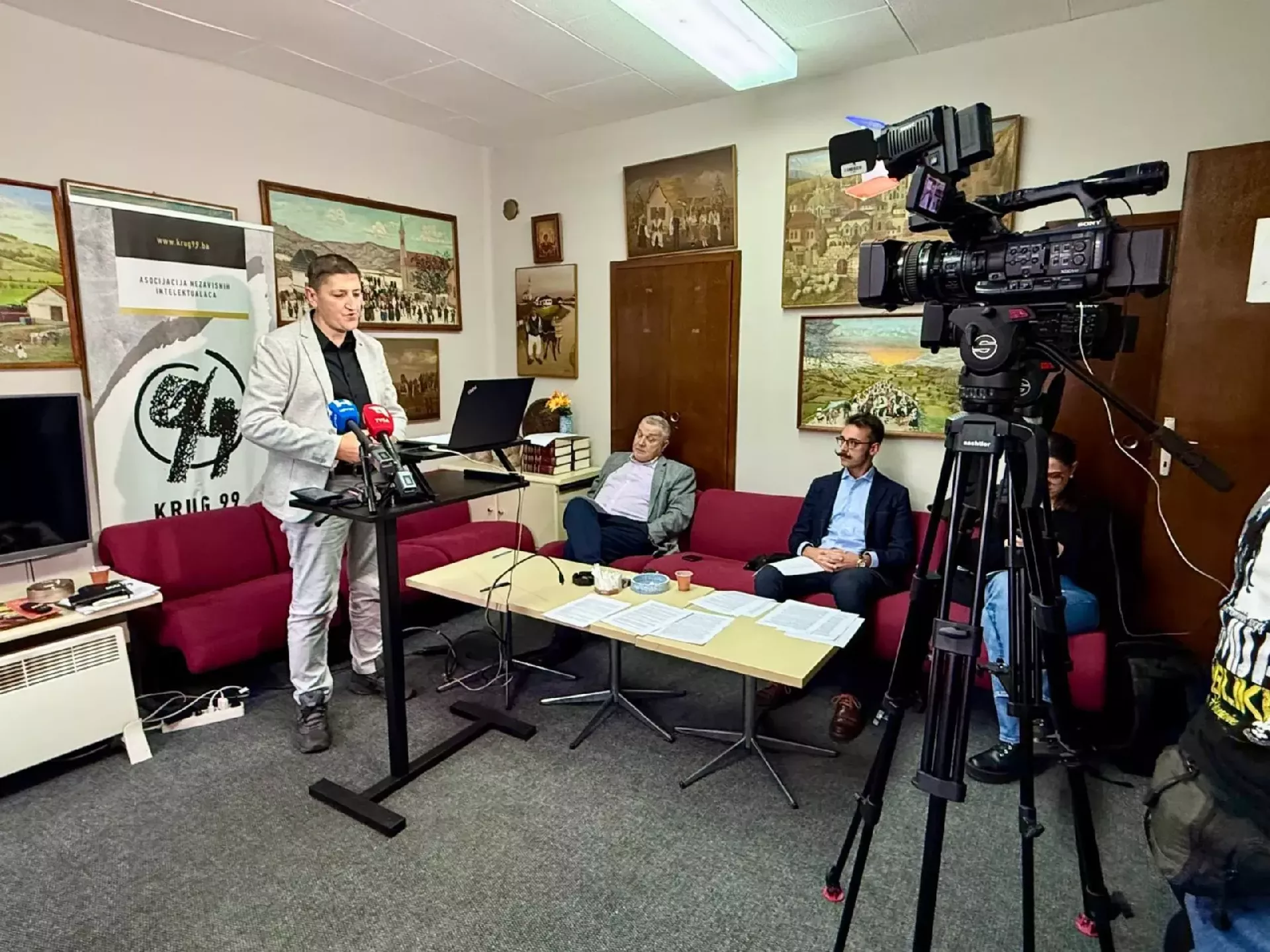
(Patria) - "Defend Sarajevo from demonization" is the title of today's regular session of the Association of Independent Intellectuals Krug 99.
The presenters were the president and members of the Presidency of Krug 99 Adil Kulenović, prof. dr. Enver Halilović, prof. dr. Hazim Bašić, Fuad Đidić, and journalist of the Patria News Agency Rasim Belko.
Below, we present the statement by Rasim Belko, who is also the president of the non-governmental organization "Guardians of Bosnia".
"Media and Special Warfare Against Sarajevo"
Edward Bernays, considered the father of propaganda, defined this activity as follows: "The conscious and intelligent manipulation of the organized habits and opinions of the masses is an important element in a democratic society. Those who manipulate this unseen mechanism of society constitute an invisible government which is the true ruling power of the country."
This definition reveals the key issue in the media and special warfare sphere, which we are trying to deal with today – information is not neutral, it is a tool of power, often subtly and visually directed.
Sight is our primary sense; a visual message shapes emotion and perception. Therefore, special warfare is adapted to the visual – images, shots, memes, and videos target emotions directly. When a negative narrative is continuously built through these tools, the result is the slow but systematic dehumanization of the object against which special warfare is waged.
Media as a Weapon – Infrastructure of Influence
Over the past two decades, media networks have emerged that operate in the interest of external centers of power. Through ownership, funding, and editorial lines, these media often act as vanguards of campaigns that work against the interests of Sarajevo. The narrative does not always rely on outright lies – it often involves selective presentation of facts, interpretations, and visual effects that create a sense of security threat and social collapse.
As an illustration, we can take the example of media reporting and propaganda surrounding the cancellation of the international rabbinical conference in Sarajevo. Such cases show how a news item, even if not entirely substantiated, can be transformed into a powerful symbol – a symbol of insecurity and intolerance. The resulting narrative is often more effective than a verified fact.
Journalist Zoran Krešić, in Večernji list, resorted to a propaganda construct solely aimed at dehumanizing Sarajevo in favor of the interest centers for which he works. The mentioned article stated: "The meeting of the Conference of European Rabbis (CER), which was supposed to be held in Sarajevo from June 16 to 19, was canceled for security reasons after numerous threats that the organizers observed in the media in Bosnia and Herzegovina and inflammatory and anti-Semitic statements by some public figures in Bosnia and Herzegovina," which is not true in the slightest.
One of the most serious and deadly elements of special media warfare against Sarajevo is the production and dissemination of the narrative that Sarajevo is a "center of Islamic radicalism." This narrative originates from secessionist and destructive political circles within Bosnia and Herzegovina, and is then re-amplified regionally and internationally.
At a time when Islamophobia is growing in parts of Europe, such a narrative quickly finds fertile ground. The consequence is twofold – internal stigmatization and external distance from allies and partners where we want to be accepted and supported. This is perhaps the most dangerous form of dehumanization: it constructs fear of us precisely where we need trust and cooperation.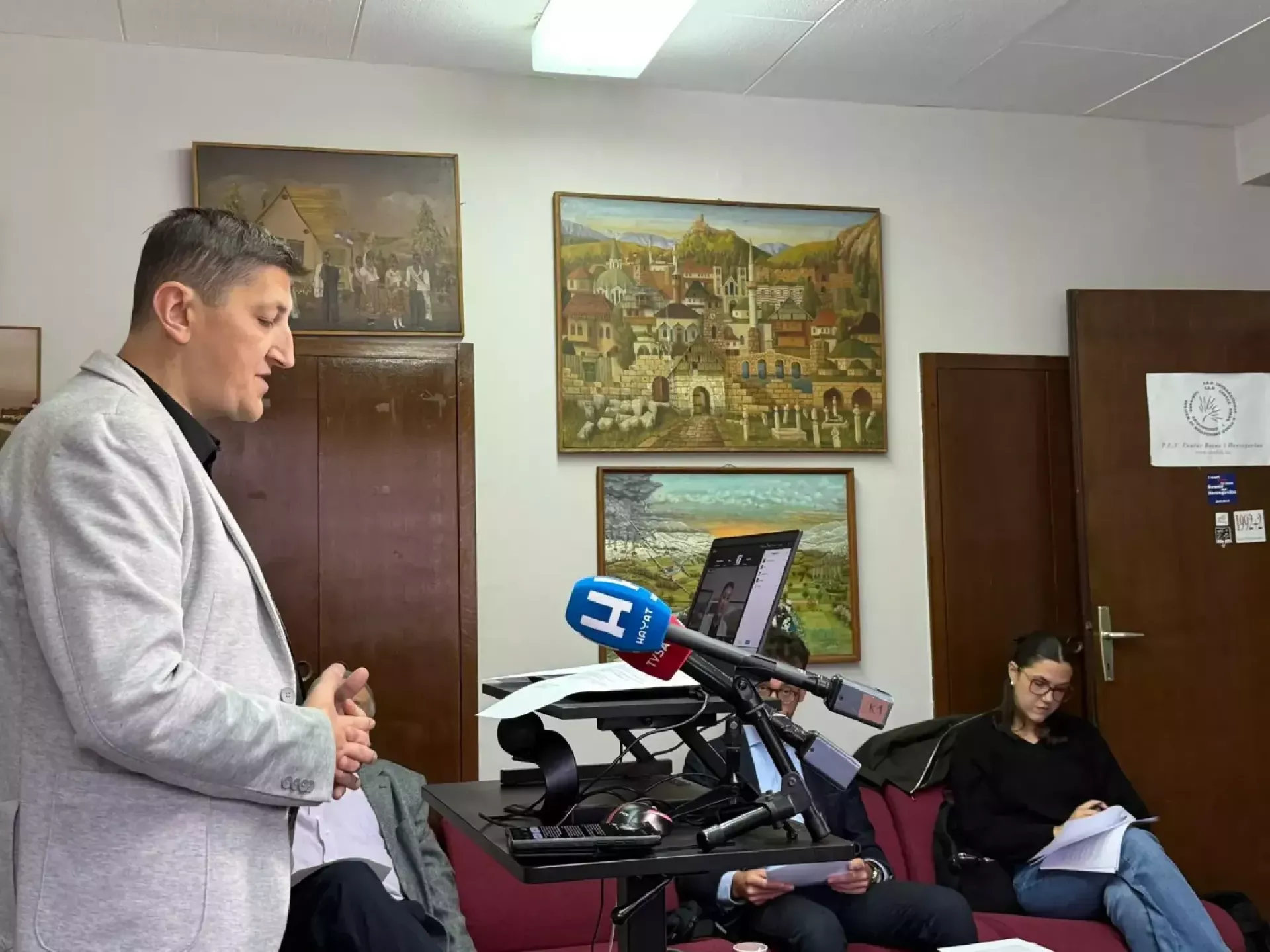
Photo: Patria
Digital Colonialism and Algorithmic Control of Narratives
The foundation of today's information ecosystem is not just media – it includes global platforms and algorithms that decide what is visible and what is not. The term "digital colonialism" describes a situation where dominant technological and media powers – through platforms, data flows, and algorithms – shape perceptions and discipline public discourse far beyond their borders. This type of external control over the information space can lead to local narratives being neglected or replaced by robust, often externally-oriented, international frameworks.
The consequence is that Sarajevo and Bosnia and Herzegovina, as small media ecosystems, lack the same tools to reintroduce their own narratives into the frame determined by global algorithms and external interest networks. And here, we can confidently speak of a lack of state sovereignty, or rather, algorithmic or digital colonialism.
What is also noticeable in recent years, especially since social networks like TikTok and Pinterest have become fully operational, is a flood of specific content that, for some reason, is algorithmically promoted in the so-called virtual space of Bosnia and Herzegovina.
Behind some of this content, there is undoubtedly the involvement of regional and other security services, as well as interest centers. The latest such virtual operation on TikTok defines that "radical Muslim Sarajevo" is against US President Donald Trump and the values he advocates, but that Trump and the US have a serious ally through the entity of RS and the president of that entity, Milorad Dodik.
Mechanisms of Special Warfare – Syntagma and Reality
The main mechanisms of special warfare are ownership control over media channels; selective reporting and emotional manipulation; strategic use of international platforms; and the explosive power of social networks – where narratives spread faster than they can be corrected. This combination of local media instrumentalization and global algorithmic forces makes our information space extremely vulnerable.
One problem I want to emphasize here is the fact that we have an institutional deficit when it comes to cyber defense. The institutions of Bosnia and Herzegovina do not yet have a developed, coordinated system of departments and mechanisms dedicated to preventing and responding to special operations. This is not just an administrative weakness – it is a security problem.
In serious countries, controlling and neutralizing malicious content is a given, while in Bosnia and Herzegovina, profiles and pages that serve propaganda and special warfare against Sarajevo continuously emerge in both the virtual and media worlds, operating completely unimpeded. The only noticeable reaction is when citizens react to platforms, and harmful content is eventually removed.
This is a form of cyber terrorism against Sarajevo, which evokes emotions of fear and anxiety in its citizens, leads them into delusion and dilemmas, and at the same time creates a disastrous image of Sarajevo outside of Bosnia and Herzegovina. If we have prosecutor groups for combating conventional terrorism, special anti-terrorism units in various police agencies, it is unclear and unacceptable that we do not have even a minimum of equipped and trained forces to combat cyber terrorism against Sarajevo.
It is important to know that there are models and mechanisms that can be activated as international aid, but so far there are no recorded cases of anyone attempting this.
The NATO alliance has developed units to counter hybrid threats, and for example, such a special team provided support in Montenegro during the political crisis caused by Serbia's subversive actions in Podgorica.
Consequences of Inaction
If this institutional deficit is not addressed and if tools for digital and media sovereignty are not developed, the consequences will be far-reaching. The dehumanization of Sarajevo in domestic and international discourse will continue as long as the creators of special operations need to achieve the interests behind these activities. The erosion of trust among allies, the hindering or closing of opportunities for constructive integration into European and transatlantic frameworks.
In this entire story, diagnosing the problem is only half the battle, because the dehumanization of Sarajevo through media activity and special warfare is clearly visible even without extensive analysis. The problem is further complicated by the flood of artificial intelligence programs and applications, which largely neutralize the traces of those conducting special warfare. Searching for modalities to counter these subversive activities is necessary and could go in several directions:
1. Formation of a department for counter-hybrid and media threats – teams that monitor media ownership, financial flows, disinformation campaigns in the virtual space, and coordinate responses with international partners;
2. Active use of international mechanisms – striving for a clear political request to NATO/EU for technical and strategic support due to continuous hybrid attacks. NATO and other allies already have experience and tools;
3. Digital sovereignty strategy – investing in local platforms, domestic media and initiatives, and regulatory mechanisms that reduce dependence on external algorithmic filters. (The issue of digital sovereignty and the fight against "digital colonialism" is gaining increasing attention in academic and policy literature);
4. Media literacy and cultural resistance – investing in educational programs that develop critical reading of visuals and sources – supporting culture and art as a form of resistance;
5. Transparency of ownership and public register – a clear and accessible register of media ownership and blocking of rogue media.
Conclusion
Special warfare against Sarajevo is today waged both on screen and in algorithms. It combines old strategies of ownership and political instrumentalization of media with new, global mechanisms of digital dominance. This is a complex challenge that requires a coordinated institutional response.
As intellectuals, media workers, and citizens, we have an obligation to seek and build mechanisms that will protect us from dehumanization: institutional tools, digital sovereignty, transparency, and cultural resistance. It is high time to clearly define these mechanisms and begin to actively implement them.
Komentari (0)
Prijavite se za komentiranje
PrijavaJos nema komentara. Budite prvi!
Minuta
Sve →Iz drugih kategorija

High Representative Not Elected: Germans, French and British Against Americans, New Attempt at End of June

ČOVIĆ WITHOUT MERCY: How Those Who Brought Ademović to Office Created a Political Hell for Him



Sunny Saturday, quite warm



Tragedy in Albanian resort: Two minors drown












