
For NAP writes: Dr. sc. Amir Šelo, legal expert
In legal theory, it is considered that there are two basic types of state structures: unitary (unified or simple state) and complex state type. The form of state structure is determined by the relationship between central and non-central bodies, i.e., whether there is one or more legislative, executive, and judicial power apparatuses on the territory of the state.
From the perspective of constitutional law, the form of a state's structure is a consequence of the territorial distribution of power established by the constitution. A unitary state is a state that has one constitution, a unified system, a system of central state bodies, and which may have a greater or lesser degree of territorial decentralization. A state with a unitary structure legally and politically disposes of the entirety of state competencies, and there is no distribution of these competencies. In exercising state power within the territory of the state, the central authority has no competitor. Unitary, unified states have long represented the basic and only form of state structure.
However, various reasons (ethnic, historical, defense, economic, geographical) have influenced the establishment of another type of state structure, which is defined in theory as a complex state. Complex states, unlike unitary ones, are characterized by the existence of multiple levels of government, the existence of constituent, constitutive elements of a complex state that have a certain degree of autonomy. In contemporary science, there is no unified definition of a complex state. A complex state, broadly speaking, denotes a state composed of multiple political-territorial units.
Throughout history, several forms of complex states have appeared: personal union, real union, confederation, and federation. The aforementioned forms of complex states differed from each other. A personal union represented a community of two sovereign states connected only by a common ruler. Personal unions arose from the coincidence of hereditary lines in two states or by the independent decision of a state to elect a foreign ruler as its own. Within them, states retained their full international legal subjectivity. Examples of this type of complex state include the union of Poland and Lithuania (1386-1569), Prussia and Neuchâtel (1707-1857), England and Hanover (1714-1837), the Netherlands and Luxembourg (1815-1890).
Another type of union, the real union, represents a link between several states with a common ruler and established common affairs. Here too, there is subjectivity of the union members, as the states are fully sovereign, but the union can also have significant elements and content of international legal subjectivity. They, however, act externally as a unified state, but the constitutional independence of the member states of the union is undeniable. Examples of real unions usually mentioned are the Swedish-Norwegian union (1815-1905), Austria-Hungary (1867-1918), the union of Denmark and Iceland (1918-1944), and some viewpoints also consider the union of Russia and Finland (1809-1917) as a real union. These two forms of complex states belong to the past today.
A similar situation exists with confederations. A confederation is an alliance of several states based on an international treaty, with the aim of achieving a common interest. This is also a type/form of complex state which, historically speaking, preceded the establishment of federations as complex federal states. Although in traditional constitutional theory confederations and federations are placed in a single state-law category called a "complex" state, confederations, by all essential criteria (legal basis of the community, legal relationship of the community's bodies to citizens, and the status of states in international law), represent an alliance of states, not a state. Dr. sc. Amir Šelo
Unlike federations, which are established by a constitution, confederations are established by an international treaty, which defines the goals of the confederation and the way they are achieved, and they are not creations of state (constitutional) law, but of international law. In them, there is no legal relationship between the confederation's bodies and the citizens of the member country. A confederation is not a subject of international law, because the member states of the confederation act independently in international relations. Confederation members are subjects of international law with a preserved wide scope of affairs within their jurisdiction.
In principle, a confederation is an enhanced alliance of states that do not form any new state, because a confederation does not have its own territory, there are no citizens of the confederation, nor is there a supreme authority of the confederation as such. It is a contractual relationship between independent and sovereign states that retain their sovereignty even after the creation of the confederation. Confederations as alliances of states have most often evolved into federations (e.g., the USA, Switzerland, Germany), with this form of alliance providing the possibility for member states to unilaterally withdraw without any political or legal consequences. The aforementioned forms of complex states are largely obsolete today.
Today, the concept of a complex state is generally equated with the concept of a federal state. Of course, in newer constitutional law theory, different viewpoints emerge. Thus, regional states are also classified in the category of complex states.
The very concept of regional states is relatively new and appeared only in the second half of the twentieth century, since regions, as special territorial units, were introduced into the structure of government in certain states, and in this regard, scientific interest arose in theoretically shaping this concept. A regional state represents a special, more modern form of state composed of special areas, regions, which, thanks to political decentralization, have considerable autonomy in carrying out affairs. It is a state in which regional, i.e., provincial bodies, have limited but considerable decentralized state power in all main types of state affairs, which makes them politically and territorially privileged.
Regional bodies engage in legislative activity, but without their own special legislator. Therefore, it is said that the power of regional bodies is dependent on the power of central bodies, but to a lesser extent. The powers of regions are also determined by the constitution, with the powers of regions being able to be similar to the powers of local self-government units, but also approximately equal to the powers of federal units.
What is particularly specific, and what depends on the central authority of each state individually, are the statuses of individual federal units and regions. Namely, it can happen that within this framework there are asymmetrical solutions. Such asymmetrical solutions are most often prescribed by the highest act of the state - the constitution. Thus, for example, after World War II, minority regions in Italy received asymmetrical autonomy (South Tyrol, Friuli - Venezia Giulia, Valle d’Aosta, 1948), Spain in 1978 granted asymmetrical autonomy to the Basque Country, Catalonia, and Galicia, and France granted a limited form of autonomy to Corsica (1991). Great Britain adopted asymmetrical devolution for Scotland, Northern Ireland, and Wales in 1998, and Denmark for Greenland in 1978.
Today, there are only two true regional states, namely Italy and Spain. A regional state, therefore, represents a form of state structure that lies between a unitary state and a federation. Thus, it can be defined as a special form of unitary state with a high degree of decentralization, but also as a special complex state in which regions, as autonomous territorial units, cannot be considered states with all three state functions of power in terms of constitutional law. Italy and Spain are defined by their constitutions as regional states composed of regions with a high degree of legislative autonomy.
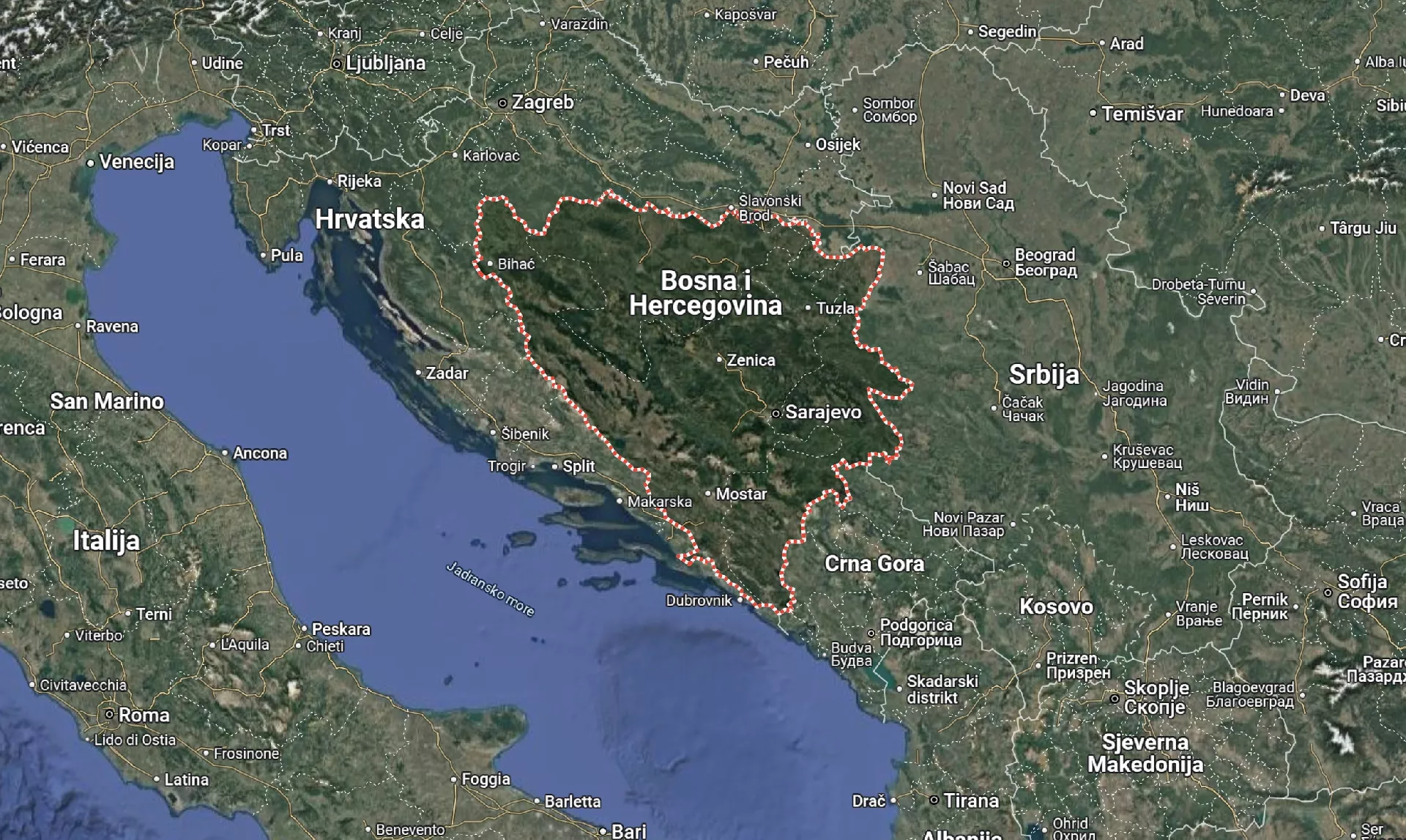
The model of a regional state or a state composed of regions is a model that can serve legal science and the socio-political community for building a dialogue about future constitutional principles for Bosnia and Herzegovina. Regions can be based on geographical, economic, and business characteristics and be a cohesive factor in the principles for building a modern Bosnia and Herzegovina. Such a model should be a response to the increasing lobbying to introduce the "Belgian model" of state into Bosnia and Herzegovina. Belgium's structure as a federal state is in no way applicable to Bosnia and Herzegovina, as Belgium was transformed from a unitary to a federal state in 1993 (peacefully and through internal consensus).
Komentari (0)
Prijavite se za komentiranje
PrijavaJos nema komentara. Budite prvi!
Minuta
Sve →Iz drugih kategorija

High Representative Not Elected: Germans, French and British Against Americans, New Attempt at End of June

ČOVIĆ WITHOUT MERCY: How Those Who Brought Ademović to Office Created a Political Hell for Him



Sunny Saturday, quite warm



Tragedy in Albanian resort: Two minors drown












