
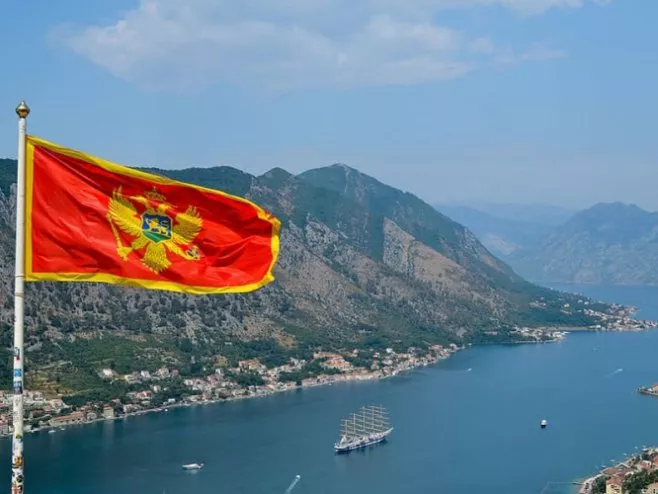
(Patria) - The regime that came to power on August 30, 2020, on the wave of a Greater Serbian clerical-nationalist revolution, has significantly changed the social character of Montenegro in less than three years, based on the nominal Constitution of 2007. Secular, civic Montenegro, a member of NATO and until recently the frontrunner for EU accession, has in the meantime, thanks to the policy of the ruling majority, become a Russian-Serbian province with systematically destroyed institutions, fundamentally shaken national and religious tolerance, multiculturalism, and freedom of expression. The strategic goal of the current regime's Greater Serbian ideology is to assimilate the Montenegrin nation, marginalize minority national and religious communities, and realize its age-old geopolitical plan – Serbia and Russia's imperial exit to the Mediterranean, writes Antena M.
The third Greater Serbian puppet government, which will complete the process of changing the character of the Montenegrin state and its institutional and economic devastation, has a clear goal: to definitively halt the EU integration process, change the country's foreign policy course, and prepare the ground for leaving NATO; after placing Montenegro's cultural-historical heritage under Belgrade's control, to seize Montenegro's most important resources, and to falsify the census. Serbia would easily re-annex such a Montenegro, with a changed Constitution and state symbols.
Precisely because of this, there can be no place in that government, whose axis should be formed by the President of Montenegro – who does not recognize Montenegrin identity, language, and culture – and coalitions led by protagonists who have been convicted in the Moscow-directed attempted coup of 2016, for those who cherish the values of civic, secular, and multicultural Montenegro.
The moment for Montenegrin society and the state is dramatic. Effective and organized political struggle and defense of human rights are a prerequisite for the internationalization of the issue of the survival of the Montenegrin state. It is the obligation of pro-Western sovereignist parties, the civil sector, cultural and intellectual associations, and initiatives to strongly resist the undemocratic attacks of Greater Serbian nationalism and Russian imperialism, whose representatives control all institutions of culture and education, public media, the security sector, diplomacy, and public enterprises. In line with its entrenched imperial ideology, the regime continues to criminalize the idea of Montenegrin sovereignty, to persecute, dehumanize, and criminalize all its critics: writers, journalists, intellectuals, and to shut down the last critical television station.
Therefore, we appeal to parties of sovereignist, civic, pro-Western provenance that, if the trend of institutional collapse, endangerment of human rights and freedoms, and attacks on the democratic postulates of our society continues in the process of forming a new government, they should leave all institutions and call for civil resistance and disobedience. Cooperation with Greater Serbian and pro-Russian parties is unacceptable.
Remaining in parliament would mean a form of collaboration with yet another anti-Montenegrin, anti-democratic, Greater Serbian, pro-Russian, anti-European, anti-NATO government, which will proclaim Europeanism and secularism for external consumption, while domestically implementing and promoting clericalism, cultural and national segregation as a specific form of Balkan clerical fascism. By remaining in the Assembly, opposition parties would not only further encourage citizen apathy but would also legitimize the regime to continue the annulment of Montenegro's sovereignty, its civic structure, and multiculturalism.
We call on human rights institutions and organizations in the UN, EU, and OSCE to condemn the daily hate speech, the direct interference of the Serbian state, its media, and security services in the internal affairs of another sovereign state, as well as the permanent discrimination against national Montenegrins and minority national and religious communities, the cultural ghettoization of Montenegrin cultural organizations and creators, the persecution of critical intellectuals, and the suppression of public media not controlled by the regime.
Novak Adžić
Miodrag D. Bajković
Nataša Baranin
Goran Barović
Boban Batrićević
Antonija Bojanić
Boris Borozan
Ranka Božović
Žarko Božović
Dragan Bursać
Danilo Burzan
Rajko Cerović
Ivana Cicović
Borislav Cimeša
Adnan Čirgić
Radovan Damjanović
Irena Delja
Mirka Dević
Draško Đuranović
Slavko Đurđić
Savo Jeknić
Slobodan Jovanović
Danilo Kalezić
Nebojša Kaluđerović
Feđa Klikovac
Ana Knežević
Tanja Knežević
Isidora Kovačević
Marija Krivokapić
Risto Krivokapić
Hajdana Lompar-Huter
Milan Marković
Nikola Martinović
Veljko K. Martinović
Danilo Marunović
Milutin Mijović
Maja Miličković
Nebojša Mrvaljević
Milan Mrvošević
Rosanda Mučalica
Ljubomir Mudreša
Emira Mustajbašić-Ličina
Jadranko Nikčević
Jasmina Nikčević
Milan Nikčević
Tamara Nikčević
Andrej Nikolaidis
Danica Nikolić
Sanja Orlandić
Ivana Pajović
Suzana Pajović
Svetlana Pajović-Musić
Ana Pejović
Dragan B. Perović
Milenko A. Perović
Željko Perović
Ljiljana Pešić
Milorad Popović
Nikola Popović
Božidar Proročić
Vukić Pulević
Aleksandar Radoman
Aleksandra Radoman-Kovačević
Šeki Radončić
Snežana Rakonjac
Ivana Rondović
Jadranka Selhanović
Faiz Softić
Majda Šahman-Zaimović
Đorđe Šćepović
Vladimir Šibalić
Darko Šuković
Tanja Šuković
Jelena Šušanj
Rajko Todorović Todor
Stefan Todorović
Vesna Vičević
Snezana Rakonjac
Desanka Vlahović
Miodrag Vlahović
Stevo Vučinić
Zoran Vulević
Čedomila Vujošević
Sreten Vujović
Vukota Vukotić
Komentari (0)
Prijavite se za komentiranje
PrijavaJos nema komentara. Budite prvi!
Minuta
Sve →Iz drugih kategorija

High Representative Not Elected: Germans, French and British Sabotaged Americans, New Attempt at End of June

ČOVIĆ WITHOUT MERCY: How Those Who Brought Ademović to Office Created a Political Hell for Him



Sunny Saturday, quite warm



Tragedy in Albanian resort: Two minors drown












