
By Armin Sijamić
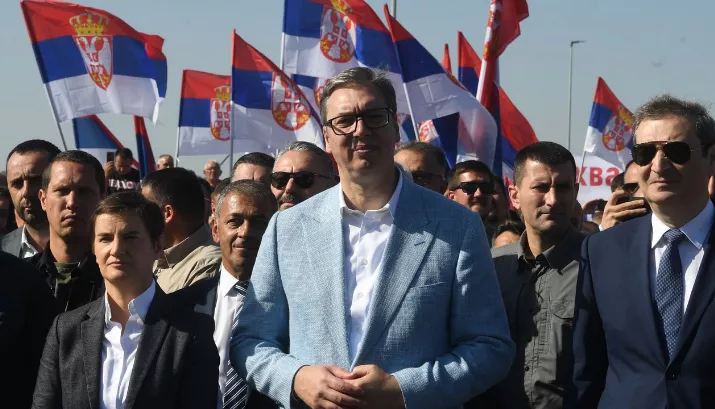
Serbia will have another snap election on December 17, this time, according to President Aleksandar Vučić, at the request of the opposition. He accepted this alleged request in the days following an armed attack on the Kosovo police, so citizens will vote for the state, provincial (Vojvodina), and local levels in several municipalities and cities, including Belgrade.
The attack on the Kosovo police, as well as other important topics, have been removed from the public sphere, so citizens in Serbia are once again choosing between Vučić and the others, between openly or covertly pro-Russian parties, between open and covert proponents of Greater Serbia projects, between those who "won't give up Kosovo" in various ways and those who want to go to the West on their own terms, and a handful of those who truly want a different country that will live in peace with its neighbors.
According to information from the competent authorities in Serbia, there are 6.5 million voters on the voter list for the upcoming elections, and according to last year's census, 6.6 million people live in that country (without Kosovo). These numbers indicate how irregular elections in Serbia can be, a fact pointed out by some media, activists, political parties...
Nevertheless, Serbia is going to the polls. The opposition has no objections to the election conditions, and just a few years ago, they refused to participate in them. Mediators from Brussels came to Belgrade to help a European country in the 21st century hold some kind of free and fair elections. The mediators did not succeed, what the opposition asked for did not happen, just as with the demands from the mass protests after two massacres (the "Ribnikar" and "Dubona and Malo Orašje" cases).
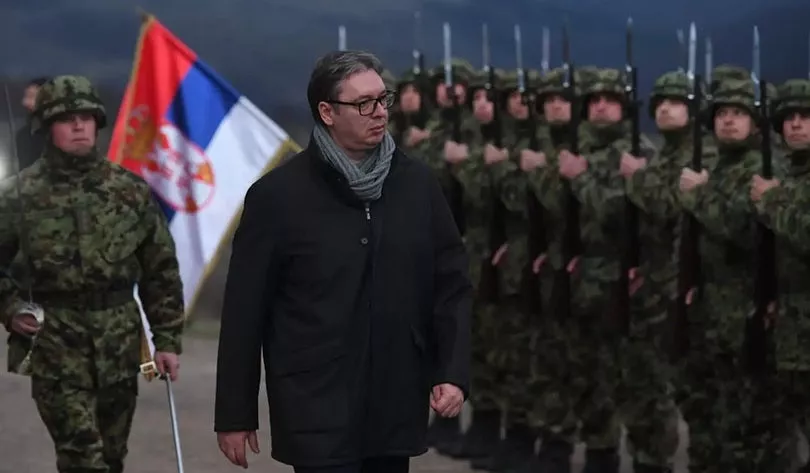
The opposition, which accuses each other of "working for Vučić" in various ways, has assessed that the accumulated scandals are enough for Vučić to lose the elections, or rather, for him and his partners not to secure a majority in the parliament.
It is impossible to even list all these scandals. Some of them include mass and individual murders, terrorist attacks and paramilitary camps, drug trafficking linked to state officials, attacks on journalists and media, corruption, and US sanctions against Aleksandar Vulin...
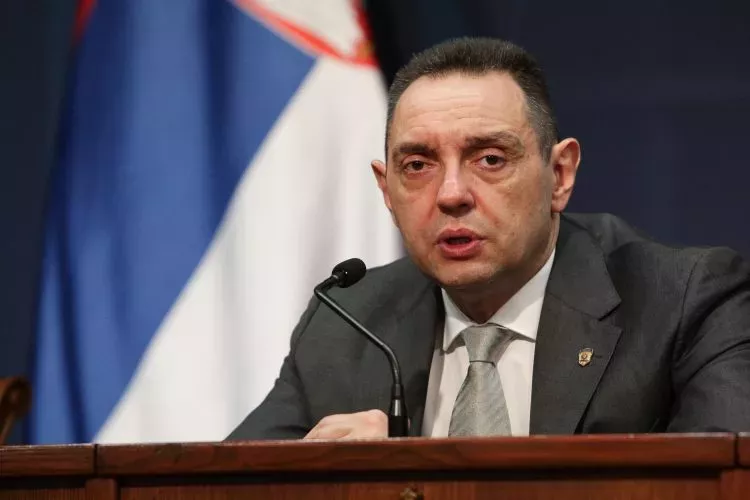
Therefore, from the remarks of some critics of both the government and the opposition, one could ironically conclude that the opposition called for elections in order to lose them, so that the pro-Russian Vučić would lead the country to the West.
What is the debate about?
In this year's elections in Serbia, perhaps the most unclear thing is what the main topic of the election debate is, assuming there is one, because Vučić has been refusing televised confrontations with opposition leaders for years, and in shows where members of his party appear, everything ends in arguments. Nevertheless, Vučić is the main actor of the election campaign, even though he is not a candidate in these elections.
What Vučić offers and what the opposition offers is also difficult to define. In short, Vučić offers a continuation of the current policies, and the largest part of the opposition believes that the current government must go and be succeeded by a government that will radically deal with Vučić's twelve-year rule.
Another characteristic of this campaign is that there are almost no strong parties or coalitions that have the same stance on important issues within themselves. For example, part of the opposition coalition "Serbia Against Violence" is for turning towards the West, while another part is skeptical. With Vučić, it's the same story for years; he has proponents of rapprochement with the West, Russia, and China within his party.
Such differences on past issues, which is an even greater paradox, are even more pronounced. In this campaign, opposition parties are trying to discredit themselves with the formulation that they "recognize the genocide in Srebrenica," which is tantamount to treason of national interests. At the same time, the government is sending a message that Serbia is ready for cooperation with its neighbors and wants Euro-Atlantic integration, which part of the West believes.
The further we go into the past, the greater the dystopia. Political and social actors are working on the rehabilitation of all kinds of fascism, asking the public to "read" their messages "correctly." A recent example is the attempt to bring back Dragoš Kalajić to the public stage, if he was ever ideologically expelled, who claimed during the aggression against Bosnia and Herzegovina that the Balkans were being defended from "Islamists" and Russia from "globalists."
More uncertain who will be below the threshold than who will win the election
The winner of the elections in Serbia is known, it is the ruling Serbian Progressive Party (SNS). The question remains how many percent they will get and whether it will be enough for them to form a government alone or with coalition partners, and whether those coalition partners will include people like Vulin.
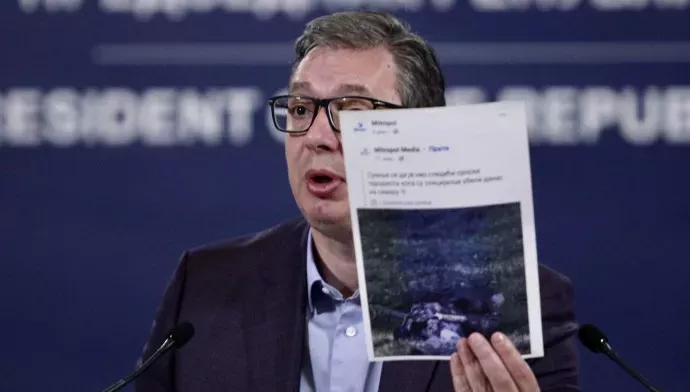
According to various polls cited by the media in Serbia, the SNS will receive between 39 and 45 percent of the votes. The fact that every vote is important to Vučić is confirmed by his coalition with Vojislav Šešelj in Belgrade, and the remaining member of the radical trio – Tomislav Nikolić – has also joined the campaign.
In second place, according to polls, will be the aforementioned coalition "Serbia Without Violence," which should have 15 to 20 percentage points less than the SNS. The coalition gathered around Ivica Dačić, who placed Slobodan Milošević's grandson third on his list, will also cross the threshold. Seats in parliament are likely secured by minority lists of Hungarians, Bosniaks, and Albanians, as well as two right-wing coalitions gathered around Boško Obradović and Miloš Jovanović.
All others will fight to cross the threshold, which is the main issue in these elections, because the votes of those who do not cross the threshold, according to the D'Hondt system, are transferred to the winners, so it would suit Vučić if as many as possible remain below three percent support. It is precisely in these parties that many have sought "Vučić's opposition," even among those who do not declare themselves as right-wing.
The West, Russia, Serbia
Although "citizens are choosing" in the elections, the relationship between the West and Russia towards these elections and Serbia in general is more important for the overall situation in the Balkans. The popularity of Russia among parties in Serbia is well-known and as such is not news – Belgrade actors compete to see who loves Russia more, even to their own detriment. Therefore, Russian influence on this campaign is both visible and invisible, meaning it does not need to manifest itself particularly, as political actors know what is expected of them.
But the West's attitude towards this pre-election campaign is more than an interesting phenomenon, because Vučić enjoys greater support from those who are openly for rapprochement with the European Union and NATO. Before these elections, NATO Secretary General Jens Stoltenberg also came to Serbia, and he was welcomed by an unarmed honor guard at Belgrade airport. In previous campaigns, Vučić met with Vladimir Putin during the campaign, which was a message to voters that Moscow stood behind him.
However, one of the most interesting details of recent election cycles is the support Vučić receives from Alexander Soros, the son of the more famous George, to a much greater extent than from those who hold similar ideological positions as the wealthy and influential American guest. This phenomenon, as well as the phenomenon of "color revolutions" which are strongly linked to Serbia and some of its citizens, still needs to be examined. How Vučić managed to gain more support from this address than his opponents is an important question for Serbia's neighbors as well.
Thus, the elections on December 17 could open new chapters in the history of Serbia, especially its opposition, which wanted elections under conditions that it had previously claimed were unfair and that Vučić had subordinated the entire state apparatus to his victory. It is clear that the opposition is counting on citizens' anger and that this is their main asset for victory, given that most of them, like Vučić, have no plan on how to turn Serbia into a country that will resemble modern, developed, and democratic European states.
Komentari (0)
Prijavite se za komentiranje
PrijavaJos nema komentara. Budite prvi!
Minuta
Sve →Iz drugih kategorija

High Representative Not Elected: Germans, French and British Sabotaged Americans, New Attempt at End of June

ČOVIĆ WITHOUT MERCY: How Those Who Brought Ademović to Office Created a Political Hell for Him



Sunny Saturday, quite warm



Tragedy in Albanian resort: Two minors drown












