
(Patria) - In light of the latest developments related to the Milorad Dodik case, especially after his sudden appearance before the Court of BiH and the statement that he "voluntarily surrendered", the legal and professional public in Bosnia and Herzegovina was taken aback.
While institutions are sending messages about "lawful" conduct, numerous questions remain unanswered, from how the sudden turn of events in the treatment of the suspect came about, to whether the entire judicial system succumbed to political or other influences.
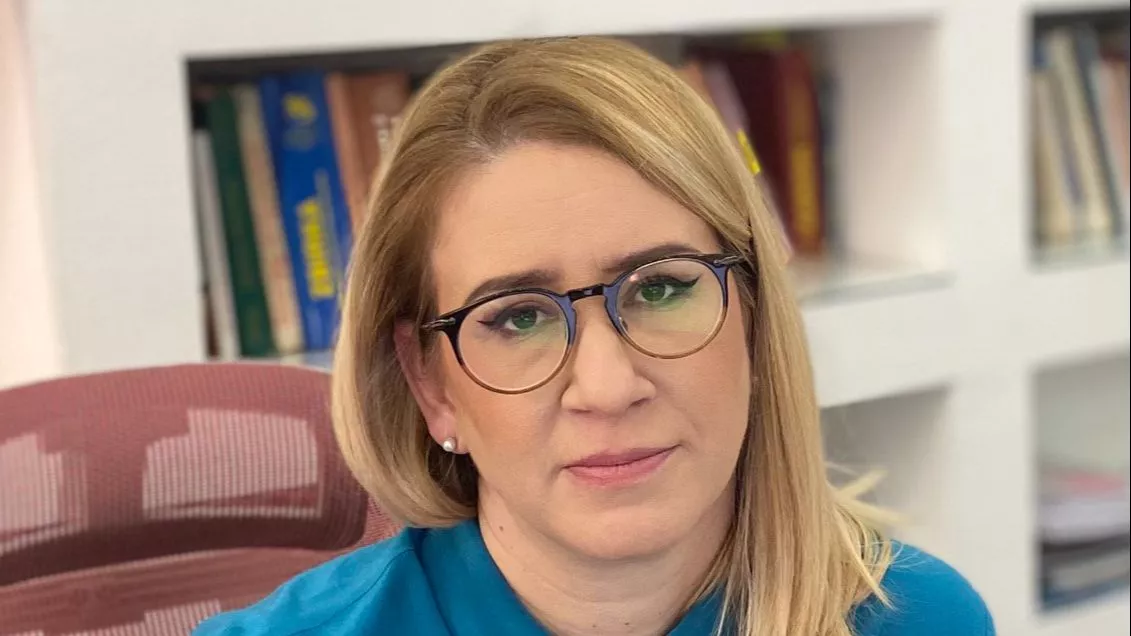
Lawyer Sabina Hota-Ćatović, who has been practicing before the Court of BiH for years and represents defendants in the most sensitive cases, presents an argued and sharp legal analysis for the Patria News Agency of everything that has happened, from the circumstances of the alleged surrender, through the actions of the judge and the prosecution, to the broader context of the role of the international community and the state of the domestic judiciary.
Her interview opens the door for a deeper discussion about the integrity of key judicial institutions in Bosnia and Herzegovina.
Does the public statement stating that Milorad Dodik voluntarily surrendered – correctly inform the public?
"The suspect did not voluntarily surrender, and it is an incorrect public statement that does not serve to inform the public but to conceal a corrupt agreement and abuse of influence that was made between all judicial officials involved and the suspect.
The element of voluntariness is excluded by the court orders for deprivation of liberty and the decision to impose custody, the execution of which the suspect avoided by threatening the use of force and forming a special paramilitary formation that would offer armed resistance to those who were supposed to act on the court's order.
In this way, the suspect, by threatening the state with the use of force, secured his arrival at and departure from the court. This is not a surrender, let alone a "voluntary" one, because he did not enter the court to "surrender", but solely to enter the courtroom and leave it as a free citizen.
Is the information that judge Tatjana Kosović had her hands tied and could not have acted otherwise when such a proposal came to her – correct?
"It is not correct. First of all, we must know that there was no judicial decision-making process at play. The prosecutor's proposal did not come to the judge's desk like any other proposal from the parties in the proceedings, which she is yet to decide on after hearing the prosecutor. Article 136 of the Criminal Procedure Code of BiH states that during the investigation, and before the expiry of the custody period, the pre-trial judge may revoke custody by decision after a prior hearing of the prosecutor.
This suspect would never have set foot in the courtroom if he had not already known in advance that a decision was written to revoke his custody and annul the warrant for his arrest and deprivation of liberty. He said as much in a way when he addressed the public and said that he had received "those papers" at the court and that the matter was over for him.
Secondly, the judge could have rejected the prosecutor's proposal. Although this rarely happens, this is a situation where not only could she have (because the law states that the judge "may" revoke, meaning it obliges the court to determine whether what the prosecutor claims is indeed founded, and only if she finds it so will she issue a decision to revoke), but she had to reject it because, quite simply, what the prosecutor stated in the proposal as a reason for revocation is not a true or accurate fact. We all know this, and the judge knew it too.
The pre-trial judge who was in the courtroom is likely the same judge who issued the order for deprivation of liberty and made the decision to impose custody, and later issued the warrant, determining that he was on the run (although he was de facto not on the run, but the competent police agencies refused to execute the court's order).
The judge knew that the claim that the suspect voluntarily surrendered was not true or accurate, just as she knew that the prosecutor's claim that there was no danger of the suspect being unavailable was false and untrue. If there has ever been an example in the history of judicial practice of a suspect being unavailable, it is the case of this suspect, who actively resisted for three months with threats of force from a paramilitary unit he formed to protect himself from judicial prosecution.
How is it possible, how is it at all possible, that the court finally addressed us with a joint public statement in which they claim that the danger of his unavailability to the court has ceased?!! This is an unprecedented blow not only to professionals and lawyers throughout the country but an attack on the common sense and intelligence of citizens.
The way, according to available information, this entire undertaking of his release unfolded, and finally the recordings from the courtroom, indicate that certain individuals, in performing their official duties, seriously violated the law, and for that, the only possible response in this situation will be a detailed investigation and prosecution of all responsible persons who committed this criminal offense.
We are now receiving information that certain cases are being processed by the disciplinary bodies of the HJPC, do you mean that when you say "responsibility"?
"No. Here, disciplinary proceedings can be initiated in the form of suspension until the criminal investigation is concluded, because this situation can only be resolved by a criminal investigation and a judicial epilogue of prosecuting those responsible, including all persons who abused their influence and arranged the outcome of the proceedings for the suspect, which contains all elements of a corrupt agreement in order to commit abuse of official duty to the detriment of the state and its legal order, and in favor of the suspect.
In a broader sense, it can also be said that through this corrupt agreement, all those who participated in it, and all those who assisted and provided help to the suspect, have become co-perpetrators and concealers of the perpetrators of the attack on the constitutional order of the state. If it is true that the director of OSA transported the suspect and did not deprive him of his liberty, as he could not, since it is not his jurisdiction, it is clear that he was supposed to serve as protection for the person for whom the warrant was issued, so that he would not be arrested by official persons in the Sarajevo Canton if he found himself in the territory under their jurisdiction. It is obvious that there was an abuse of official duty in the criminal law sense, based on a previously established corrupt agreement.
The order for bringing is executed by the court police, and it is certain that the bringing was not ordered by the court, nor could it have been ordered to the director of OSA.
Dodik claims that the Court of BiH lacks legitimacy and is a political instrument. As a lawyer who has practiced before that court for years, how well-founded are these claims in practice?
"Until Friday, these were just claims that could be countered with opposing arguments, however, since Friday evening, the court and the prosecution have deprived us all of any argument to claim otherwise. This suspect has practically proven, live stream, with his own example, that what he says about the court and the prosecution of BiH is, unfortunately, a harsh reality from which there is no defense anymore.
How do you comment on the role of the international community in judicial processes in BiH, especially regarding the perception of selective justice?
"That is also, unfortunately, a harsh reality that we must face as soon as possible and urgently find an adequate response. Americans cannot dictate our judiciary if we see how their own judicial and constitutional system functions or does not function.
Their current president, a few years ago, staged a coup and, with organized hordes, stormed Congress and carried out a coup d'état. Of course, he was amnestied for it and then nominated and re-elected as president. It is obvious that the American administration does not have a problem with such dangerous illegal actions. Every day we witness mass abuse of the judicial-police apparatus and persecution of dissidents, and now, finally, the formation of para-state police structures that arbitrarily and arbitrarily deprive citizens of their liberty, throw them into prison, or extradite them illegally.
We must not allow anyone to blindly follow their orders because it has become very dangerous. It is clear that they are not in the service of justice and that they are leading to further legal and constitutional disintegration of the state and its institutions. If Americans are unable to protect their own constitutional-legal and judicial framework and the rule of law, and we all see that they are not, then any individual who complies with their orders here is nothing more than a traitor to this state and its interests.
Based on your experience, what reforms are necessary in the BiH judiciary to restore citizens' trust, including those who have gone through processes with the feeling that they have not received a fair trial?
Reforms are an outdated story, and we should all stop talking about famous judicial reforms. As for the Court of BiH and the Prosecutor's Office of BiH, after Friday evening, July 4 (symbolically), the only reform of that judicial apparatus located at Kraljice Jelene 88, and the only possible solution is to lock the doors.
Namely, the basic jurisdiction of that court and prosecutor's office is the protection of the constitutional and legal order of the state. All other jurisdictions can be handled by other courts and prosecutor's offices, but only they can handle this one.
We have now seen that in a period of more than three months, they are unable to do so and that they do not have effective control for the enforcement of laws in one part of the state, and this is now a new reality that must be faced and responded to adequately, because the State Court and Prosecutor's Office are unable to do so and never will be.
We should no longer pay for a judicial mirage with our money. It is too expensive, and it is also dangerous. It is better to know that we do not have a mechanism, to face it in time, than to think that we have it but know that it will betray us when it is most needed."
(A. Čorbo-Zećo)
Komentari (0)
Prijavite se za komentiranje
PrijavaJos nema komentara. Budite prvi!
Minuta
Sve →Iz drugih kategorija

High Representative Not Elected: Germans, French and British Against Americans, New Attempt at End of June

ČOVIĆ WITHOUT MERCY: How Those Who Brought Ademović to Office Created a Political Hell for Him



Sunny Saturday, quite warm



Tragedy in Albanian resort: Two minors drown












