By Armin Sijamić
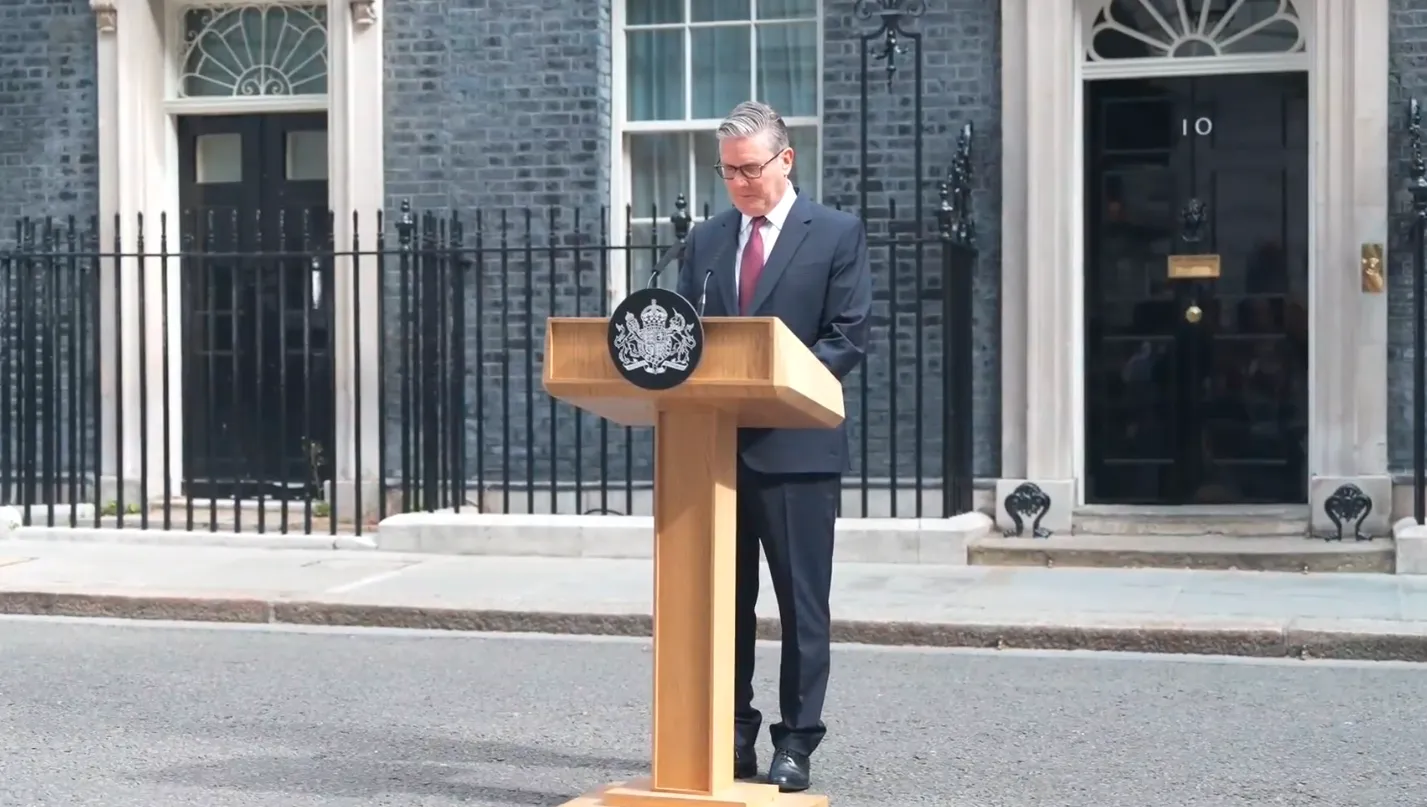
UK Prime Minister Keir Starmer visited Germany and France this week. The Labour Prime Minister, among old allies who are the backbone of the European Union, tested the relationship between London and Brussels, as well as numerous other topics including Ukraine.
After the UK voted to leave the European Union in a referendum in June 2016 and formally withdrew from membership in January 2020, the Brexit story continues, either as a consequence of the contract termination with the rest of the continent or as a way to overcome the termination more easily.
Brexit was implemented by the Conservatives, and the role of then-Prime Minister David Cameron, who was at one point for leaving the Union, only to later await an offer from Brussels to remain in the Union, is still remembered today. It is unlikely that Brexit would have happened if Labour had governed the island at the time, as they had been in opposition and on the defensive for the last fourteen years. But Labour won the last election, which should facilitate ties with old European allies.
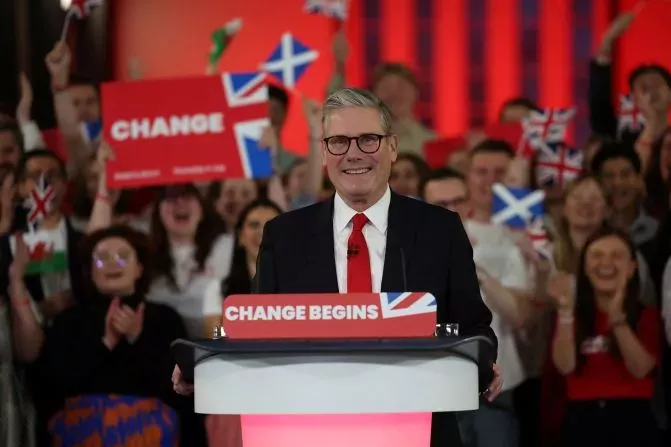
This week, Starmer knocked on the doors of European allies, trying to strengthen existing alliances, create new ones, and continue to support Ukraine together, which has been fighting against Russian aggression for thirty months. On Wednesday, Starmer was in Berlin, and the day later in Paris.
Agreement between Berlin and London
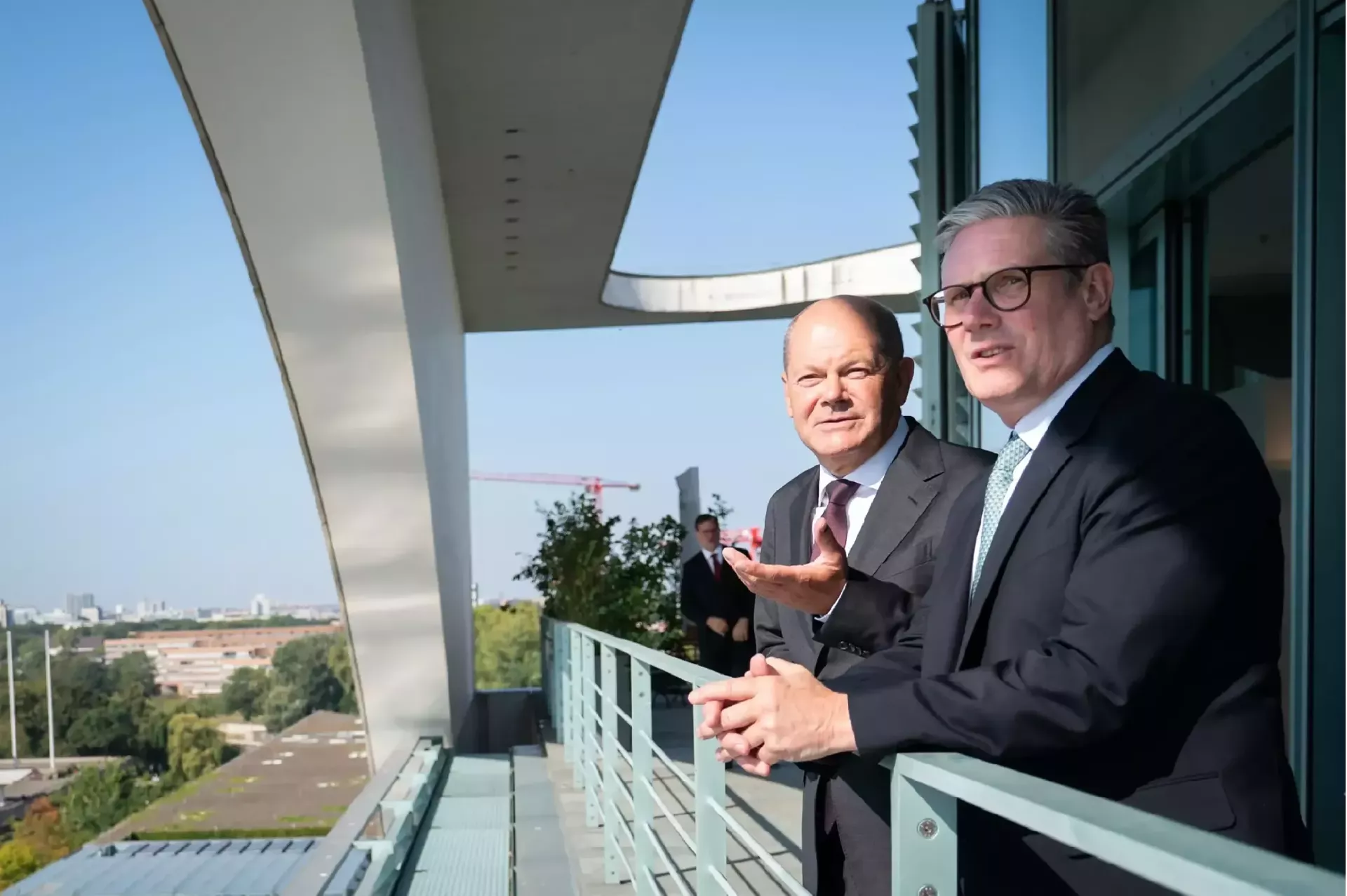
News agencies reported Starmer's visit to Berlin to meet German Chancellor Olaf Scholz as an attempt by official London to mend strained relations during the Conservative government and to negotiate a new bilateral agreement between Germany and the UK.
Scholz and Starmer agreed that they are ready to work on a new agreement in the areas of trade, defense, energy, technology, labor mobility, and illegal migration... Starmer called it a "once-in-a-lifetime opportunity," but stressed that it does not mean the UK's return to the single European market or the annulment of Brexit, although he said during the election campaign that Labour would work to redefine the agreement because it is harmful to London. Scholz welcomed the relations with the old ally and said that an agreement could be reached within the next six months.
Ukraine and the possibility of Donald Trump returning to the White House and limiting American aid to Kyiv were also important topics. Starmer called the defense agreement the "heart of the agreement" and noted that it could be similar to the one London has had with Paris since 2010. The well-known "Lancaster House Agreements" provide for cooperation between security agencies and include the sharing of resources between the two armies. Russia's aggression against Ukraine has shown Europe how important it is for allies to share resources in the event of a clash with a major military power.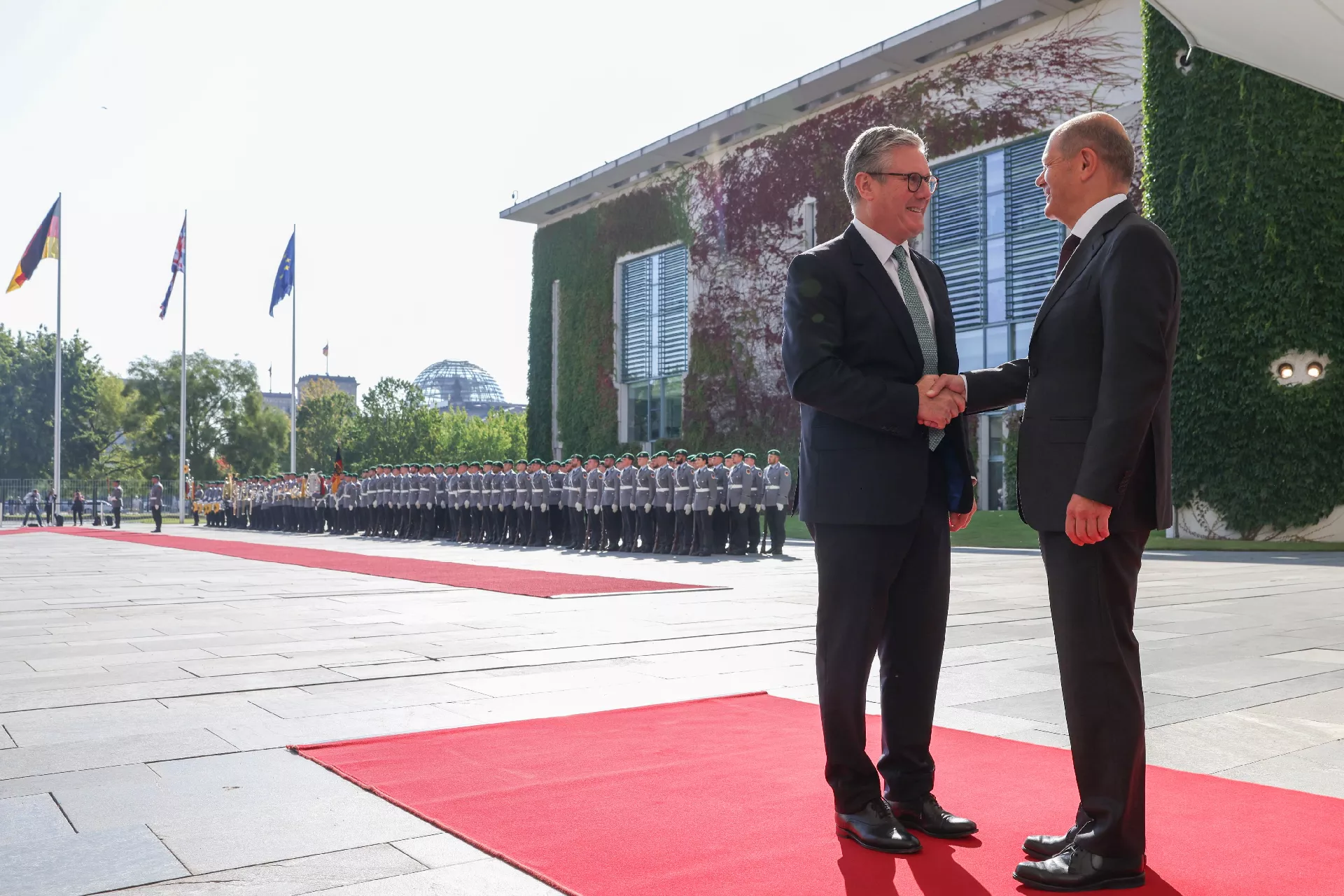
Starmer with Scholz
In Berlin, Starmer tried to fulfill his election promise and sought negotiations on new trade terms with the European Union, but there is little guarantee that he will achieve this. All member states decide on this, and London has previously shown that it has communication problems with all member states of the Union. We recall Cameron's tour before Brexit when he visited only some EU countries with the intention of convincing them to respect London's positions. According to the agreement, the document can be revised in 2026.
Scholz expressed his readiness to cooperate with his Social Democratic colleague. Official Berlin showed understanding for Starmer, who came to power after the Conservatives. Berlin wanted a youth mobility agreement, which would mean that those between the ages of eighteen and thirty could freely study and work in other EU countries, and Starmer said he did not come for that agreement but was willing to make a bilateral agreement with Germany on it.
As Berlin is aware that the UK will have difficulty accessing the common European market, it seems that Scholz expressed his readiness to conclude an agreement with London at the level of states and companies from the two countries, meaning that British companies in Germany would be a gateway to the European market.
At Macron's to confirm the agreement from Berlin
After Berlin, Starmer went to Paris to meet President Emmanuel Macron. Besides being the only European nuclear powers and members of the UN Security Council, excluding Russia, which is now hostile to them, France, along with Germany, is the main force in the European Union. In addition to "resetting relations" with the rest of the continent, Starmer said they discussed trade, defense, security, illegal migrants, and emphasized that he placed a special focus on the growth of economic ties. Illegal migrants crossing the English Channel in boats are a particularly important issue.
Macron was happy to meet Starmer after poor relations with former Conservative prime ministers. He had previously described Boris Johnson as a "clown," and he wanted to punish British prime ministers since Brexit with stricter withdrawal terms from the European Union as an example to others that it is painful and as a message to voters how much France would suffer if Marine Le Pen, who threatened Frexit, came to power.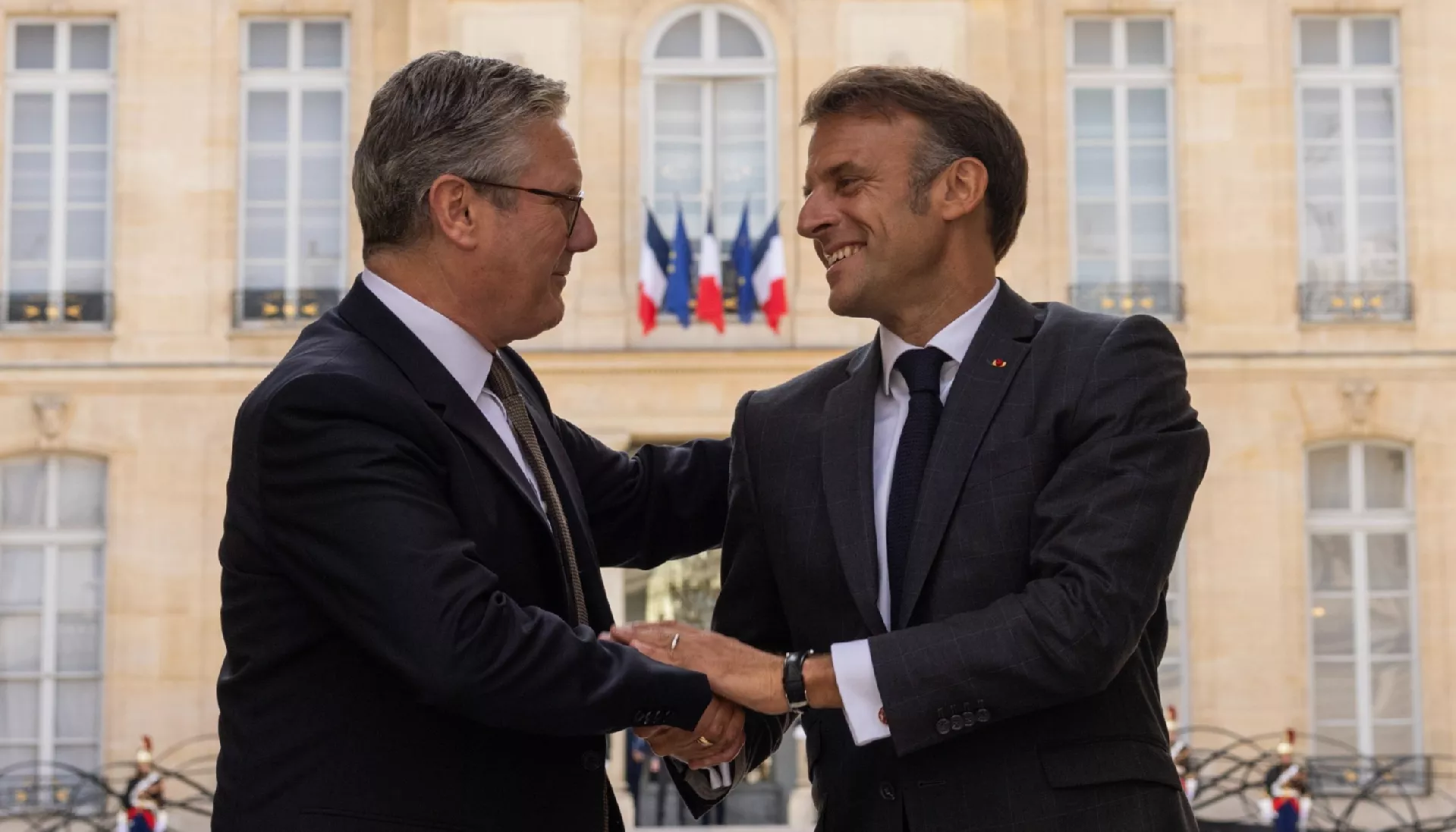
Starmer with Macron
Starmer, as a center-left politician, is closer to Macron in many ways than the Conservatives. Together with Scholz, a Social Democrat, they now have the opportunity to prove to the rising right that some things can be improved at home, as well as on the foreign policy front, especially in supporting Ukraine. Moreover, Macron and Starmer have another connection – they are opponents of the far-left and right of all kinds.
There were no major announcements after their meeting. Starmer's plan was to persuade Macron not to take such a strong stance against cooperation with London in Brussels, which Paris had presented for years as a commitment to the idea of a united Europe. After the success in Berlin, Paris presented itself to Starmer as a logical destination.
Russian Threat
There is no doubt that Starmer paid special attention to the Russian aggression against Ukraine in his talks in Berlin and Paris. Official London stood by Kyiv from day one, and upon leaving office, Prime Minister Johnson told his successor, whoever it might be, not to abandon Ukraine.
Starmer has continued this policy. "Europe faces some of the greatest challenges of our time," he recently said in the context of the "barbaric Russian war" that "echoes across our continent."
Such behavior from official London is not surprising. Historically, every Russian advance towards central or southern Europe has set off alarms on the island. Suppressing Russian expansion is almost a natural reflex for London, and neither Labour nor the Conservatives deviate from this. The extent of London's role in Ukraine is best illustrated by guests on Russian media who, when discussing the war in Ukraine, also talk about an attack on London as the first target in the confrontation with the West in Europe.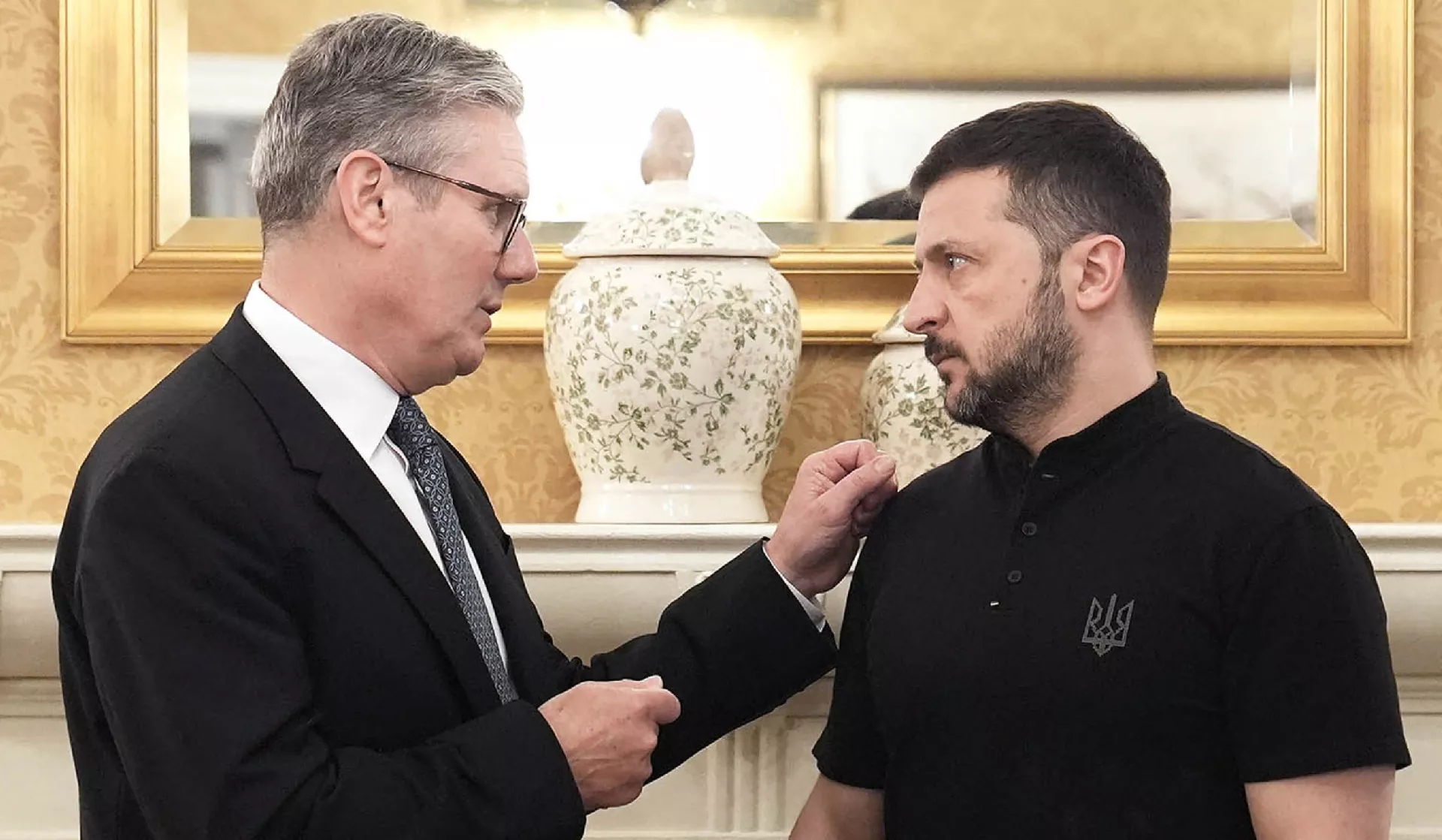
UK Prime Minister with Zelensky
Starmer understands that it will be difficult to meet Kyiv's needs if Trump comes to power and implements what he says. The burden-sharing of the war in Ukraine would be welcomed by this and any other presidential administration in Washington, and the UK, France, and Germany are the only ones that can do it.
The fact that the United Kingdom is outside the European Union complicates joint action, for example in the field of economy or arms production, but it is not an obstacle that these three countries cannot overcome in their common interest. At the same time, it is a way for London to move closer to the European Union.
Komentari (0)
Prijavite se za komentiranje
PrijavaJos nema komentara. Budite prvi!
Minuta
Sve →Iz drugih kategorija

Hoher Repräsentant nicht gewählt: Deutsche, Franzosen und Briten gegen Amerikaner, neuer Versuch Ende Juni

ČOVIĆ OHNE GNADE Wie diejenigen, die Ademović ins Amt brachten, ihm eine politische Hölle bereiteten



Sonniger Samstag, es wird recht warm


Tragödie im albanischen Ferienort: Zwei Minderjährige ertrunken