By Armin Sijamić
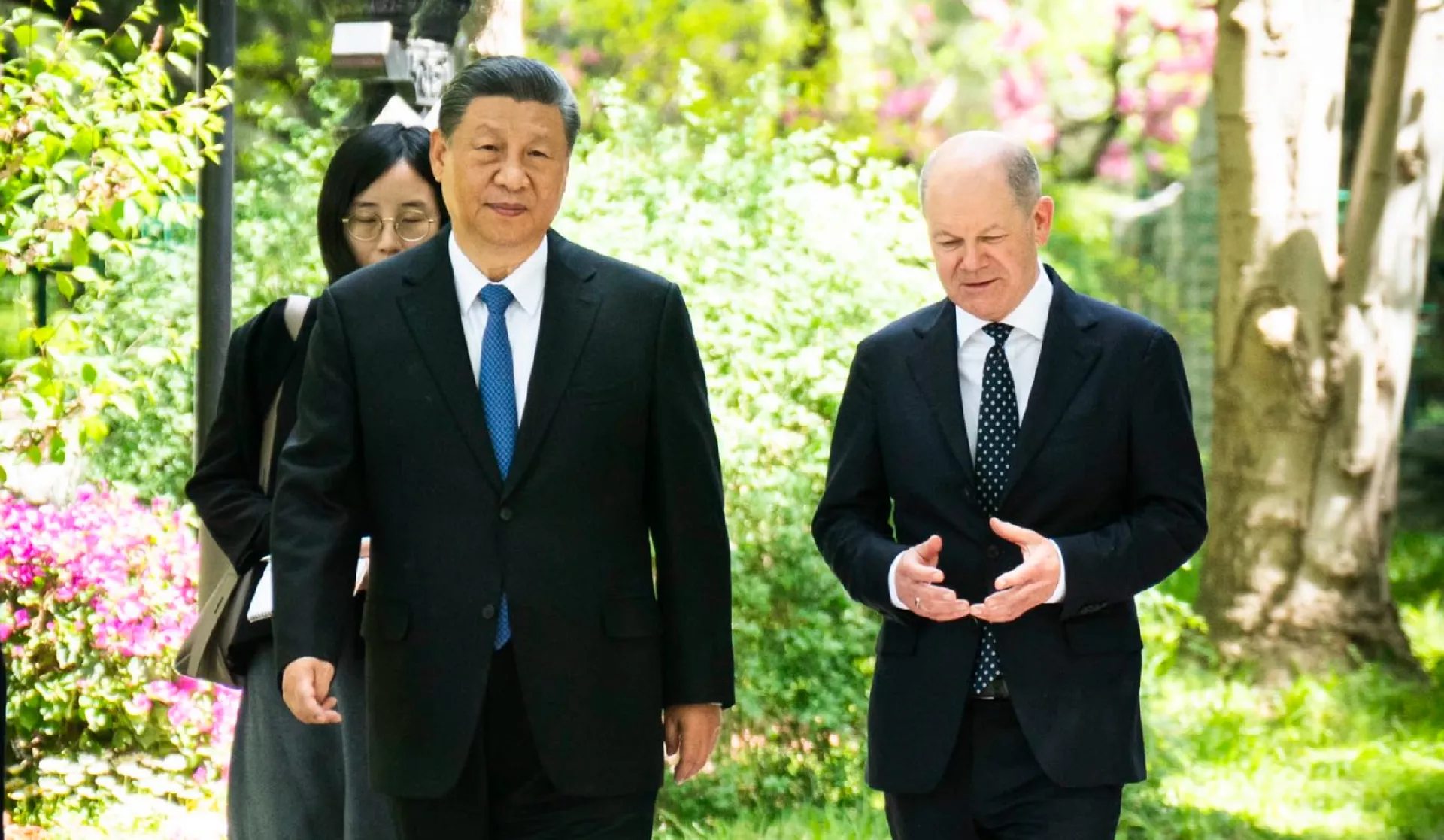
On Sunday, German Chancellor Olaf Scholz, with a large economic and political delegation, arrived for a three-day visit to China. Berlin and Beijing are finding it increasingly difficult to find common ground in politics, but it is the economy that prevents a complete break between the two economic giants.
Scholz's trip to China highlights the complexity of the West's relationship with China and other countries seeking to play an independent role in the world. China's case is made more interesting by the fact that the West, in its desire to distance Beijing from Moscow and in pursuit of profit, invested money and transferred technology there, contributing to China's growing economic, and thus political and military, strength. Last year, the European Union's trade deficit with China amounted to 291 billion euros.
China is the world's second-largest economy, ahead of Germany, which has an economy almost four times smaller. Trends indicate that China will continue to strengthen. This is partly due to the trade exchange between the two countries, which amounted to 254.1 billion euros last year. German imports to China amount to 97.3 billion dollars.
Scholz's trip is part of efforts to reduce the trade deficit and to encourage Beijing to provide better conditions for German companies, as Berlin has complained about market barriers and Chinese subsidies to domestic companies. How successful Scholz will be will be shown by the final accounts at the end of this year and next year, just as last year's data showed a 15.5 percent drop in the volume of economic exchange between the two countries compared to the previous year. The decline was partly caused by a change in German policy towards China, namely the adoption of a series of documents that, in practical terms, create political and economic obstacles for Beijing wherever possible.
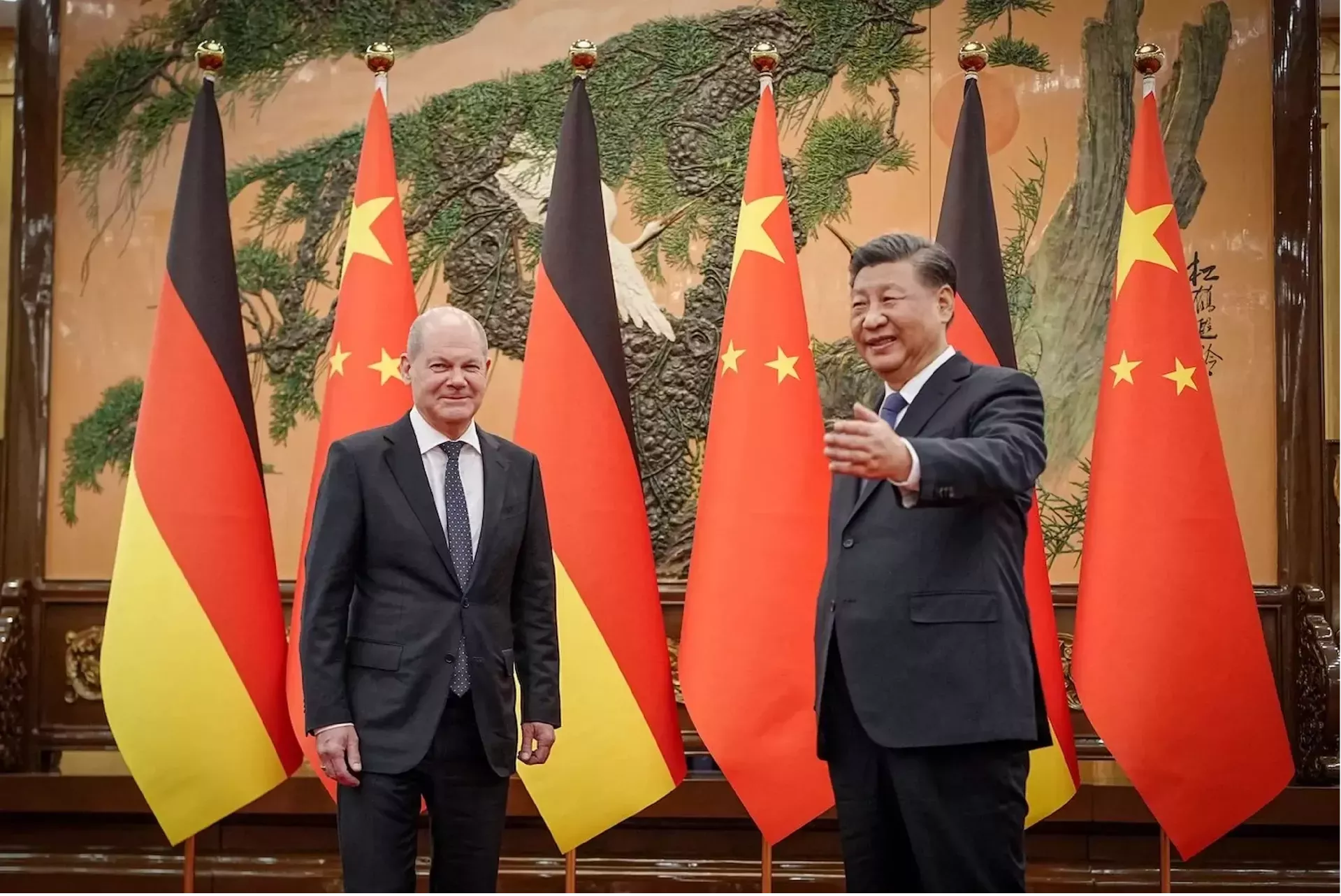
The decision by Berlin, shaped under Foreign Minister Annalena Baerbock of the Green Party – aligned with American Democrats, was a slap in the face to Beijing, which tried to prevent it. China, Germany's largest trading partner for eight consecutive years, has been designated a "systemic rival".
To make matters worse for the German economy, the confrontation with China came at a time when, due to Russia's aggression against Ukraine, Berlin was losing the Russian market and cheap natural gas. There is no doubt that German businesses would prefer the Chinese market over the Russian one, and China is suitable for this if it wishes.
Political Differences
Chancellor Scholz presented his second trip to China, after the one in November 2022, as an opportunity to discuss political differences, primarily regarding the war in Ukraine, as he believes China has not done enough to punish Russia. The day before arriving in China, he wrote on X about his conversation with President Volodymyr Zelenskyy, about Russia's "massive" attacks on civilian energy infrastructure, and stated that Berlin would "unwaveringly stand by Ukraine".
The announcement seemed like an alibi for potential failure in economic negotiations, and if we add other positions of the Scholz government, we can say that the ties with China are maintained by large economic deals and almost nothing else. Namely, the Scholz government believes that the issue of the breakaway Chinese island of Taiwan should be resolved through negotiations and supports Taipei's membership in international organizations. Berlin is also concerned about the state of human and labor rights in China, China's policy in the Arctic and Antarctic, and demands that Beijing announce its military exercises. In return, Germany will expand cooperation with Indo-Pacific countries and send its warships to China's coast.
But before Scholz met with President Xi Jinping, he visited several Chinese cities and German factories there. He also visited the industrial hub of Chongqing, a production base for the Chinese automotive industry. It is precisely the automotive industry, and the strong development of China's electric car industry, that worries German companies, which are finding it increasingly difficult to keep up with China's low prices. In July last year, in response to being denied access to semiconductors from the West, China halted exports of gallium and germanium, metals important in the production of these very semiconductors, electronics, automotive, and military industries. China is the world leader in the production of these two rare metals.
China's Stance
Scholz's arrival in China, and his reception, sparked discussions about the host's (lack of) respect for the guest. Chinese state television showed Scholz disembarking from the plane in Chongqing and leaving, but offered no comments to the Chinese delegation, which consisted mainly of regional officials. The reception in Beijing by Xi Jinping in the Great Hall of the People improved the impression. The reserved reception in Chongqing, unless the German delegation insisted on it, shows that China is also changing and that its political independence is growing with its strength. Furthermore, it should be remembered that Berlin was the one that decided to limit ties with Beijing.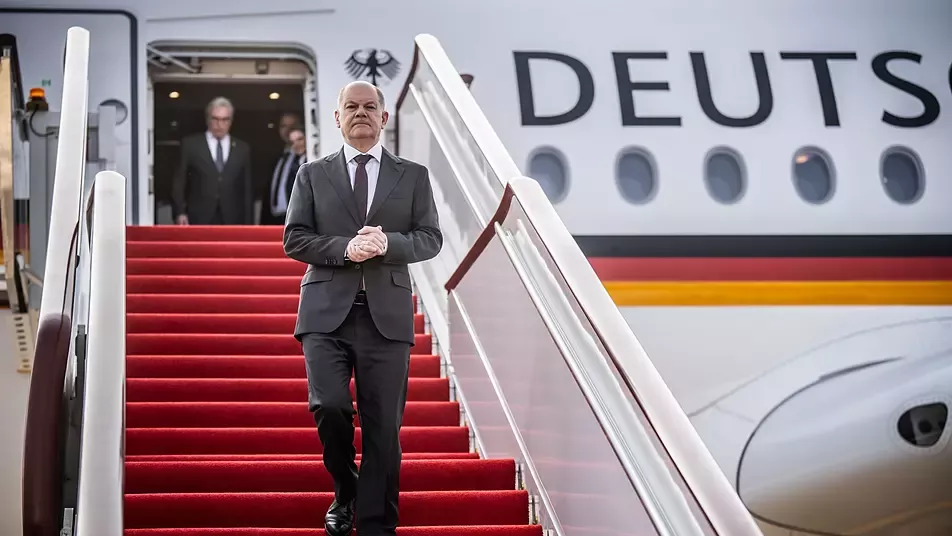
Chinese media report that Xi told the guest that this year marks the tenth anniversary of the establishment of the comprehensive strategic partnership between China and Germany, and that during this period, despite changes in the international situation, their relations have always developed steadily. He stated that Germany and China should consider and develop bilateral relations from a long-term and strategic perspective, in order to jointly bring more stability and security to the world, that there is no fundamental conflict of interest between them, and that they do not pose a security threat to each other.
Sino-German cooperation is beneficial for both sides and for the world, Xi said, adding that given the global turmoil, the two sides must strengthen the resilience and vitality of bilateral relations, insist on the main tone of cooperation and the general direction of the development of Sino-German relations, and consolidate the position of the comprehensive strategic partnership between the two countries, and that China's policy towards Germany will maintain a high degree of stability and consistency.
Finally, Xi emphasized that German and Chinese industries are highly complementary and that their markets are interdependent, and that China will continue to insist on its policy of opening up to the world and hopes that the German side will ensure a fair business environment for Chinese companies in Germany.
Veiled Criticism and Obvious Obstacle
China's reservedness in its statements is well known. Xi Jinping's aforementioned address seemed to deviate from this approach, as his speech celebrating the ties between the two countries was, in fact, a criticism of Berlin.
Mentioning the ten-year-old agreement, considering the documents Berlin adopted in July last year, is a message to the guest to stick to what has been signed, especially since the two countries, according to Xi Jinping, are not a security threat to each other. In other words, Xi told the guest that he has agreements with China that allow him not to wage an American war against Beijing, but to look strategically at future relations. Furthermore, he told Berlin that Chinese interests must also be protected while the EU prepares for an economic confrontation with Beijing.
Scholz said, in addition to general remarks about cooperation between the two countries, that their relations are developing well and that they want to work with China on global challenges such as climate change, the international order, and world peace... But Scholz also spoke about differences, touching upon Russia and Ukraine. He told the host that Russia's invasion of Ukraine is a threat to global security and that Germany's "vital interests" are affected by this war. He added that no one should threaten to use nuclear weapons, alluding to Russian President Vladimir Putin's statement that he is ready to use all means to protect Moscow's interests. Scholz sought China's support for a "just peace in Ukraine".
Xi was much more reserved now. He said that China supports all efforts leading to a solution of the crisis, including Germany's. In other words, he repeated what Beijing has said many times in its attempts to broker peace in Ukraine, namely, it publicly presented an undefined Chinese stance that cannot be implemented, as it simultaneously advocates for Ukraine's unity and Russia's right to achieve its goals.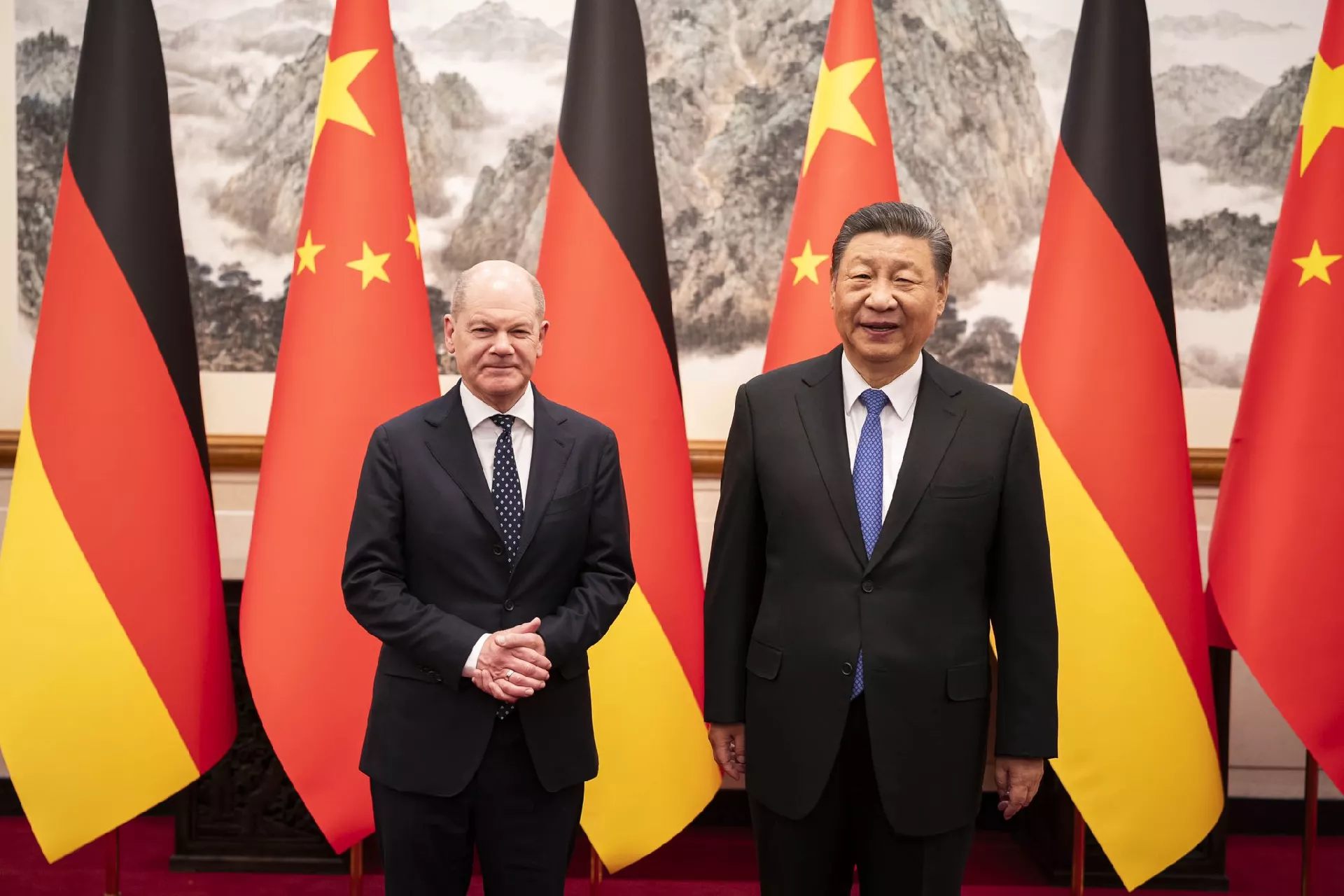
Three weeks ago, Dutch Prime Minister Mark Rutte asked the host in Beijing to "put significant pressure on Russia to influence the course of events," and five days later, French Foreign Minister Stéphane Séjourné said after a meeting with his Chinese counterpart that France expects China to convey messages to Russia about Ukraine. And this week, Scholz asked for something similar: "China's word carries weight in Russia. That's why I asked President Xi to deal with Russia so that Putin finally stops his crazy campaign, withdraws his troops and ends this terrible war."
Therefore, European politicians are asking Beijing to persuade Moscow to end the war in Ukraine, and European businesses are asking to reduce the trade deficit with China and for their companies to get better conditions in China. At the same time, the West is working to curb China, especially its technology companies. Although these demands seem unrealistic and difficult to achieve under these circumstances, many are counting on the aforementioned economic interdependence. However, some argue that Beijing may not be able to deliver any of this due to its own economic problems and its inability to force Moscow to make concessions in Ukraine. After Scholz's visit, it is still unclear which of these two opinions is more accurate.
Komentari (0)
Prijavite se za komentiranje
PrijavaJos nema komentara. Budite prvi!
Minuta
Sve →Iz drugih kategorija
Hoher Repräsentant nicht gewählt: Deutsche, Franzosen und Briten gegen Amerikaner, neuer Versuch Ende Juni
ČOVIĆ OHNE GNADE Wie diejenigen, die Ademović ins Amt brachten, ihm eine politische Hölle bereiteten

Sonniger Samstag, es wird recht warm

Tragödie im albanischen Ferienort: Zwei Minderjährige ertrunken