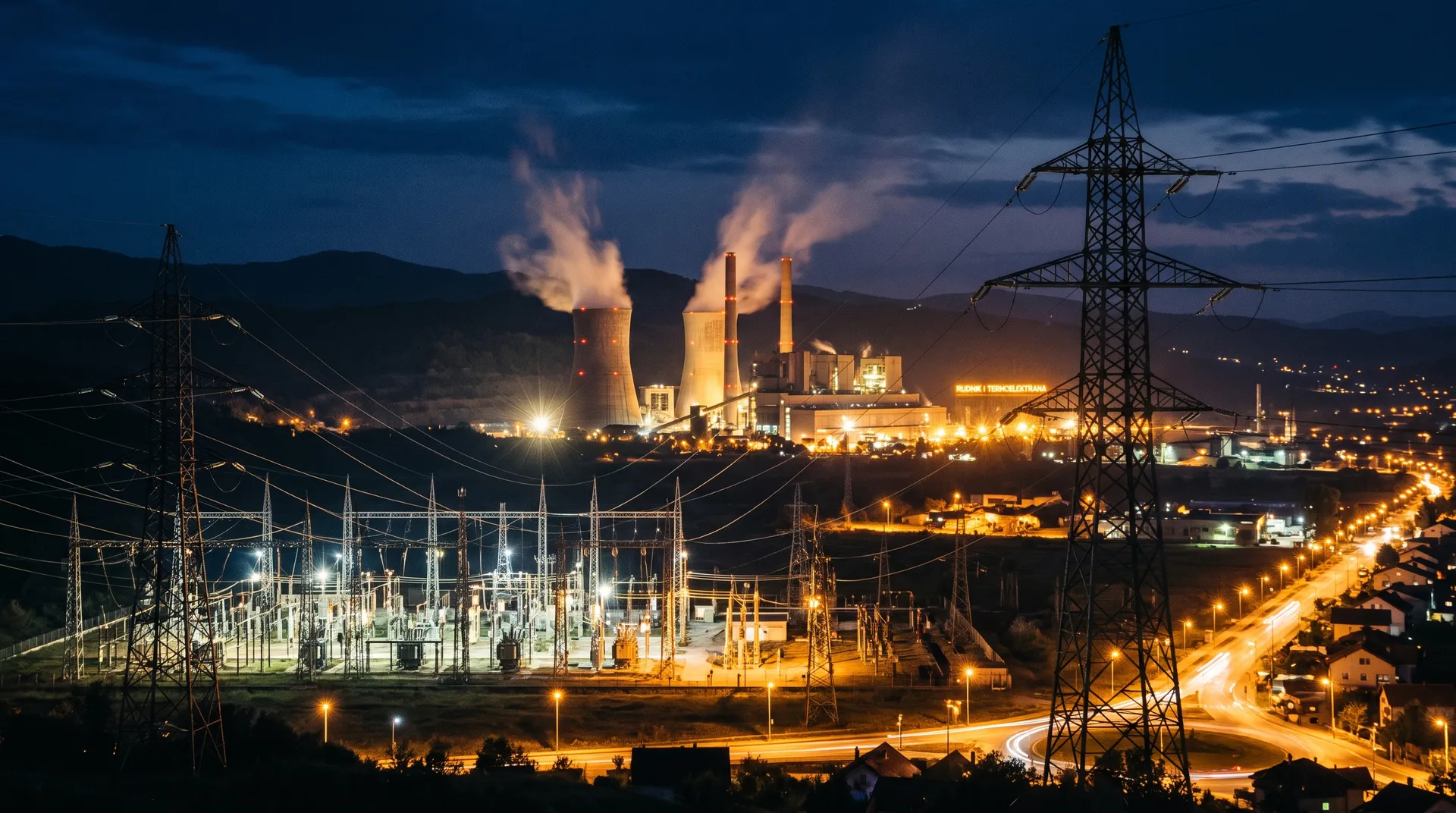
Automatically translated from Bosnian.
How many times have we heard our politicians say, “The law isn’t the best, but we had to pass it because of the EU path…”? Too many times, because laws that are not best for Bosnia and Herzegovina as it is today will become an insurmountable problem tomorrow.
There is one area where we accepted laws using the aforementioned approach—“it’s bad, but we have to do it for the EU”—and we are already in a situation where we seriously regret it. And as time goes by, the regret will only grow—and become more costly.
“Whoever controls energy controls the nation” is a paraphrased realpolitik message from Henry Kissinger. If our politicians had read anything, they would know that without energy sovereignty there can be no political sovereignty either. But they haven’t; once they get their hands on positions and office, they become “the smartest people in the room,” and there is no Tesla or Einstein who could advise them. They only accept people nodding along.
That is why we are now in a situation where we are all nodding our heads, but in disbelief at where the politics we chose has led us. This is the politics that puts the fate of this country behind an imagined goal called the path to the European Union. Perhaps it would not be imaginary if our politicians read and listened, but we are far from that. We are much closer to circumstances that emerge when the letter “t” in the word for “state” is replaced by the letter “r.”
One of the words our politicians learned from the swindlers in the European Union is “restructuring.” Back in 2019, the Parliament of the Federation of Bosnia and Herzegovina therefore tasked the Government and Elektroprivreda BiH with actively restructuring the electricity sector, including the mines.
That restructuring, Bosnian-style, ended with the sector being completely gutted and the mines becoming social-welfare institutions, because the authorities neither pay the miners nor their social contributions. At the same time, the authorities—especially those in office from 2022 to 2026—have restructured the electricity sector so much that all that remains is a shell on glass legs.
We’ll reach the afterlife before we reach the EU
The key problem at the heart of Bosnia and Herzegovina’s economy and industry is an adjustment that is no adjustment at all, to a road that does not exist. It is the road that has been promised to us for decades through the rose-tinted glasses of European prosperity and development. And every new step we have taken toward this supposed prosperity has made us poorer.
They prohibited us from building the modern Unit 7 because the EU has its own rules and promotes its own producers, so there is no need for Bosnia and Herzegovina to build its own modern facilities and become an electricity exporter. I know they will say that some people withdrew from the project, but we also know what a campaign there was before they withdrew.
And then they imposed all sorts of standards and penalties on us because we produce electricity mainly from coal. As if electricity over there just comes down in alternating showers of rain and sunshine. Sure it does!
The rules the European Union continually imposes on us in the energy sector are the same as those followed by its member states, while estimates that we will join the Union within the next 10 years are within the margin of statistical error. I know Euro-fanatics will call these rules part of the accession process and reforms, but why don’t the political leaders of Bosnia and Herzegovina first think about the interests of our country and its citizens, and only then about EU demands?
Because if we shut down the mines—and that is the path we are on—we will become dependent on imported electricity, which ultimately means we will pay more for it, both as households and through products that will become more expensive when industry has to pay more for electricity.
That is why it is time to ask our political elites, in the public sphere—and, if necessary, in the streets—whether we are the focus of the laws and decisions they make, or whether their focus is their EU cronies, the various crooks who wheel and deal under the banner of the “path to the EU.”
I have said many times on these pages, as have other authors, that we must not pay for the European path with our disappearance. Disappearance, however, is inevitable if we lose a key element of sovereignty in a country like Bosnia and Herzegovina. Without energy, we are dead.
That is why the government being formed must rein in its need to please European predators, look out the window, and see the miners there today, Elektroprivreda workers tomorrow, and, a day or two later, all of us who need to survive first and only then move toward the EU.
Instead of the insane policy of “adopt it and don’t ask questions,” it is time for laws to start being made in the interests of all of us. Rather than talking about shutting down mines and destroying the mining and geology sector, they should move on to concrete, strategic and systematic action to modernize mines or open new ones wherever significant mineral deposits have been proven to exist.
That will not serve the EU’s interests and it will cause problems, but its diplomats need to be told that the country and its energy sector come first. Warsaw makes this clear to Brussels, as Poland still produces more than 50 percent of its electricity from thermal power plants; so does Germany, where thermal power plants produce more than 20 percent of the electricity.
Fairy tales about how one day we will live happily and in prosperity are just fairy tales. They might come true one day, but if Turkey has been waiting for eternity, we will wait much longer. It’s the same reason—it starts with the letter “m”!
Droughts are reducing hydroelectricity potential, while electricity production from wind and solar power remains low, so thermal power plants are the key to our energy system, and they will remain so for a considerable time. They can continue to do so even as we talk about the EU, if the politicians we call Bosnian or pro-Bosnian wake up and start working for Bosnia and Herzegovina.
In 2025, Poland generated about 53 percent of its total electricity from thermal power plants, while Bosnia and Herzegovina generated about 59 percent. So the difference isn’t all that great. Bosnia and Herzegovina has enough coal reserves for at least 150 years. Why should we give up the wealth of our country for the supposed benefits of a promised union? And promises are always uncertain—only a fool would rejoice in them.
That is why it is essential that the incoming authorities be resolute, committed to a strategic course, and ready to face pressure. They should give miners and engineers higher wages and bring in experts who will modernize the mines in both environmental and production terms. They should put capable and prepared people in charge of Elektroprivreda.
Then we can restore electricity exports, instead of waiting every day to see when imported electricity will burn us.
If they do all that without Asim and his cronies, they will succeed—there is no doubt about it.
Otherwise, f*** the EU—we’re dead. And the dead go to the afterlife. What’s Brussels got to do with it? What fairy tales?
Komentari (0)
Prijavite se za komentiranje
PrijavaJos nema komentara. Budite prvi!
Minuta
Sve →Iz drugih kategorija
Celebration at the Bosnian House concludes multi-day observance of Bosnia and Herzegovina’s Statehood Day in Birmingham
Ramo Isak did not appoint himself: Konaković and the Troika remain silent as the institutions of the Federation of Bosnia and Herzegovina are mocked

Assembly to elect new government tomorrow; Omer Kovčić to become new prime minister of Tuzla Canton