Automatically translated from Bosnian.
(Patria) - The second round of elections for mayors and municipal heads will be held in 45 Slovenian municipalities on November 29, and the latest opinion poll shows the two candidates in the capital are virtually tied.
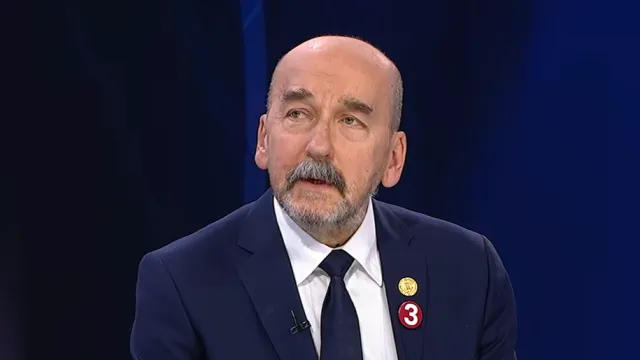
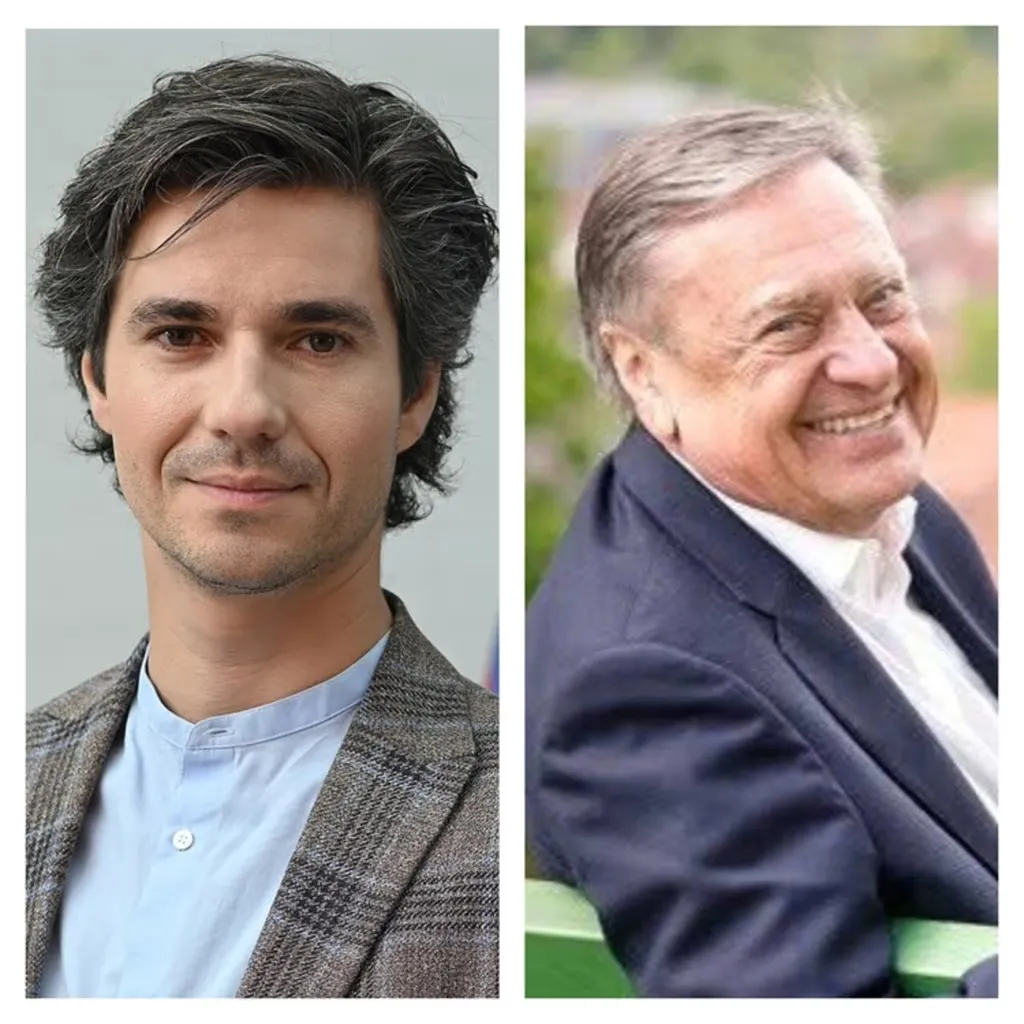
After two decades of Zoran Janković’s dominance, Ljubljana faces the possibility of a change at the helm of the city administration.
The longtime mayor is being challenged by Luka Mesec, former coordinator of the Levica party, former deputy prime minister of Slovenia and labour minister.
The latest poll by the Ninamedia agency, published by Ljubljana’s Dnevnik on November 27, shows that among decided voters, Mesec has the support of 50.1 percent and Janković 49.9 percent.
The poll surveyed 1,500 people over nine days. The difference between the candidates is far below the statistical margin of error.
Janković won in the first round in every previous election in which he secured the mayoral office. In the 2022 election, he received as much as 61.83 percent of the vote.
Four years later, his support fell to 34.94 percent.
In the first round of voting, held on November 15, Janković received 39,239 votes, while Mesec received 29,352, or 26.14 percent.
Nearly 44,000 voters cast their ballots for one of the remaining 13 candidates.
They included Aleš Vrhovec, the candidate of Prime Minister Janez Janša’s Slovenian Democratic Party (SDS), who received 8.80 percent of the vote, and conservative politician Aleš Primc, with 8.31 percent support.
Former Slovenian prime minister Anton Rop received 6.18 percent, Klemen Boštjančič of the Freedom Movement 5.05 percent, Aleksandar Repić 4.26 percent, and Jasmin Feratović 2.47 percent of the vote.
The new balance of power in the Ljubljana City Council will also be particularly important for the functioning of the future city administration.
According to the first-round results, Zoran Janković’s List will have 13 of the 45 council seats, Levica ten, SDS five and the Freedom Movement four, while smaller parties and independent lists won the remaining seats.
Neither of the two candidates, therefore, will have a majority of their own in the City Council.
The sizable community of Ljubljana residents with roots in Bosnia and Herzegovina is of particular interest.
According to the 2002 census—the last to provide comprehensive data on the population’s national affiliation—5,763 Bosniaks, 3,332 people who identified nationally as Muslims, and 2,323 residents who identified as Bosnians lived within the Municipality of Ljubljana.
A total of 11,418 residents were recorded in these three categories, or 4.29 percent of Ljubljana’s population at the time.
This does not, however, mean that they can all automatically be classified as Bosniaks.
Even then, Ljubljana was home to more than a quarter of all people in Slovenia who identified nationally as Bosniaks.
Meanwhile, the population of the Slovenian capital has grown from 265,881 to 298,227, according to Slovenia’s statistical office, which reported that number for mid-2024.
More recent Slovenian population registers do not provide comparable data on national affiliation, making it impossible to determine precisely how many Bosniaks live in Ljubljana today.
An amendment to Slovenian electoral legislation that took effect on September 2, 2026, is particularly significant for the political participation of the Bosnian diaspora.
It revoked the right to vote in local elections for citizens of countries outside the European Union, despite their permanent residence in Slovenia.
The decision also affects numerous citizens of Bosnia and Herzegovina who have lived and worked in Slovenia for years, paid taxes and raised families there, but have not acquired Slovenian citizenship.
The political position of Bosniaks in Ljubljana cannot be viewed solely through the size of the community. Some hold Slovenian citizenship and full voting rights, while others have been left unable to participate in decisions on local issues.
The construction of the Muslim Cultural Centre, including a mosque, in Ljubljana—opened in 2020 after decades of efforts by the Islamic Community in Slovenia to secure suitable premises—is particularly significant to Janković’s relationship with the Muslim community.
The project was carried out during Janković’s mayoral terms.
By contrast, Luka Mesec’s Levica has traditionally based its policies on social rights, access to housing, workers’ rights and equality for people of different backgrounds.
There are, however, no representative surveys showing which of the two candidates Ljubljana’s Bosniaks will vote for, or how many of them are on the electoral register.
A total of 205,470 voters are eligible to vote in Ljubljana’s second round. They can cast their ballots at 256 polling stations between 7 a.m. and 7 p.m.
In addition to Ljubljana, a second round of voting is being held in five of Slovenia’s 12 urban municipalities.
In Maribor, Matevž Frangež, the joint candidate of Levica, the Social Democrats and the List of Cyclists and Pedestrians, is competing for the mayor’s office against Bor Greiner. In the first round, they received 28.18 and 22.85 percent of the vote, respectively.
In Kranj, Janez Černe, who won 28.18 percent of the vote in the first round, is facing Irena Dolenc, a candidate from New Slovenia – Christian Democrats, who received 25.27 percent.
In Koper, incumbent Mayor Aleš Bržan is seeking a new term, challenged by Nik Popovič, son of former longtime mayor Boris Popovič.
According to the latest poll published by Primorske novice, 56.3 percent of respondents support Bržan and 32.1 percent support Popovič.
In Nova Gorica, incumbent Mayor Samo Turel of the Freedom Movement will face Bogdan Česnik. The latest public opinion poll shows that Turel is supported by 46.4 percent of respondents and Česnik by 40.5 percent.
In Ptuj, incumbent Mayor Nuška Gajšek of the Social Democrats is facing Janko Širec. In the first round, they received 44.93 and 24.50 percent of the vote, respectively.
According to the official decision of Slovenia’s National Electoral Commission, a second round of elections will also be held in the municipalities of Bohinj, Bovec, Cerknica, Cerkno, Črenšovci, Divača, Dolenjske Toplice, Gorišnica, Grad, Horjul, Hrastnik, Idrija, Izola, Kamnik, Kidričevo, Kobarid, Komen, Kostanjevica na Krki, Lendava, Litija, Ljubno, Makole, Moravče, Moravske Toplice, Postojna, Radovljica, Renče-Vogrsko, Rogatec, Ruše, Selnica ob Dravi, Sevnica, Slovenske Konjice, Sveti Jurij v Slovenskih goricah, Šempeter-Vrtojba, Šentilj, Šmartno ob Paki, Tišina, Zavrč and Žužemberk.
A total of 90 candidates are taking part in the second round of local elections, including 20 women.
A total of 1,066 regular polling stations will be open in Slovenia.
By-elections or repeat elections will also be held in some municipalities for members of municipal councils, as well as councils of local, village and urban communities.
In the remaining 167 of Slovenia’s 212 municipalities, mayors and heads of municipalities were elected in the first round on November 15, politički.ba reports.
Komentari (0)
Prijavite se za komentiranje
PrijavaJos nema komentara. Budite prvi!
Minuta
Sve →Iz drugih kategorija

Sarajevo Remembers: 33 Years Since the Massacre on Hamdije Kreševljaković Street