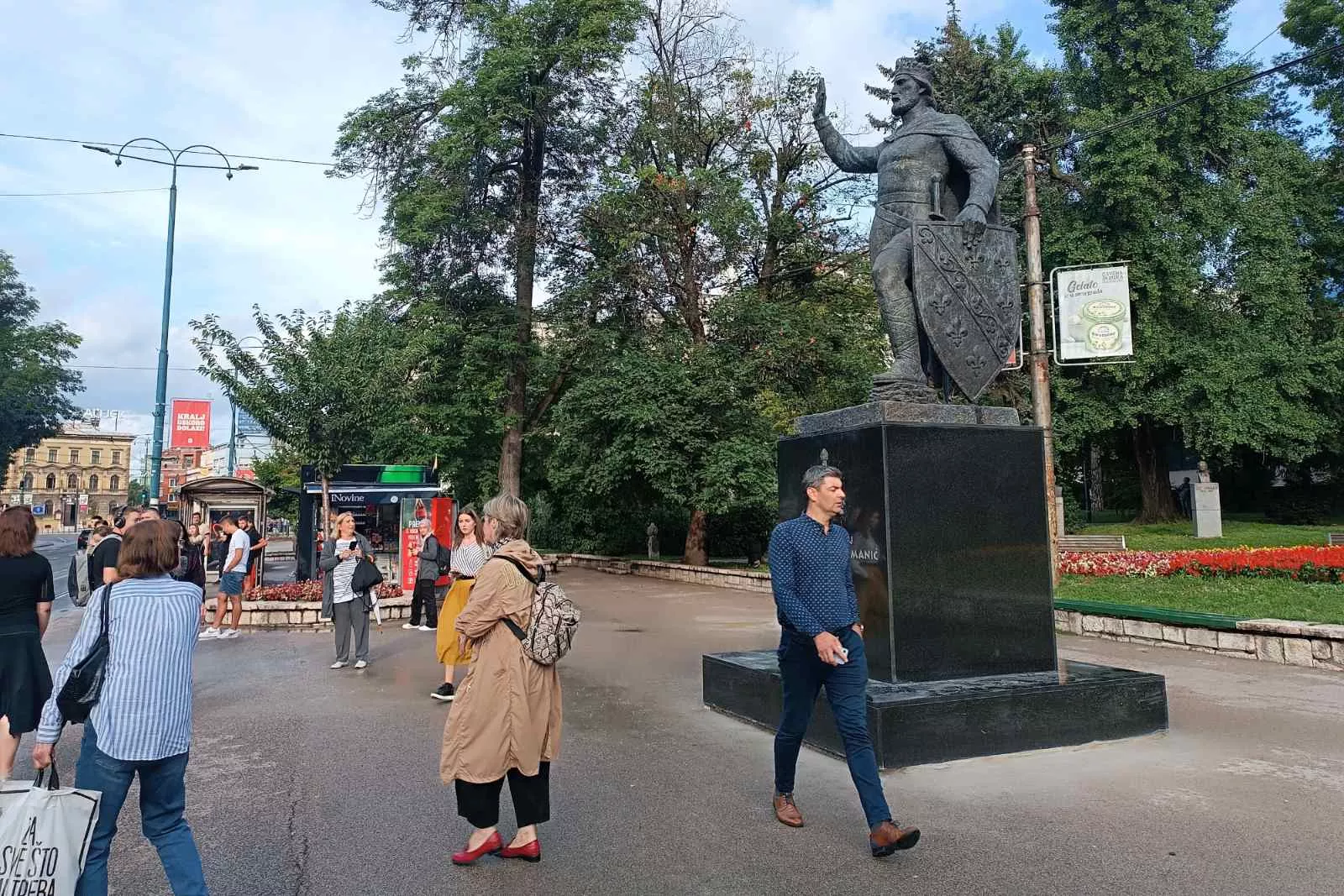
(Patria) - In Sarajevo, a monument to one of the most significant medieval rulers of Bosnia - King Tvrtko I Kotromanić - was erected, and today's 834th anniversary of the signing of the Charter of Ban Kulin, the oldest document on Bosnian statehood, was chosen as the day of the monument's opening.
The Charter is an international legal act, which the Bosnian Ban Kulin sent to the Dubrovnik Prince Krvaš to regulate trade relations with Dubrovnik, then the most important trading partner of his country. It grants Dubrovnik merchants freedom to trade in Bosnia without paying taxes, but also guarantees them security and compensation for any damage.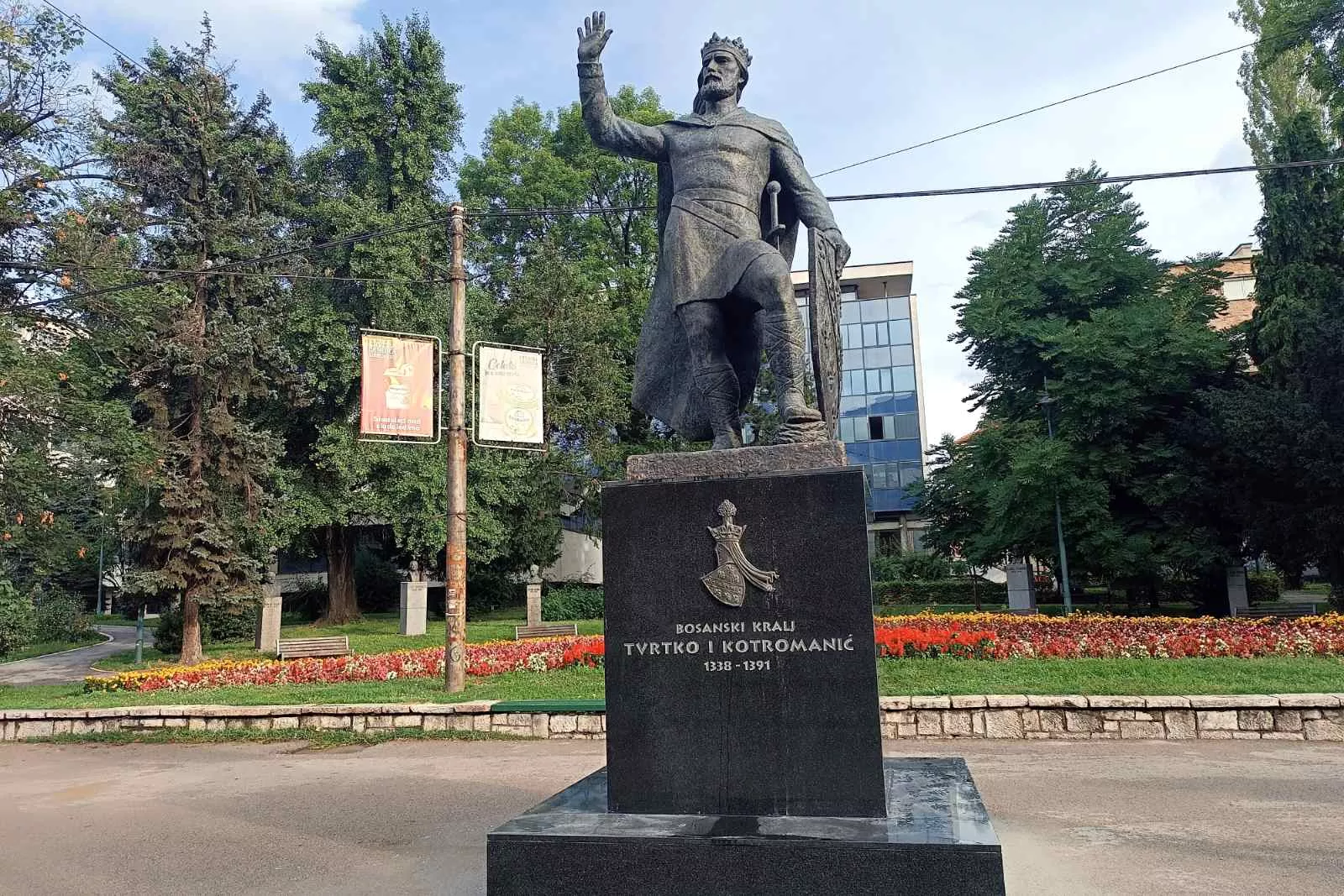
It is the oldest preserved document testifying to centuries of Bosnian statehood and one of the oldest state documents among all South Slavic peoples.
Kotromanić is considered one of the greatest medieval rulers of Bosnia. He left behind a country larger, stronger, more politically influential, and militarily capable than the one he inherited.
He was born around 1338. The son of Vladislav Kotromanić and Jelena Šubić, Tvrtko came to the Bosnian throne as a fifteen-year-old boy in 1353, and ruled Bosnia as Ban until 1377.
His rule over Bosnia during that period was marked by constant conflicts with the Kingdom of Hungary, which wanted to seize the rich Bosnian mines and eradicate the Bosnian Bogumils. Tvrtko I Kotromanić was the first Bosnian ruler to take the title of King. This happened in 1377 in Mile near Visoko. During his reign, King Tvrtko I Kotromanić turned Bosnia and Herzegovina into a respectable European state, which experienced political, cultural, and economic expansion.
King Tvrtko I is also special because he was the first ruler of Bosnia to launch a counter-offensive against neighboring countries after Bosnia had been the target of their attacks for years. Tvrtko I was more than successful in his conquests. His campaign to Montenegro ended with the conquest of territories up to Kotor. He then turned towards Serbia and reached Sjenica in present-day Sandžak. In Mile, he was crowned King of Serbs, Bosnians, Maritime Regions, Hum Land, Lower Regions, Western Regions, Usora, and Podrinje.
Bosnia was then also considered an economic power, basing its economy on rich deposits of gold, silver, lead, and other valuable metals. The gold coin minted testifies to the economic power. Tvrtko's ducat was four times larger than the Ottoman one, it was 24 carats, four centimeters wide, and weighed 16 grams. This gold coin was also important for its symbolism. On one side was the coat of arms of the Kingdom of Bosnia, with six lilies and two more lilies on the sides, and on the other side was a rampant lion, a symbol of the power of his kingdom. The fact that the Republic of Venice, the leading European maritime power, inscribed him in its golden book of honorary citizens also speaks of his power.
The Bosnian army also participated in the Battle of Kosovo on the side of Serbian Prince Lazar, who had asked Tvrtko I for help. The Bosnian army achieved victory over the Turkish army on the left flank where it fought and returned home with negligible losses. After that, Tvrtko I turned to the conquest of Croatian territories, where he advanced as far as Novigrad, and all Dalmatian islands and cities except Zadar and Dubrovnik were under his rule.
He died suddenly on March 10, 1391, and was succeeded by his cousin Stjepan Dabiša. Tvrtko I was buried in the Church of St. Nicholas in the settlement of Mile near Visoko.
Komentari (0)
Prijavite se za komentiranje
PrijavaJos nema komentara. Budite prvi!
Minuta
Sve →Iz drugih kategorija

Hoher Repräsentant nicht gewählt: Deutsche, Franzosen und Briten gegen Amerikaner, neuer Versuch Ende Juni

ČOVIĆ OHNE GNADE Wie diejenigen, die Ademović ins Amt brachten, ihm eine politische Hölle bereiteten



Sonniger Samstag, es wird recht warm




Tragödie im albanischen Ferienort: Zwei Minderjährige ertrunken