Ernad Metaj
The EU is lying to itself. This is most evident in the example of the Balkans. The reports coming from the EU on moderate success of reforms seek to conceal the complete debacle of European politics in the Western Balkans.
Brussels should seriously consider the claims of the director of the International Institute for Middle East and Balkan Studies (IFIMES), Zijad Bećirović, that some of their diplomats in charge of the Balkans are prone to corruption and that they have established cooperation with local corrupt politicians. Gabriel Escobar, the special US envoy for the Western Balkans, rightly stated that BiH does not have an ethnic, but a problem of systemic corruption and a lack of credibility of domestic politicians.
The fact is that the EU has not sent its best and most experienced diplomats to BiH, but also to the rest of the Western Balkans. One can often hear in public an opinion that the third-class politicians appointed to the region only care about their own progress. That would not be a problem if the EU were to take Bosnia and Herzegovina and the Western Balkans seriously. Since the EU has not put this geopolitical area at the top of its priority list, bad diplomats are often left free to do as they see fit.
The result is best seen in BiH, where international officials have significantly contributed to the degradation of state institutions, reducing reform talks to SDA, HDZ and SNSD leaders. The talks are held in restaurants instead of institutions. The EU should be aware of the risks that authoritarian and populist leaders bring to democracy. Their strengthening usually boosts corruption. The corruption undermines democratic institutions that are finding it increasingly difficult to manage processes. Unfortunately, when it comes to corruption, BiH has proven to be one of the ‘champions’.
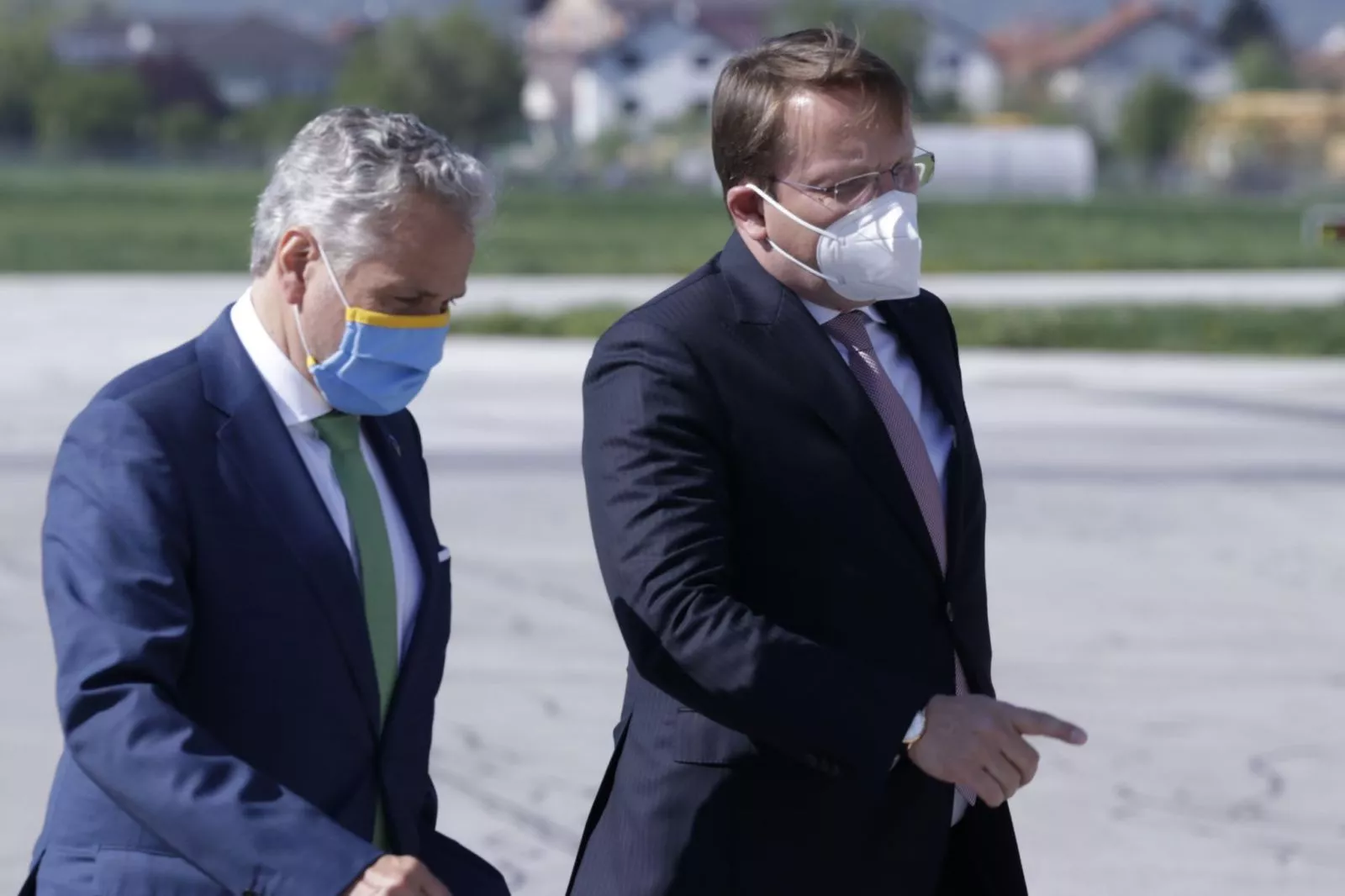
One of the riskiest European countries in terms of corruption is Hungary, and we are witnessing its strong influence on the development of the situation in BiH. It is not only about the promised financial assistance of the Prime Minister of Hungary, Viktor Orbán to the RS, but the fact that one of the key figures for the Western Balkans is the Hungarian Oliver Várhely, who is the Commissioner for Enlargement. There have been some rumors flying around recently that he attempted a special session of the NSRS with Dodik on the transfer of competencies. This was denied, as expected, but the suspicion remained.
According to Daniel Serwer, a professor at Johns Hopkins University in the United States, one of the negotiators of the Dayton Accords and a connoisseur of the Balkans, Dodik is a champion of Serb ideals, an obedient puppet of Moscow and a deeply corrupt thief with illicit gains, whom EU and US must stop.
Unfortunately, the actions of the EU Delegation in BiH have insofar shown the inability of the 'old lady' to oppose Dodik. Staffing could again be a problem, as Johann Sattler, an Austrian suspected to be under strong Russian influence, has been appointed head of the EU Delegation to BiH. Satler is a Russian student, and his appointment was pushed by then-Austrian Foreign Minister Karin Kneissl. Later on she moved into realm of business. From her ministerial position, she sat in the chair of an advisor to the Board of Directors of the strongest and largest Russian state oil company Rosnjeft. Russian President Vladimir Putin was at her wedding.
It seems that the EU has left BiH and the Western Balkans to the influence of right-wing governments. Apart from evident growth of the Russian influence, it also feeds into corruption, and no one in this area has yet tried to deal with it seriously. The alarm went off in BiH and the Western Balkans while ago, and the EU must objectively see if its envoys are putting out the fire or pouring fuel on it. Europe has already failed the exam in BiH and the Balkans. The case of BiH, but also the lack of support for the government of Zoran Zaev in Northern Macedonia, indicate that it is sliding in that direction again.
The hope is to raise awareness, especially in Germany, that possible new conflicts in the Balkans would this time endanger the EU itself. Without it, it would be fair to leave things to the US again; perhaps their solutions were not the best ones, but they have already proven to have the strength to cool off domestic hotheads.
Komentari (0)
Prijavite se za komentiranje
PrijavaJos nema komentara. Budite prvi!
Minuta
Sve →Iz drugih kategorija
Dok im plaće rastu, Vijeće ministara BiH i Parlamentarna skupština BiH uveli moratorij na rad
Vitalni nacionalni interes kao veto na volju većine: Otvorena ozbiljna pitanja o presudi Ustavnog suda FBiH
Hurtić potpisao ugovore za podršku radu devet sigurnih kuća